Best SEO Platforms to Learn and Earn in 2026
Published: 18 Aug 2026
You want to learn SEO, but every search result throws a different course at you, and half of them ask for money before you even know if the subject suits you. Once you actually learn it, a second question shows up right behind the first one: where do you find clients who will pay for that skill? Between learning and earning, choosing the best SEO platforms makes the whole journey much smoother.
This guide covers both sides of that journey. I looked at where people genuinely learn SEO well, for free or for a fair price, and where they turn that skill into real income once they are ready. By the end, you will know exactly which platforms deserve your time.
What are SEO Platforms?
An SEO platform, in this sense, is any website built to help you either learn search engine optimization or earn money by offering it as a service. Learning platforms teach you keyword research, technical audits, and content strategy through structured courses. Earning platforms connect you with clients who need that exact skill.
Some sites, like Semrush Academy, quietly do both, since the certification you earn there can also become the credential that lands your first client. Once you see this connection, picking from the best platforms for SEO gets much easier.
Top SEO Platforms List
This list splits cleanly into two groups: places to learn and places to earn. Together they form a solid path from complete beginner to paid freelancer, and they make up a dependable list of top SEO platforms worth bookmarking in 2026.
- Semrush Academy
- HubSpot Academy
- Ahrefs Academy
- Moz Learning Center
- Google Search Central
- Yoast SEO Academy
- Coursera
- LinkedIn Learning
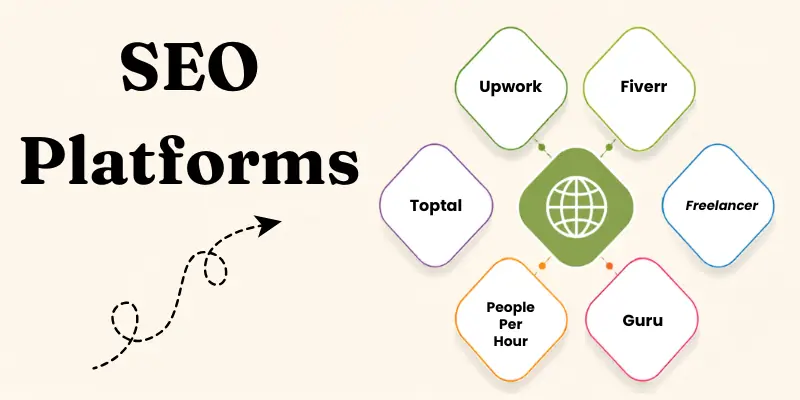
- Fiverr
- Upwork
- PeoplePerHour
- Freelancer.com
- Legiit
Read through each one and note which stage of your journey it fits. You do not need to sign up everywhere at once.
Popular SEO Platforms for Learning and Earning
This single list covers every platform from both angles, the ones that teach real SEO skills and the ones that turn that skill into actual income.
Among SEO learning websites, the first eight consistently come up as the most trusted starting points.
1. Semrush Academy
Semrush Academy pairs free, expert-led video lessons with a certificate at the end of every course, including newer material on AI search visibility. Brian Dean, known for his work at Backlinko, teaches several of the courses, and the lessons stay practical rather than theoretical.
The catalog does push toward Semrush’s own tools in places, but the underlying concepts apply no matter which software you eventually use. For a first structured introduction to SEO, it remains one of the strongest free options available.
- Completely free with certificates included
- Covers both foundational and AI search topics
- Some lessons lean toward Semrush’s own tools
- Best for complete beginners wanting a guided start
2. HubSpot Academy
HubSpot Academy’s SEO certification runs close to four hours across eight lessons and covers everything from how search engines work to link building strategy. Employers frequently recognize this certificate specifically, which gives it real weight on a resume or a freelance profile.
The pacing suits someone who wants full context before jumping into practice, so it takes longer to finish than some shorter alternatives. That extra time pays off in how complete the foundation feels afterward.
- Widely recognized certification by employers
- Thorough, structured curriculum
- Longer time commitment than shorter courses
- Best for building a resume-ready credential
3. Ahrefs Academy
Ahrefs Academy offers a free beginner course built around the same data-driven approach the company is known for in its paid tool. It focuses heavily on practical keyword research and link building rather than abstract theory.
Because it ties closely to Ahrefs’ own platform, some exercises work best if you also explore the free Ahrefs Webmaster Tools alongside the lessons. For anyone drawn to a numbers-first way of learning, it fits naturally.
- Free, practical, data-driven lessons
- Pairs well with Ahrefs Webmaster Tools
- Fewer courses than Semrush or HubSpot
- Best for learners who like working with real data
4. Moz Learning Center
Moz built one of the earliest and most respected SEO education hubs on the internet, and its learning center still holds up as a reliable reference. The Domain Authority concept, which Moz introduced, is explained here in full detail alongside other core ranking factors.
Content here reads more like a library than a single structured course, so self-directed learners get the most value from it. If you prefer reading and referencing over sitting through video lessons, this suits your style well.
- Deep, well-respected foundational content
- Great as an ongoing reference library
- Less structured than a single guided course
- Best for self-directed readers
5. Google Search Central
Google Search Central comes straight from the source, explaining exactly how Google crawls, indexes, and ranks pages. Nothing else on this list carries the same authority, since this is Google explaining its own system.
It reads more like documentation than a course, so complete beginners sometimes find it dry compared to video-based platforms. Pair it with a more guided course first, then return here once the basics click.
- Direct, authoritative source material
- Completely free, no signup required
- Dry, documentation-style format
- Best as a reference once fundamentals are clear
6. Yoast SEO Academy
Yoast SEO Academy focuses tightly on WordPress-based SEO, which makes it a strong pick if your blog or client work runs on that platform. Short, focused courses cover everything from structured data to content SEO.
It will not teach broader technical SEO outside the WordPress ecosystem, so pair it with a more general course if you plan to work across different platforms. For WordPress-specific work, though, it saves real time.
- Focused, WordPress-specific training
- Short, digestible course format
- Narrow scope outside WordPress
- Best for bloggers and WordPress freelancers
7. Coursera
Coursera hosts university and industry-backed SEO courses, some free to audit and others requiring payment for a certificate. The academic structure appeals to learners who want graded assignments and peer discussion built into the process.
Paid certificates can cost more than the free academies on this list, so weigh the cost against how much the formal structure actually helps you. For learners who thrive with deadlines and structure, it is worth the investment.
- Structured, university-style courses
- Graded assignments and peer interaction
- Certificates often require payment
- Best for learners who need external structure
8. LinkedIn Learning
LinkedIn Learning offers short, focused SEO courses taught by working professionals, often under two hours each. Completing a course adds a certificate directly to your LinkedIn profile, where potential clients can see it immediately.
The courses stay fairly high-level compared to a full academy program, so treat them as a supplement rather than your only source of learning. As a visibility boost tied to your professional profile, though, they carry real value.
- Short, professional, easy to finish quickly
- Certificate shows directly on your profile
- Less depth than a full academy course
- Best for adding visible credentials fast
Once you have a working skill set, these SEO freelance platforms turn that knowledge into actual income.
9. Fiverr
Fiverr lets you list specific SEO gigs, such as keyword research or a technical audit, with clear pricing clients can browse and buy instantly. There is no application process, so you can publish your first gig the same day you sign up.
Competition runs high in broad categories, so a narrow, specific gig tends to attract clients faster than a generic one. Many freelancers use it as their very first client-facing platform.
- No approval process, fast to start
- Clear, package-based pricing
- High competition in broad categories
- Best for a quick first step into freelancing
10. Upwork
Upwork works through a proposal system, where clients post SEO jobs and freelancers bid with a tailored pitch. It suits longer, ongoing contracts better than one-off gigs, and built-in time tracking and escrow protect both sides.
New freelancers without reviews often need extra effort to stand out early on. Once you land a few solid reviews, though, larger and more consistent SEO contracts become much easier to win.
- Strong for long-term, ongoing contracts
- Built-in escrow and time tracking
- Harder to gain traction without early reviews
- Best for freelancers ready to commit to bigger projects
11. PeoplePerHour
PeoplePerHour connects freelancers with clients, mostly across the UK and Europe, through both fixed-price offers and traditional proposals. Its tiered fee structure actually rewards freelancers who keep working with the same client over time, since fees drop as total billings grow.
The talent pool stays smaller than Fiverr or Upwork, which can mean less competition for a newer freelancer. For anyone targeting European clients specifically, it fits that niche well.
- Fee structure rewards repeat clients
- Smaller, less crowded talent pool
- Best suited to UK and European clients
- Both fixed-price and proposal-based work
12. Freelancer
Freelancer.com runs on a bidding system similar to Upwork, but with a broader, more budget-conscious client base across many countries. It works well for freelancers building their very first portfolio and review history.
Rates here often skew lower than on other platforms, so treat it as a stepping stone rather than a long-term home once your skills and reputation grow. Many freelancers move on after their first few completed projects.
- Good for building an initial portfolio
- Broad, global client base
- Rates tend to run lower than average
- Best as a starting point, not a long-term base
13. Legiit
Legiit focuses specifically on SEO and digital marketing services, unlike the general marketplaces above it. Clients arrive already looking for SEO help, which cuts out a lot of the explaining a broader platform requires.
Because it is niche, the overall client volume stays smaller than Fiverr or Upwork. If SEO is your only offering, though, the built-in audience fit makes it worth checking alongside the bigger names.
- Built specifically around SEO and marketing
- Clients already understand what they need
- Smaller overall client volume
- Best for SEO specialists, not generalists
14. LinkedIn
LinkedIn works less like a marketplace and more like a visibility engine, where sharing your SEO knowledge and certifications attracts inbound client interest over time. Posting case studies or results from your work builds trust before a client even messages you.
It takes longer to generate leads compared to an active marketplace listing, so treat it as a long-term asset rather than a fast source of work. Many established SEO freelancers say their best clients eventually came from here.
- Builds long-term inbound client trust
- Free and tied to your professional identity
- Slower than marketplace-based platforms
- Best as a long-term addition, not a quick win
Together, these marketplaces double as SEO service websites for businesses looking to hire outside help, which means steady demand if you keep proving your results.
Comparison Table: Learning vs Earning Focus
This table makes the path clear: start on the left side of the table to build skill, then move to the right side once you feel ready to earn from it.
| Platform | Type | Free to Start | Best For |
|---|---|---|---|
| Semrush Academy | Learning | Yes | Guided beginner start |
| HubSpot Academy | Learning | Yes | Resume-ready certification |
| Ahrefs Academy | Learning | Yes | Data-driven learners |
| Moz Learning Center | Learning | Yes | Self-directed reading |
| Google Search Central | Learning | Yes | Authoritative reference |
| Yoast SEO Academy | Learning | Partial | WordPress-focused work |
| Coursera | Learning | Partial | Structured, graded courses |
| LinkedIn Learning | Learning | Partial | Fast, visible credentials |
| Fiverr | Earning | Yes | Fast first gigs |
| Upwork | Earning | Yes | Long-term contracts |
| PeoplePerHour | Earning | Yes | European clients |
| Freelancer.com | Earning | Yes | First portfolio projects |
| Legiit | Earning | Yes | SEO-specific clients |
| Earning | Yes | Long-term inbound trust |
Free SEO Platforms to Learn Without Spending
If your budget is zero right now, these free SEO platforms let you build real skill without paying anything.
- Semrush Academy: Every course is free with a certificate included.
- Ahrefs Academy: Free beginner course plus free webmaster tools.
- Google Search Central: Completely free, straight from Google itself.
- Moz Learning Center: Free foundational articles and guides.
- HubSpot Academy: Free certification course, no cost at all.
Best SEO Platforms to Make Money
Once learning is behind you, these stand out as the strongest picks among the best SEO platforms when earning becomes the priority.
- Fiverr: Fast, package-based gigs with no approval process.
- Upwork: Long-term contracts once you build a solid review history.
- Legiit: SEO-specific marketplace where clients already know what they need.
- PeoplePerHour: Fees drop the longer you work with the same client.
- LinkedIn: Slower to start, but often brings higher-quality, long-term clients.
How to Choose the Right Platform for You
Not every name on this list fits your current stage, so weigh a few things before committing your time.
- Your current skill level: Total beginners benefit most from a structured course like HubSpot or Semrush Academy.
- Your budget: Free learning platforms cover the fundamentals well before you spend anything.
- Your earning goal: Fast, one-off income points toward Fiverr, while long-term client relationships point toward Upwork or LinkedIn.
- Your niche: WordPress-focused freelancers gain more from Yoast Academy than a generalist course.
- Your patience for building trust: Inbound platforms like LinkedIn take longer but often bring higher-quality clients.
Many of the best SEO sites on this list work well together rather than as competitors, so combining a learning platform with an earning platform usually produces the fastest results.
Conclusion
Across this guide, we walked through the best SEO platform which worth your time, from free academies that hand you real skill and a certificate to marketplaces where that skill finally turns into income. We looked at the strongest options for learning, the fastest routes to your first paying client, and a clear table to help you see where each platform stands.
The one thread running through all of it stays simple: SEO platforms work best when you treat learning and earning as one connected path, not two separate finish lines. Pick a starting point from what you read here, commit to it fully, and let your results speak before you chase the next shiny tool.
Frequently Asked Questions
Before you go, here are a few quick questions you might still have.
Semrush Academy and HubSpot Academy both work well for absolute beginners since they start from the very basics and include a certificate. Google Search Central is useful once you understand the fundamentals and want direct answers from Google itself.
Start with one guided course before jumping into documentation-style resources. This order keeps early learning from feeling overwhelming.
HubSpot Academy’s certification carries strong recognition among employers and clients alike. Semrush Academy follows closely, especially for its updated AI search visibility course.
Coursera offers university-backed certificates for those who want extra formal weight. Pick one or two rather than collecting certificates from everywhere.
Ahrefs Academy suits learners who already understand the basics and want a data-driven, practical approach. Moz’s Learning Center works well as an ongoing reference once foundational courses are behind you.
Advanced freelancers often keep returning to Google Search Central for accuracy. Combine these with real client projects for the fastest growth.
Fiverr and Upwork lead in overall client volume and remain the fastest way to land a first paying project. Legiit offers a smaller but more targeted audience already looking specifically for SEO help.
LinkedIn works slower but often brings higher-quality, long-term clients. Most successful freelancers end up using two or three of these together.
Most beginners finish a solid foundational course, such as HubSpot Academy or Semrush Academy, within two to four weeks of steady effort. Applying that knowledge to a real site, even your own blog, speeds up understanding significantly.
Many freelancers land their first paid gig within one to three months of starting. Consistency matters far more than speed here.
A certification is not strictly required, but it does help clients trust you faster, especially on marketplaces like Fiverr and Upwork. Free options like Semrush Academy and HubSpot Academy make this an easy first step regardless of budget.
A small portfolio of real results usually convinces clients even more than a certificate alone. Aim for both if you can manage the time.
PeoplePerHour rewards repeat clients with fees that drop from twenty percent down to around three and a half percent over time. Freelancer.com charges a flat ten- percent rate on most bids.
Upwork’s fees taper as your billing with a single client grows, similar to PeoplePerHour. Compare fee structures against how long you expect to keep each client before choosing.
Yes, many freelancers build steady, full-time income once they combine a real skill set with consistent presence across two or three platforms. Niche marketplaces like Legiit and long-term relationship platforms like Upwork tend to produce the most stable income over time.
Building a small portfolio and a couple of strong client testimonials speeds this up considerably. Treat the first few months as reputation-building rather than a fast payday.





- Be Respectful
- Stay Relevant
- Stay Positive
- True Feedback
- Encourage Discussion
- Avoid Spamming
- No Fake News
- Don't Copy-Paste
- No Personal Attacks
- Be Respectful
- Stay Relevant
- Stay Positive
- True Feedback
- Encourage Discussion
- Avoid Spamming
- No Fake News
- Don't Copy-Paste
- No Personal Attacks
