How to Learn SEO: A Step-by-Step Guide for Beginners
Published: 6 Aug 2026
What if the difference between a website that gets found and one that stays invisible comes down to a skill you have not learned yet? That is exactly what SEO is, and it is a lot more learnable than most people assume. You might be asking yourself, “Where do I even begin?” or “Do I need a certification to understand this stuff?” If you have been searching for how to learn SEO in a way that actually makes sense, you are about to get your answer.
Here is the part that surprises most beginners: SEO is not some secret skill locked behind years of experience. Every skilled SEO expert once started with zero knowledge and a blank screen, just like you. What separates the ones who succeed from the ones who give up is not talent, it is following a clear path instead of jumping between random tips and tutorials.
Stick around because this guide breaks that exact path down step by step so you can start learning with direction and confidence. Before you get into the how, it helps to have a few basics ready. Getting these small things in place first makes the rest of the process much smoother.
Basic Requirements
You do not need fancy tools or a marketing degree to begin. Most beginners can get started with a few simple things already sitting in front of them.
- A Computer or Laptop: You will use it for research, testing websites, and working with SEO tools.
- A Stable Internet Connection: SEO learning happens mostly online, so a reliable connection makes everything smoother.
- A Website or Blog to Practice On: This can be a free blog or a small test site. Applying what you learn to a real website helps the concepts stick faster than reading alone.
- Basic Computer Skills: You should be comfortable browsing websites, using a search engine, and installing simple software.
- Curiosity and Patience: SEO changes often, so being willing to keep learning matters more than memorizing rules.
- Free SEO Tools: Tools like Google Search Console and Google Analytics are free and let you get hands-on experience early.
- A Notebook or Document for Notes: Keeping track of what you learn makes it much easier to review and apply later.
Many beginners also want to know how to do SEO without spending money on expensive courses, and the good news is you do not have to.
If your goal is to learn SEO online at your own pace, the basics above are really all you need to get moving. Now let us look at the actual steps.
How to Learn SEO Step by Step
Jumping between random SEO tips can leave you more confused than when you started.
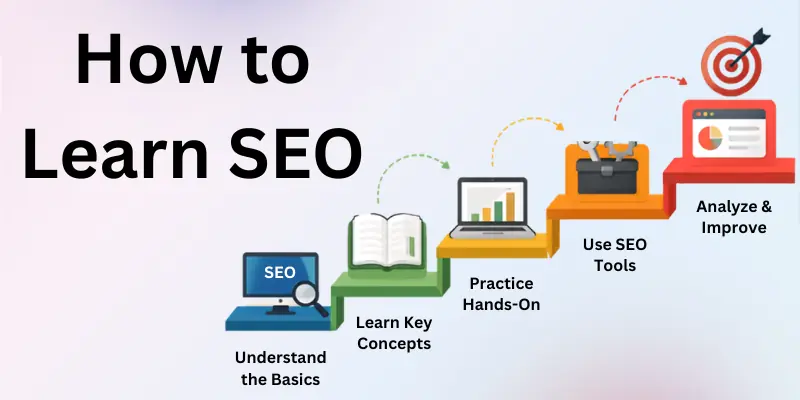
A clear path makes the process much easier to follow. Work through these steps in order, and you will build a solid foundation without feeling lost.
Step 1: Understand How Search Engines Work
Before writing a single word of content, learn the basics of how search engines find, crawl, and rank websites. This foundation makes every other step easier to understand.
- Learn how crawling and indexing work before anything else
- Understand what ranking factors search engines actually consider
- Explore how search results differ for informational and commercial searches
- Read a beginner’s guide from a trusted search engine to build accurate basics
Step 2: Learn Keyword Research Basics
Keywords are the words and phrases people type into search engines. Learn how to find them, understand search intent behind them, and figure out which ones are worth targeting.
- Start with free keyword tools before paying for premium ones
- Learn to spot search intent behind every keyword you find
- Compare keyword difficulty against your website’s current authority
- Group related keywords together instead of targeting them one by one
Step 3: Study On-Page SEO
On-page SEO covers everything you control directly on a webpage, such as titles, headings, content quality, and internal links. This is one of the easiest areas for beginners to start practicing.
- Write clear titles and meta descriptions for every page
- Structure content with proper headings instead of random formatting
- Add internal links between related pages on your site
- Keep content focused on what the reader actually searched for
Step 4: Learn Technical SEO Basics
Technical SEO focuses on how well a website works behind the scenes. Learn about site speed, mobile-friendliness, and how search engines crawl your pages.
- Check your site’s loading speed and fix obvious slowdowns
- Make sure your website displays properly on mobile devices
- Learn what a sitemap is and why search engines need one
- Fix broken links and pages that return errors
Step 5: Understand Off-Page SEO and Backlinks
Off-page SEO is about building your website’s reputation outside of your own pages, mainly through backlinks from other trusted websites.
- Learn the difference between quality backlinks and spammy ones
- Explore guest posting as a beginner-friendly link building method
- Understand how social shares can indirectly support your visibility
- Avoid shortcuts that promise fast links, since they often backfire
Step 6: Get Familiar With SEO Tools
Free and paid tools help you research keywords, check rankings, and audit websites. Start with free tools before investing in paid ones.
- Set up Google Search Console on your practice website
- Use free keyword and audit tools before trying paid platforms
- Learn to read basic reports instead of just collecting data
- Bookmark two or three tools and get comfortable with them first
Step 7: Practice on Real or Test Websites
Reading about SEO only gets you so far. Apply what you learn on an actual website, even if it is just a personal blog.
- Start a free blog if you do not have a website already
- Apply one new concept at a time instead of everything at once
- Track what changes you made and when you made them
- Give changes a few weeks before judging the results
Step 8: Track and Analyze Results
Learn to read basic analytics data, such as traffic, rankings, and click-through rates, so you can see what is working.
- Check your organic traffic trends on a regular basis
- Watch keyword rankings instead of only overall traffic numbers
- Compare click-through rates across your top pages
- Use the data to guide your next round of changes
Step 9: Stay Updated With Algorithm Changes
Search engines update their algorithms regularly. Follow trusted SEO news sources so your knowledge does not become outdated.
- Follow official updates straight from search engines when possible
- Subscribe to a couple of trusted SEO news sources
- Notice ranking changes after major algorithm updates
- Avoid reacting to every rumor without checking it first
Step 10: Learn From Case Studies
Studying how other websites improved their rankings can teach you strategies that actually work in practice.
- Look for case studies within your own industry when possible
- Note the specific changes that led to noticeable results
- Pay attention to the timeline, since SEO results take time
- Try applying one strategy from a case study to your own site
Step 11: Ask for Feedback
Share your work with experienced SEOs, mentors, or online communities. Feedback helps you spot mistakes you might miss on your own.
- Share specific pages instead of asking for general advice
- Join an SEO community where beginners are welcomed
- Be open to criticism instead of only seeking praise
- Apply the feedback you receive instead of just collecting it
Step 12: Keep Practicing Consistently
SEO rewards consistency. Regular practice, even in small amounts, builds skills faster than occasional bursts of effort.
- Set aside a fixed time each week for SEO practice
- Revisit older pages instead of only creating new ones
- Track your progress so consistency feels rewarding
- Treat setbacks as part of the process, not a reason to stop
You now have a complete roadmap for learning SEO on your own. The next question is where you can actually go to build each of these skills further.
Best Ways to Learn SEO
The internet offers plenty of options for building your SEO knowledge from home. Some resources focus on theory, while others give you hands-on practice. Mixing a few different methods usually works best.
- Online Courses: Follow structured lessons that explain SEO concepts in a clear order.
- YouTube Tutorials: Watch free walkthroughs and real examples from experienced SEOs.
- SEO Blogs: Read articles that break down strategies, updates, and case studies.
- Search Engine Newsletters: Subscribe to stay informed about algorithm changes and trends.
- Webinars: Join live sessions where experts answer common beginner questions.
- SEO Communities and Forums: Connect with other learners and discuss real challenges.
- Podcasts: Listen to SEO conversations during your commute or daily tasks.
- Case Studies: Study real websites that improved their rankings and traffic.
- Practice Tools: Use free versions of SEO tools to test what you are learning.
- Personal Website Testing: Apply changes to your own site and track the results over time.
If you are aiming to learn SEO without any budget, these free resources are more than enough to build a strong starting point.
Knowing where to learn is only half the equation. The other half is learning smarter, not just longer.
SEO Learning Tips
Many beginners spend hours learning but still feel like they are not making progress. Often, the issue is not effort, it is approach. A few simple habits can help you learn faster and stay motivated along the way.
- Focus on One Area at a Time: Master keyword research before moving to technical SEO, for example.
- Keep a Learning Journal: Write down lessons and observations so you can review them later.
- Study Real Websites: Look at how top-ranking pages are structured and written.
- Set Weekly Goals: Clear goals keep your learning organized and give it direction.
- Compare Different Strategies: Notice why some approaches work better than others.
- Review Your Past Work: Comparing old and new work helps you see how far you have come.
- Follow Industry Updates: SEO changes often, so staying current keeps your skills useful.
- Join Discussions: Talking with other learners exposes you to fresh perspectives.
- Break Big Tasks Into Smaller Ones: Smaller tasks feel manageable and prevent burnout.
- Stay Consistent: A regular routine turns learning into a lasting habit.
No single tip will turn you into an expert overnight, but steady effort adds up faster than most people expect.
Once you have the learning process down, it helps to step back and see the bigger picture of why this skill matters so much in the first place.
SEO Role in Marketing
SEO, or search engine optimization, plays a central role in how businesses get found online. Without it, even the best products or services can stay invisible to the people searching for them.
Marketing today relies heavily on visibility, and search engines are often where that journey begins. When you learn search engine optimization, you are learning how to help websites rank higher, attract the right visitors, and turn that traffic into real results.
SEO works alongside content marketing, social media, and paid ads, but it is often the most cost-effective way to bring in steady traffic over time. Businesses that understand this tend to invest in SEO early, and that is exactly why the skill is in such high demand.
With that bigger picture in mind, it is time to bring everything together.
Conclusion
So, what is stopping you now? You just walked through a complete SEO learning roadmap, from understanding why SEO matters in marketing to practicing real skills step by step. You know what to prepare before you start, how to work through the process in order, and where to keep building your knowledge over time. The only thing missing is your first move.
If you have been wondering how to learn SEO without feeling overwhelmed, here is the honest answer: start small, stay consistent, and keep practicing on real websites. Every page you optimize and every keyword you research will teach you something you could not have learned from reading alone.
Progress may feel slow some days, but the beginners who stick with it are the ones who end up surprising themselves a few months down the line. Will you be one of them? Got a few questions still bubbling up? Let’s see:
FAQs
Let us clear up the most common ones about learning SEO, one by one.
Start by learning how search engines work and what SEO actually means. Move on to basic keyword research and on-page SEO before touching technical topics.
Practice on a free blog or test website as you go. This slow, steady approach prevents overwhelm and builds real understanding.
Focus on writing for your reader first, then naturally include relevant keywords. Use clear headings, short paragraphs, and simple language throughout.
Add internal links to other helpful pages on your site. Well-structured, useful content tends to perform better in search results over time.
Start with the basics, such as a clean site structure, fast loading speed, and mobile-friendly design. Set up free tools like Google Search Console to track performance.
Add proper titles and meta descriptions to each page. These foundational steps make future SEO work much easier.
Begin with local keyword research, so your business shows up for nearby searches. Optimize your Google Business Profile alongside your website.
Create helpful content that answers common customer questions. Consistency matters more than doing everything perfectly right away.
Research the search intent behind your target keyword before you start writing. Answer the reader’s question clearly and thoroughly.
Use headings and short sentences to keep the content easy to read. Avoid stuffing keywords unnaturally into the text.
Use free resources like blogs, YouTube tutorials, and official documentation from search engines. Practice on a personal website or a free test blog.
Join SEO communities to ask questions and learn from others. Consistent self-study can take you just as far as a paid course.
Rely on free tools such as Google Search Console and Google Analytics for hands-on practice. Follow trusted SEO blogs and YouTube channels for up-to-date strategies.
Read case studies to see real results in action. Free resources are often enough to build strong foundational skills.
Focus on one core area at a time instead of trying to absorb everything at once. Practice immediately after learning a new concept instead of only reading about it.
Set small, weekly goals to stay on track. Quick progress comes from consistent, focused effort rather than shortcuts.




- Be Respectful
- Stay Relevant
- Stay Positive
- True Feedback
- Encourage Discussion
- Avoid Spamming
- No Fake News
- Don't Copy-Paste
- No Personal Attacks
- Be Respectful
- Stay Relevant
- Stay Positive
- True Feedback
- Encourage Discussion
- Avoid Spamming
- No Fake News
- Don't Copy-Paste
- No Personal Attacks
