SEO Skills: Top 15 Skills You Need to Succeed
Published: 12 Aug 2026
Have you ever spent hours building a website, only to watch it sit quietly on page five of Google while no one ever finds it? That feeling is frustrating, and it happens to almost every beginner at some point. It is not because the website lacks value. It is because the person behind it never learned the right seo skills to make search engines and readers notice it.
Once you understand these skills, everything starts to feel different. You stop guessing and start making decisions with confidence. You know why a page ranks, why another one does not, and what to fix next. This guide walks you through the skills needed for seo, one step at a time, so you can turn that quiet website into one people actually find.
SEO Skills List
Ranking on search engines is rarely about luck. It comes down to a mix of technical understanding, creativity, and patience working together. Anyone building a career in this field needs a wide range of abilities, not just one strong point.
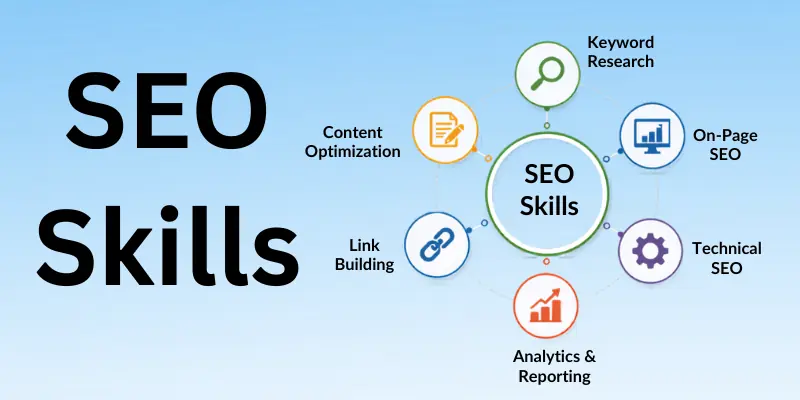
Here is the top 15 seo skills list, narrowed down here to the skills that matter most for real results.
- Keyword Research
- On-Page SEO
- Technical SEO
- Content Writing
- Link Building
- Competitor Analysis
- Analytics and Data Interpretation
- Local SEO Knowledge
- Mobile SEO Optimization
- Site Speed Optimization
- User Experience
- Copywriting for SEO
- Search Engine Algorithm Awareness
- Time Management
- Continuous Learning and Adaptability
These top seo skills help you plan smarter, write better, and grow your website faster. Let us explore each one in detail.
1. Keyword Research
Keyword research forms the base of all search engine optimization skills. It helps you understand what people actually type into search engines.
- Find keywords that match what your audience searches for.
- Check search volume before choosing a keyword.
- Study keyword difficulty to pick realistic targets.
- Group related keywords under one topic.
- Update your keyword list as trends change.
Once you know which keywords to target, the next step is placing them where they matter most.
2. On-Page SEO
On-page SEO is one of the most important seo skills, since it directly shapes how a page performs in search results.
- Place the main keyword in the title and first paragraph.
- Write clear meta descriptions that encourage clicks.
- Use headings to organize the page for readers.
- Add internal links to related pages on your site.
- Optimize images with proper alt text.
On-page work makes a single page shine, but the website behind it needs to function well too.
3. Technical SEO
Technical SEO covers the backend part of a website. It falls under the skills required for seo that many beginners overlook.
- Check that the website loads properly on all devices.
- Fix broken links before they hurt rankings.
- Create and submit an XML sitemap.
- Use structured data to help search engines read content.
- Monitor crawl errors through search console tools.
A technically sound website still needs strong content to give readers a reason to stay.
4. Content Writing
Content writing connects SEO with real readers. It remains one of the basic seo skills everyone should master first.
- Write in simple language that readers understand quickly.
- Focus on solving the reader’s problem, not just ranking.
- Keep paragraphs short for better readability.
- Add examples that support the main idea.
- Update old content when facts change.
Once your content reads well, the next question becomes how it earns trust beyond its own pages.
5. Link Building
Link building strengthens a website’s authority. It remains part of every strong seo skill set.
- Reach out to relevant websites for guest posting.
- Create content that naturally earns backlinks.
- Avoid low-quality or spammy link sources.
- Monitor existing backlinks for broken or lost links.
- Focus on quality links rather than large quantities.
Building links matters, but it helps to first understand what already works for others in your niche.
6. Competitor Analysis
Competitor analysis shows you what already works in your niche. It builds sharper skills in seo strategy and planning.
- Study top-ranking pages for your target keywords.
- Note the content gaps competitors have missed.
- Compare page speed and structure with competitors.
- Track competitor backlinks for new opportunities.
- Learn from their strengths without copying their content.
Watching competitors is useful, but your own data tells the most honest story.
7. Analytics and Data Interpretation
Data tells you what is working and what needs improvement. This is one of the seo required skills for long-term growth.
- Track organic traffic through analytics tools.
- Monitor keyword rankings on a regular basis.
- Check bounce rate to understand reader engagement.
- Review click-through rate for underperforming pages.
- Adjust strategy based on real performance data.
Numbers tell one part of the story. Location often tells the rest, especially for smaller businesses.
8. Local SEO Knowledge
Local SEO helps businesses appear in nearby search results. It matters most for shops, clinics, and service-based websites.
- Claim and optimize a Google Business Profile.
- Use location-based keywords where relevant.
- Keep business information consistent across directories.
- Encourage genuine customer reviews.
- Add local landmarks or areas naturally in content.
Local visibility matters, but so does how a page performs on the device most people actually search from.
9. Mobile SEO Optimization
Most searches now happen on mobile devices. A website must perform well on smaller screens.
- Use a responsive design that adjusts to any screen size.
- Keep buttons and links easy to tap.
- Compress images to load faster on mobile data.
- Avoid pop-ups that block mobile content.
- Test pages regularly on different devices.
A mobile-friendly site still needs to load fast, or visitors will leave before they see any of it.
10. Site Speed Optimization
A slow website loses visitors before they even read the content. Site speed directly affects rankings and user trust.
- Compress large images without losing quality.
- Reduce unnecessary scripts and plugins.
- Use caching to speed up repeat visits.
- Choose reliable and fast hosting.
- Test loading speed regularly and fix delays.
A fast site keeps visitors around, but what they experience once they arrive matters just as much.
11. User Experience
Search engines pay close attention to how users interact with a page. A smooth experience keeps readers on the site longer.
- Design clear navigation menus.
- Keep the layout clean and uncluttered.
- Make important information easy to find.
- Avoid intrusive ads that disrupt reading.
- Test the site from a visitor’s point of view.
A good on-site experience matters, and so does convincing readers to act once they arrive.
12. Copywriting for SEO
Copywriting blends persuasion with search optimization. It helps content rank while still convincing readers to take action.
- Write headlines that grab attention instantly.
- Focus on benefits, not just features.
- Use a clear call to action at the end of pages.
- Keep the tone consistent with the brand.
- Balance keyword use with natural, persuasive writing.
Strong writing keeps readers engaged, but staying aware of bigger industry shifts matters just as much.
13. Search Engine Algorithm Awareness
Search engines update their algorithms often. Strong seo specialist skills include staying alert to these changes.
- Follow official updates from major search engines.
- Adjust strategy when rankings shift unexpectedly.
- Avoid outdated tactics that no longer work.
- Test small changes before applying them site-wide.
- Learn from case studies shared by SEO experts.
Staying alert to change is important, and managing your hours well makes that possible.
14. Time Management
SEO involves many ongoing tasks. Good time management keeps projects moving without missed deadlines.
- Plan weekly tasks for research, writing, and audits.
- Prioritize high-impact tasks first.
- Set realistic timelines for content publishing.
- Avoid spending too much time on minor details.
- Track progress against monthly SEO goals.
Managing your time well sets the stage for the one habit that keeps every other skill relevant.
15. Continuous Learning and Adaptability
SEO changes constantly, so learning never really stops. This mindset defines the best seo skills professionals in the long run.
- Read updates from trusted SEO resources.
- Test new strategies on smaller projects first.
- Learn from both successes and failed attempts.
- Follow experienced professionals in the field.
- Stay open to changing old habits that no longer work.
But knowing these fifteen skills is still not the whole picture. There are three more areas that quietly decide whether all that effort actually turns into results.
Why Blogging Skills are Important
Many beginners overlook blogging, yet it is often the fastest way to attract organic traffic. A blog gives a website a reason to keep growing instead of staying static.
It gives search engines fresh content to crawl and rank on a regular basis. Without this skill, even a well-designed website can feel empty and forgettable.
- Publish blogs consistently to build authority.
- Cover topics your audience actually searches for.
- Answer common questions within each blog post.
- Link blog posts to related pages on your site.
- Refresh older blogs with updated information.
- Add a clear call to action at the end of each post.
Publishing regularly is only half the job. The right tools make that consistency far easier to maintain.
Important Tools for Blogging
Blogging without the right blogging tools often feels slower and more stressful than it needs to be. The right set of tools takes care of research, formatting, and tracking, so a writer can focus on the actual writing instead of guessing what to publish next.
- Use keyword tools to plan blog topics in advance.
- Use grammar checkers to keep writing clean.
- Use readability tools to simplify complex sentences.
- Use scheduling tools to plan a consistent posting calendar.
- Use analytics tools to track which blogs perform best.
- Use editing tools to speed up the review process.
Tools handle the process, but something less visible often decides whether a person actually succeeds in this field.
Soft Skills Needed for SEO Success
It is easy to assume SEO is only about tools and technical checklists, but the people who succeed long term usually have something more. They stay calm when rankings drop, explain their strategy in a way clients actually understand, and keep working even when results take longer than expected.
- Communicate strategy clearly with clients or teams.
- Stay patient, since SEO results take time.
- Solve problems creatively when rankings drop.
- Collaborate well with writers and developers.
- Manage feedback without losing focus on goals.
- Stay motivated during slow or uncertain months.
Knowing all these skills is a strong start, but it also helps to know what commonly gets in the way.
SEO Mistakes to Avoid
Many beginners start SEO with good intentions, but small mistakes can slow down real progress. Avoiding these errors makes every skill above work better.
- Ignoring Keyword Research: Guessing keywords instead of researching them wastes effort.
- Keyword Stuffing: Repeating a keyword too often makes content unnatural.
- Weak Content Quality: Thin or copied content fails to satisfy readers or search engines.
- Slow Website Speed: A slow-loading site pushes visitors away quickly.
- Missing Mobile Optimization: Ignoring mobile users hurts both rankings and traffic.
- Broken Links: Unfixed broken links damage user trust and crawl efficiency.
- No Internal Linking: Pages that stand alone miss valuable ranking opportunities.
- Skipping Analytics: Working without data leads to guesswork instead of strategy.
- Copying Competitors: Duplicating competitor content instead of improving on it backfires.
- Inconsistent Publishing: Random posting schedules slow down growth and authority.
- Overlooking Technical Issues: Ignoring crawl errors and broken sitemaps limits visibility.
- Expecting Instant Results: SEO takes time, and rushing the process often leads to shortcuts that hurt rankings later.
These mistakes are common, but real progress comes from actively working to avoid them while practicing the skills above.
Conclusion
By now, you have gone through the technical side of SEO, the writing side, the blogging habits, the tools, and even the softer skills that rarely get mentioned but quietly shape every result. That is a lot to take in, and no one expects you to master it all in one sitting.
What matters more is the direction you take from here. Pick one skill from this guide, whether it is keyword research, blogging, or simply managing your time better, and give it real attention this week. Watch how one small improvement in your seo skills slowly changes the way your website performs. That first shift is often the moment that turns a beginner into someone who actually understands SEO. I hope this guide gave you exactly that starting point.
Still curious about a few more things? Lets see FAQs:
FAQs
Here are honest answers to the questions people ask most about seo skills.
SEO skills are the abilities needed to improve a website’s visibility on search engines. They include keyword research, content writing, technical optimization, and data analysis.
These skills work together to help a website rank higher. Beginners usually start with content and keyword basics first.
You can improve your seo skills by practicing regularly on real projects. Start with small websites or blogs to test strategies safely.
Follow trusted SEO resources to stay updated. Review your results often and adjust your approach based on what works.
Basic SEO skills are fairly easy to pick up with consistent practice. Concepts like keyword research and on-page optimization are simple to start with.
Technical SEO takes a bit more time and patience to master. Most learners build confidence within a few months of regular practice.
Technical seo skills focus on website structure, speed, and search engine crawling. Creative seo skills involve content writing, storytelling, and audience engagement.
Both types work together to support strong rankings. A well-rounded professional develops skills in both areas.
Keyword research tools help identify the right search terms to target. Analytics tools track traffic and user behavior on your site.
Site audit tools highlight technical issues that need fixing. Using these tools regularly speeds up the learning process.
Basic seo skills can develop within a few weeks of steady practice. Stronger, more advanced skills usually take several months to build confidently.
The timeline depends on how consistently a person practices and applies these skills. Real websites and live projects speed up the learning curve.
Yes, soft skills play a real role in SEO success. Communication helps explain strategy clearly to clients or team members. Patience matters, since SEO results take time to show. Problem-solving skills help handle sudden ranking drops calmly.
Keyword research is usually the best skill to learn first. It shapes almost every other SEO decision that follows. Once keyword research feels comfortable, content writing and on-page SEO come next naturally. These basics build a strong foundation for advanced skills later.




- Be Respectful
- Stay Relevant
- Stay Positive
- True Feedback
- Encourage Discussion
- Avoid Spamming
- No Fake News
- Don't Copy-Paste
- No Personal Attacks
- Be Respectful
- Stay Relevant
- Stay Positive
- True Feedback
- Encourage Discussion
- Avoid Spamming
- No Fake News
- Don't Copy-Paste
- No Personal Attacks
