SEO Course for Beginners: A Complete Learning Guide
Published: 15 Aug 2026
Confused about where to start with SEO and which program actually teaches real skills? Most beginners face the same struggle, too many options, too many promises, and no clear idea of what a good program should include. A solid SEO course for beginners clears up that confusion by laying out a proper path, so you learn in the right order instead of jumping between random YouTube videos.
This guide breaks down everything a strong search engine optimization course should cover, from the basic requirements to the full syllabus, so you know exactly what to expect before you sign up for an online SEO course.
What is an SEO Course for Beginners?
An SEO course teaches you how search engines rank content and how to shape a website so it shows up in front of the right audience. Most SEO classes online start with the basics of how Google works, then move into practical skills you apply on a real website as you go.
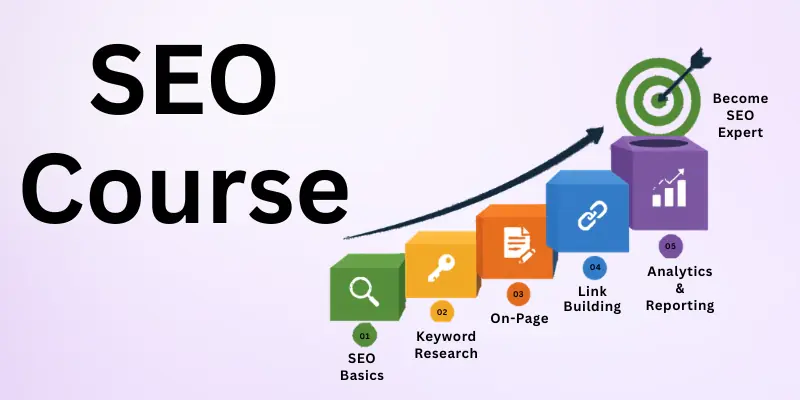
Once you decide to learn SEO course material properly, you build a foundation that supports every other digital marketing skill you pick up later, since almost every online business depends on search visibility in some way.
Before you get into the actual lessons, it helps to know what you need ready first.
SEO Course Requirements
A few basics make the learning process smoother once you begin an SEO program.
- A working website or blog: Practicing on a live site teaches you far more than theory alone.
- Basic computer skills: Comfort with browsers, files, and simple settings changes.
- Stable internet access: Needed for lessons, tools, and research.
- Willingness to test and track results: SEO rewards patience and experimentation, not shortcuts.
- A few hours weekly: Consistency beats cramming everything into one weekend.
- Curiosity about how search engines work: Helps you understand the reasoning behind each tactic instead of memorizing steps.
Once these basics are ready, you can move into what the course itself actually teaches.
Best SEO Course Details
Below are the core areas most structured SEO programs are built around. Covering them in order keeps your learning organized instead of scattered.
SEO Fundamentals
This section builds your understanding of how search engines crawl, index, and rank pages. You learn the reasoning behind every tactic taught later in the program.
- How search engines work
- Ranking factors overview
- Understanding search intent
- White hat versus black hat practices
Keyword Research
Here you learn how to find the terms your audience actually searches for. Good keyword research shapes almost every decision you make afterwards.
- Finding relevant keywords
- Judging search volume and competition
- Grouping keywords by intent
- Choosing primary and secondary keywords
On-Page SEO
This module covers everything you control directly on a page. Small adjustments here often bring noticeable ranking improvements.
- Writing SEO-friendly titles
- Structuring headings properly
- Optimizing images and alt text
- Internal linking basics
Technical SEO
You get into the backend side of SEO that affects how search engines read your site. This part of the seo course content feels technical at first, but it becomes easier with practice.
- Site speed basics
- Mobile friendliness
- XML sitemaps and robots.txt
- Fixing broken links and crawl errors
Off-Page SEO and Link Building
This section focuses on building authority outside your own website. Backlinks remain one of the strongest ranking signals available.
- Backlink basics
- Guest posting strategies
- Building brand mentions
- Avoiding spammy link practices
Content Writing for SEO
Good rankings depend on content that actually satisfies the reader. This module blends writing skills with SEO structure.
- Writing for search intent
- Formatting for readability
- Adding value beyond competitor pages
- Updating old content for freshness
Analytics and Reporting
You learn to track whether your efforts are actually working. Numbers tell you what to keep doing and what to fix.
- Reading traffic reports
- Tracking keyword rankings
- Understanding bounce rate and engagement
- Setting up basic dashboards
Freelancing and Career Building
The final stretch turns your skills into paid opportunities. Many programs cover the full set of seo course topics needed to work with real clients confidently.
- Building an SEO portfolio
- Pitching to small businesses
- Pricing your services
- Long term career growth
That covers the full breakdown of a complete SEO course. Next, it helps to know the difference between free and paid learning paths.
Free vs Paid SEO Courses
Choosing between free and paid options depends on your goals, budget, and how deep you want to go.
A free search engine optimization course works well if you want to test the waters before committing money. Many platforms offer short lessons covering the basics, which is enough to decide whether SEO interests you long-term.
- A free online SEO course usually skips advanced topics like technical audits or detailed link-building strategies, since these need more structured guidance.
- A paid SEO course typically includes deeper modules, live support, assignments, and sometimes a certificate at the end. If you plan to freelance or work in SEO professionally, investing in the best SEO course you can find often pays off faster than piecing together free content from scattered sources.
Once you know which path fits your budget, the next thing worth understanding is how AI now fits into modern SEO training.
AI SEO Course
AI has changed how SEO gets taught, and most updated programs now weave it into the lessons instead of treating it as a bonus topic.
An AI-focused module usually covers the following areas among the wider seo course subjects you study.
- AI writing assistants: Using tools to speed up outlines, drafts, and content ideas.
- AI-powered keyword tools: Platforms that analyze search intent and suggest ranking opportunities faster.
- Content optimization with AI: Checking readability, structure, and relevance before publishing.
- AI for technical audits: Spotting crawl issues and site errors quicker than manual checks.
- Balancing AI with human judgment: Using AI as a starting point while adding original research, fact-checking, and expertise.
A good course always stresses that AI supports the strategy, it does not replace the strategist. The strongest rankings still come from learners who use AI to save time on research, then apply their own judgment before anything goes live.
With that foundation in place, the next step is checking how a complete syllabus ties every module together.
SEO Course Syllabus and Modules
If you are comparing programs, here is a quick view of what a typical seo course syllabus looks like from start to finish.
- Weeks 1-2 — Fundamentals and Keyword Research: Building the foundation and learning how search engines think.
- Weeks 3-4 — On-Page and Content Optimization: Practicing the technical and writing side together.
- Weeks 5-6 — Technical SEO and Off-Page Strategies: Working on backend fixes and building authority.
- Weeks 7-8 — Analytics and Reporting: Learning to measure results and adjust strategy.
- Final Stage — Career and Freelancing Prep: Preparing a portfolio and client-ready profile.
This SEO syllabus structure is not fixed everywhere. Some programs compress the entire SEO curriculum into a few intensive weeks, while others spread the SEO course outline across several months for deeper practice.
Either way, a proper SEO training syllabus should always move from fundamentals toward practical, income-ready skills.
With the syllabus clear, the next step is knowing how to actually pick between all the programs available.
How to Choose the Best SEO Course
With so many options online, picking the right program can feel harder than learning SEO itself. A few practical checks make the decision easier.
- Check instructor experience: A course taught by an active SEO practitioner usually reflects current, working strategies.
- Compare among top SEO courses: Look at what similar programs offer before settling on one.
- Read genuine reviews: Real student feedback tells you more than any sales page.
- Look for an SEO masterclass angle: Programs that go beyond basics into advanced strategy tend to hold more long-term value.
- Confirm certification value: An SEO certification course helps when you want proof of training for clients or employers.
- Check for a recognized search engine optimization certification: Some employers specifically look for this when hiring.
- Match it to your goal: A course built for hobby bloggers looks different from one built for future SEO freelancers.
Taking a few extra minutes here saves you from spending money on a program that does not match your actual needs. Once you have made your pick, here is what that investment can lead to.
Career Opportunities After an SEO Course
Finishing a strong SEO program opens up several paid paths, not just personal projects.
- SEO Specialist: Manage the full SEO strategy for a business or agency.
- Content Strategist: Plan content around search intent and keyword data.
- Freelance SEO Consultant: Work with multiple clients across industries.
- Digital Marketing Executive: Combine SEO with broader marketing skills.
- Link Building Specialist: Focus specifically on off-page authority building.
- SEO Analyst: Track performance and report on ranking trends.
Many learners start applying for these roles right after completing an SEO course online, especially once they have a portfolio to show.
Others take a more advanced search engine optimization online course later to specialize further or work through additional search engine optimization lessons focused on a specific industry.
Conclusion
This guide has walked through what an SEO course for beginners actually covers, from the basic requirements and full module breakdown to the syllabus timeline, free versus paid options, how to choose the right program, and the career paths waiting afterwards.
Like any skill, staying consistent and picking a program that fits your goals matter more than finding a perfect course on the first try. Whether you start with a free lesson to test the waters or commit straight to a paid program, what matters most is choosing a path that fits where you want to go and sticking with it. Still weighing a few details before you sign up?
FAQs
Here are the answers to the questions beginners ask most often.
Yes, a structured course saves time compared to learning everything through scattered blog posts and videos. It gives you a clear order to follow, so you understand the reasoning behind each tactic instead of guessing.
Beginners who follow a proper course usually see faster, more consistent results. It also builds confidence before working on a real website or client project.
Most beginner programs run between six and ten weeks, depending on how deep the curriculum goes. Some intensive options compress this into a few weeks of daily lessons.
Mastery, however, takes longer since SEO improves with hands-on practice over months. Treat the course as a starting point, not the finish line.
Yes, many platforms offer free introductory lessons covering the basics of keywords, on-page optimization, and search intent. This works well if you want to test your interest before spending money.
Once you need deeper technical training or certification, a paid option usually fills those gaps better. Combining both approaches often works best for beginners.
No, basic SEO does not require coding knowledge to get started. Some technical modules touch on simple HTML or site structure concepts, but courses explain these in beginner-friendly terms.
As you advance into technical SEO, a little comfort with website backends helps, though it is never mandatory. Most successful SEO professionals learn this gradually on the job.
A course focuses on teaching the actual skills through lessons and practice assignments. A certification is a credential you earn after completing assessments, often used to prove your training to employers or clients.
Many programs combine both, teaching the material and issuing a certificate at the end. Certification carries more weight when it comes from a recognized provider.
A solid program should include keyword research, on-page optimization, technical SEO, link building, content writing, and analytics at minimum. Skipping any of these leaves gaps in your practical skill set.
Look for a syllabus that moves from fundamentals toward real, applicable strategies. Course quality often shows in how updated these modules stay with current search trends.
Yes, SEO is one of the more in-demand freelance skills since almost every business with a website needs visibility. A good course usually includes a section on building a portfolio, pitching clients, and pricing services.
Many freelancers start with small projects while still completing their training. Building real case studies early makes client conversations much easier later.
Check the instructor’s real-world experience and look for genuine student reviews rather than testimonials on the sales page. Compare the syllabus against what this guide outlined to spot any missing modules.
A free preview lesson, when available, tells you a lot about teaching quality. Pricing alone never guarantees value, so focus on curriculum depth and support instead.






- Be Respectful
- Stay Relevant
- Stay Positive
- True Feedback
- Encourage Discussion
- Avoid Spamming
- No Fake News
- Don't Copy-Paste
- No Personal Attacks
- Be Respectful
- Stay Relevant
- Stay Positive
- True Feedback
- Encourage Discussion
- Avoid Spamming
- No Fake News
- Don't Copy-Paste
- No Personal Attacks
