How to Start Blogging: Step-by-Step Guide for Freshers
Published: 20 Jul 2026
So you have decided you want to start a blog, but you are not sure how to start blogging. Should you buy a domain first? Do you need to know coding? What if you run out of things to write about after a few posts?
These doubts are completely normal, and almost every blogger had the same questions when they were starting out. This guide walks you through everything step by step, so instead of feeling stuck, you have a clear guide to starting a blog you can actually follow.
Basic Requirements to Start Blogging
Before jumping in, it helps to have a few basics sorted. None of these requires a big budget or technical background, just the right mindset and a few simple tools.
- A laptop or computer – enough to write, research, and manage your blog.
- A stable internet connection – you will be online constantly for research and publishing.
- A blogging platform – something like WordPress or Blogger to actually host your content.
- A topic you can stick with – pick something you will not get bored of in a month.
- Basic writing ability – you don’t need to be a great writer, just a clear one.
- A notebook or notes app – for jotting down post ideas as they come to you.
- Patience – blogging rarely gives quick results, and that’s completely normal.
- A willingness to learn – you will pick up SEO, design, and writing skills along the way.
Once these basics are in place, the real question becomes how to actually turn a blank blog into something people want to read.
How to Learn Blogging Step by Step
This is where most people get stuck, not because blogging is hard, but because it’s easy to overthink where to start.
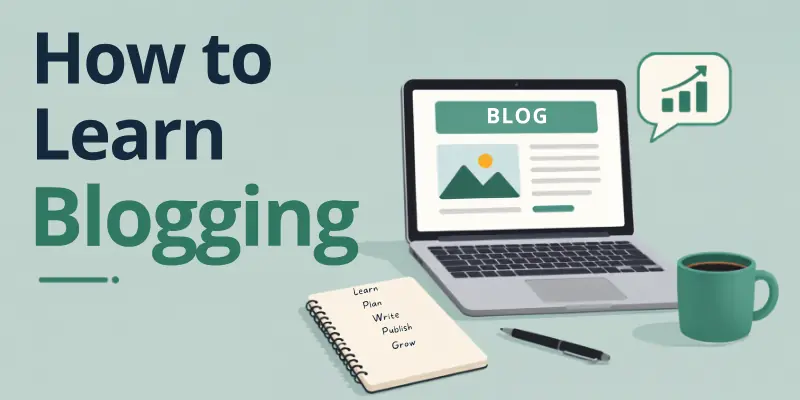
Here’s a simple order to follow if you want to begin blogging without wasting time on the wrong things first.
Step 1: Understand What Blogging Actually Involves
Before writing a single post, get clear on what a blog really is: a place where you regularly publish content on a topic you care about. Look at a few blogs in different niches and notice how they are structured, how often they post, and what tone they use.
- Read at least 3 to 5 blogs in different niches to compare styles.
- Notice how often successful blogs publish new content.
- Pay attention to the tone each blog uses with its readers.
Step 2: Choose Your Niche
Pick a topic broad enough to write about consistently, but focused enough to attract the right readers. Think about what you already know, what you enjoy, and what people are actually searching for.
- List 3 to 5 topics you already know something about.
- Check if people are actively searching for those topics online.
- Narrow it down to one niche you will not get bored of quickly.
Step 3: Pick a Blogging Platform
WordPress and Blogger are both beginner-friendly and do not require coding knowledge. Choose one, set up your account, and get familiar with how posts are created and published.
- Compare WordPress and Blogger to see which feels easier to use.
- Set up your account and explore the dashboard before writing.
- Try publishing a test post to understand the process.
Step 4: Plan Your First Few Posts
Don’t just write randomly list out five to ten post ideas before you begin. This gives you direction and stops you from staring at a blank page every time you sit down to write.
- Write down at least 5 topic ideas within your niche.
- Pick the easiest one to start with as your very first post.
- Save others as a waiting list for future weeks.
Step 5: Learn Basic SEO
Search engine optimization is what helps people actually find your blog through Google. Learn the basics: keywords, headings, and meta descriptions so your content has a chance to be discovered.
- Learn how to find simple keywords related to your niche.
- Practice using headings to organize your posts clearly.
- Write short, clear meta descriptions for every post.
Step 6: Write Your First Post
This is the step most beginners delay the longest. Your first post will not be perfect, and that’s fine; the goal is to get something published and build a base from there.
- Set a deadline for yourself to publish within the week.
- Write in simple, everyday language instead of overthinking it.
- Focus on finishing the post rather than making it flawless.
Step 7: Edit Before You Publish
Read through your draft and cut anything unnecessary. Look for long sentences, repeated ideas, and unclear phrases, and simplify wherever possible.
- Read your post out loud to catch awkward sentences.
- Remove repeated points or unnecessary filler words.
- Break long paragraphs into shorter, easier chunks.
Step 8: Build a Simple Posting Schedule
Decide how often you will publish; once a week is a realistic starting point for most beginners. Consistency matters far more than posting frequently for a week and then disappearing.
- Choose a fixed day each week to publish new content.
- Start with one post a week rather than overcommitting.
- Stick to the schedule even when a post feels rushed.
Step 9: Promote Your Content
Share your posts on social media, in relevant communities, or with people who might find them useful. A great post that nobody sees will not grow your blog.
- Share each new post across your social media accounts.
- Join relevant online communities related to your niche.
- Send your post directly to people who will find it useful.
Step 10: Track What’s Working
After a few weeks, check which posts are getting more views or engagement. Use that information to guide what you write next.
- Check which posts get the most views after a few weeks.
- Notice what topics or headlines perform better than others.
- Use those insights to plan your upcoming posts.
Once you are comfortable with these steps, it helps to know exactly where you can go to keep sharpening your skills.
Best Online Ways to Learn Blogging
The internet has more than enough free resources to help you get better at blogging without spending a rupee on courses.
- YouTube tutorials – step-by-step videos on setup, writing, and SEO.
- Blogging communities – forums and groups where bloggers share advice and answer questions.
- Other blogs in your niche – studying how established bloggers write and structure posts.
- Free SEO tools – platforms that show you what people are actually searching for.
- Podcasts – listen to bloggers talk about their journey and lessons learned.
- Email newsletters from bloggers – see how experienced writers communicate directly with readers.
- Online writing courses – many free or low-cost options cover blogging basics well.
- Case studies – read about how specific blogs grew and what worked for them.
With so many resources available, the challenge usually is not finding information; it is learning how to use your time on it wisely.
Tips to Learn Blogging Faster
A few small habits can save you months of trial and error if you build them in early.
- Write consistently, even if it’s short – a rough post published beats a perfect one left unfinished.
- Study successful blogs in your niche – notice their structure, tone, and headlines.
- Focus on one skill at a time – work on writing first, then move to SEO, then design.
- Keep a running list of post ideas – so you never sit down with a blank page.
- Ask for feedback – share your posts with friends or online communities for honest opinions.
- Revisit old posts – update and improve them as you learn more.
- Set small, realistic goals – like publishing one post a week instead of aiming for daily content.
- Stay curious about your niche – the more you read around your topic, the easier writing becomes.
None of these tips will make you an expert overnight, but together, they will help you build your skills faster.
Conclusion
Now you have a clear picture of how to start blogging, from the basics you need to the exact steps to follow, the best places to keep learning, and small habits that speed things up.
If you are still hesitant, remember that every blogger you admire started exactly where you are now with zero posts and a lot of questions. The only real difference between someone who succeeds at blogging and someone who does not is that one of them actually started.
So pick your topic, choose a platform, and write your first post today. Starting a blog from scratch feels intimidating at first, but it gets easier with every post you publish.
FAQs
Here are some commonly searched questions about how to start blogging.
Pick a topic you are comfortable writing about regularly. Choose a simple platform like WordPress and set up your blog. Then write and publish your first post without overthinking it.
No, platforms like WordPress and Blogger are designed for non-technical users. You can set up a blog in under an hour. Learning how to do blogging doesn’t require any coding knowledge.
You can start completely free using platforms like Blogger. If you want your own domain and hosting, costs are usually low to begin with. Most beginners do not need to spend much in the first few months.
Publishing content once a week is a suitable and reliable pace for most beginners. Consistency matters more than frequency in the early stages. It’s better to post regularly than to post often and then stop.
Growth is usually slow in the first few months as your content gets discovered. Most bloggers start seeing real traction after six months to a year of consistent effort. Patience and regular publishing matter more than speed.
Pick something simple and specific within your niche, not too broad. An introductory or how-to post often works well as a starting point. The goal is just to get your first post published and move forward.
Yes, many bloggers eventually earn through ads, affiliate marketing, or promoting their own services. This usually takes time and a steady audience first. Focus on writing well before worrying about income.
Overthinking the setup instead of just publishing content. Waiting for the “perfect” post often leads to never posting at all. It’s better to start simple and improve as you go.
- Be Respectful
- Stay Relevant
- Stay Positive
- True Feedback
- Encourage Discussion
- Avoid Spamming
- No Fake News
- Don't Copy-Paste
- No Personal Attacks
- Be Respectful
- Stay Relevant
- Stay Positive
- True Feedback
- Encourage Discussion
- Avoid Spamming
- No Fake News
- Don't Copy-Paste
- No Personal Attacks
