Types of Blogging List for Beginners Fully Explained
Published: 21 Jul 2026
Every blog you come across online is written for a reason, even if that reason is not obvious at first glance. A travel blogger sharing photos from a trip and a company writing about its latest product update are technically both “blogging,” yet their goals could not be more different.
Knowing the different types of blogging helps you figure out where your own writing fits before you even publish your first post. Below is a simple breakdown of the most common formats, what each one is used for, and where you will usually find them.
Blogging Types
Blogging is not just one style of writing. It changes based on what the blogger wants to do and who they want to reach.
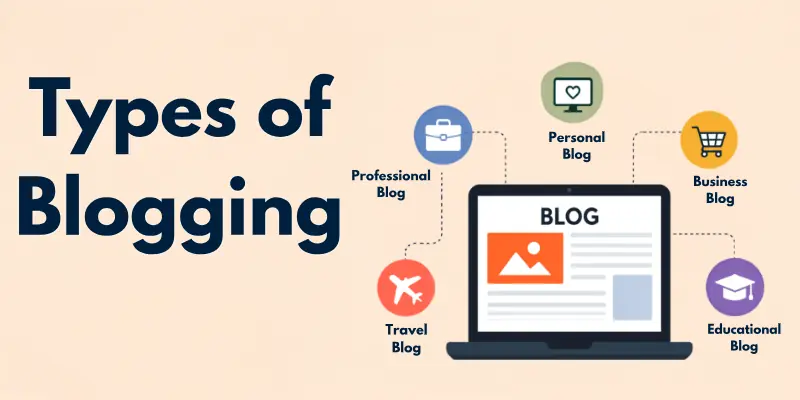
Let’s look at the main types below.
1. Personal Blogging
Personal blogging is all about your own life and thoughts. You write about your day, your feelings, or things you have learned along the way.
There are no strict rules here. You can post whenever you like and write about whatever feels real to you.
- Centers on real-life experiences and thoughts
- No fixed posting rules to follow
- Readers connect through relatability
- Common first step for new bloggers
- Can grow into a more focused topic later
Examples: A life-update journal, a self-improvement blog and a solo travel diary.
Once you have been writing personal posts for a while, many bloggers naturally narrow things down to one specific topic. That’s where the next type comes in.
2. Niche Blogging
Niche blogging means picking one topic and sticking to it. Instead of writing about everything, you focus on just one area, like fitness or money.
This helps you build a smaller but very interested group of readers. People trust you more because you focus on one thing well.
- Stays focused on a single subject
- Attracts a specific, interested audience
- Ranks more easily for related searches
- Builds credibility faster than broad topics
- Popular choice among bloggers who want to earn
Examples: A budgeting and money-saving blog, a home workout blog, a plant care blog.
While niche blogging is usually run by one person, some blogs exist purely to support a company. Let’s look at that next.
3. Business Blogging
Business blogging is when a company writes blog posts to promote what they sell. It helps them talk to customers and share updates.
This type of blog usually sounds more professional. Its main goal is to build trust and bring more visitors to the company’s website.
- Supports a brand’s marketing goals
- Helps build trust with buyers
- Brings more visitors to the company site
- Usually written in a clear, informative tone
- Works alongside social media and email marketing
Examples: A SaaS company’s blog, an online store’s blog, a consultancy’s insights page.
Not every blog is written on your own website, though. Sometimes you write for someone else’s audience instead.
4. Guest Blogging
Guest blogging means writing for someone else’s website instead of your own. You do this to reach people who do not know about you yet.
It’s a smart way to grow faster. Many guest posts also include a link back to your own blog.
- Puts your writing in front of a new audience
- Often includes a link back to your site
- Shows people you know your topic well
- Usually needs you to pitch your idea first
- A fast way to build early trust
Examples: Writing an article for an established niche site, contributing to an industry magazine.
So far, all these types rely on written words. But blogging is not limited to text alone.
5. Vlogging
Vlogging is just like blogging, but with video instead of text. You film yourself talking or showing something instead of writing it down.
The idea stays the same as regular blogging. You are still sharing something useful or interesting with your audience.
- Delivered through video instead of text
- Usually hosted on YouTube or similar apps
- Builds a stronger, more personal connection
- Needs some filming and editing skills
- Can work alongside a written blog too
Examples: A weekly vlog series, a product unboxing channel, a travel video log.
Whether you write or film, one of the most common ways bloggers earn money is by recommending things they like.
6. Affiliate Blogging
Affiliate blogging means recommending products to your readers. If someone buys through your link, you earn a small commission.
This works best when your readers trust your opinion. Honest reviews help people believe what you are suggesting.
- Centers on product suggestions and comparisons
- Income comes from referral commissions
- Usually paired with honest reviews
- Depends heavily on reader trust
- A common way niche bloggers earn money
Examples: A kitchen gadgets blog with buying guides and a skincare recommendation blog.
This naturally overlaps with another popular type, one that’s built entirely around sharing opinions.
7. Review Blogging
Review blogging is about sharing your honest opinion on products or services. You tell readers what’s good and what’s not so good.
This helps people decide before they spend their money. Staying honest is what keeps readers coming back.
- Gives detailed, honest opinions
- Helps readers compare their options
- Covers both good and bad points
- Works best when it stays neutral and fair
- Often overlaps with affiliate blogging
Examples: A film and book review site, a local restaurant review blog, a mobile app review blog.
Some bloggers skip long explanations altogether and let visuals carry the message instead.
8. Photo Blogging
Photo blogging lets pictures do most of the talking. You use only a little bit of text to explain what’s happening in the photo.
This type works great if you enjoy photography. The images become the main reason people visit your blog.
- Built around strong, high-quality photos
- Uses only a small amount of text
- Common in photography and travel spaces
- Needs decent photography skills
- Performs well on visual platforms
Examples: A photography portfolio site, a city street photography blog.
On the other end of the spectrum, some bloggers keep things extremely short and quick to publish.
9. Microblogging
Microblogging is about short and quick posts, not long articles. It’s the kind of writing you often see on social media.
You can post more often since each post takes less time. It works well if you like sharing quick thoughts.
- Posts are short and quick to read
- Published more often than long blogs
- Common on platforms like X (Twitter)
- Centers on quick thoughts or updates
- Takes less time to write than long posts
Examples: A thread-based X account and a short daily-update page.
Speed matters here too, but for a different reason, some blogs exist to keep readers updated on what’s happening right now.
10. News Blogging
News blogging covers what’s happening right now in a certain field. Speed and accuracy both matter a lot here.
Readers expect fresh updates, so you often need to publish more than once a day. Getting facts right is very important in this type.
- Focuses on timely, current topics
- Needs quick research and fast writing
- Requires careful fact-checking
- Often updated several times a day
- Common in fast-changing industries
Examples: A technology news site, an industry updates blog, a regional news page.
A calmer, more evergreen type of blog focuses on teaching rather than reporting.
11. Tutorial or How-To Blogging
Tutorial blogging teaches readers how to do something. You break the task into simple steps they can easily follow.
This type builds a lot of trust because you are actually helping people. It also does well in search results, since people often search “how to” questions.
- Breaks tasks into simple, ordered steps
- Focuses on practical, useful value
- Often includes screenshots or images
- Builds trust by genuinely helping readers
- Performs well for “how to” searches
Examples: A recipe blog, a home DIY repair blog, a beginner coding tutorial blog.
Last on this list is a format built purely for quick, easy reading.
12. Listicle Blogging
Listicle blogging shares information as a numbered or bulleted list. It’s an easy format for readers to scan.
People enjoy this style because it feels simple and clear. It also gets shared often on social media.
- Structured around clear lists
- Easy for readers to scan fast
- Works well for roundups and comparisons
- Tends to get shared often on social media
- Used across almost every blogging niche
Examples: “Top budget travel spots” posts and “best note-taking apps” roundups.
Picking just one type might feel a little tricky with so many choices in front of you. The good news is you don’t need to try them all right away; starting with one and growing from there works just fine. Your blog type gives you direction, but your career goal should make the final choice.
How to Choose the Best Type of Blogging
There’s no single “right” type of blog for everyone. The best pick depends on what suits you and your goals.
- Go with a format that matches what you naturally enjoy writing.
- Decide if you’d rather share stories, teach something, or sell.
- Be honest about how much time you can give it each week.
- Match your choice with your goals, like income or reach.
- Start with one type and try others once you are settled.
- Look at other bloggers in that category to get a sense of what’s realistic.
- Give yourself a few months before judging what feels right.
Once you have picked a direction, it also helps to know what actually makes a blogger successful, no matter which type they choose. A good topic may open the door, but strong blogging skills keep readers coming back.
Blogging Skills
No matter which type you pick, a few simple skills will help you do better as a blogger.
- Research Skills: Finding accurate, useful information before you write.
- Clear Writing: Explaining things in plain, easy words.
- Consistency: Sticking to a schedule instead of posting randomly.
- SEO Awareness: Using words your readers are actually searching for.
- Editing: Cutting down your draft to keep it clear and simple.
- Storytelling: Making even simple topics feel worth reading.
- Audience Understanding: Knowing exactly who you are writing for.
- Adaptability: Changing your tone depending on the blog type.
- Time Management: Balancing writing, research, and sharing your posts.
- Patience: Staying consistent even when growth feels slow.
These skills work for every type on this list, whether you are writing a personal blog or a detailed tutorial. It also helps to know a little about how blogging started.
History of Blogging
Blogging did not always look the way it does now. It changed a lot as the internet and reader habits changed too.
- Early Online Journals: Personal updates started appearing on simple websites in the late 1990s.
- Rise of Blogging Platforms: Tools like Blogger and WordPress made blogging easy for everyone.
- Niche Blog Growth: Writers moved from general topics to more focused ones.
- Monetization Era: Ads, affiliate links, and sponsors turned blogs into real income sources.
- Social Media Influence: Platforms like Facebook and X changed how blog posts got shared.
- Mobile Blogging Boom: Smartphones made it easy to write and read blogs anywhere.
- Modern Multi-Format Era: Today’s blogs often mix text, video, and audio together.
Even with all these changes, one thing has stayed the same: people still blog to share something useful with others.
Final Summary
This guide covered the main types of blogging, from personal and niche blogs to business, review, and tutorial-style blogs. We also looked at how to pick the right type, the skills every blogger needs, and a quick look at how blogging has grown over time.
If you are wondering exactly how many types of blogging exist, there is no fixed number. New formats keep showing up as platforms change. What really matters is finding a style that fits how you naturally like to write.
If you are just getting started, pick one type, stick with it for a while, and let your style grow from there. Trying too many types at once usually slows you down more than it helps. You now have the map.
FAQs
Let’s see, the common questions below will help you choose the type of blog for your first step planning.
The most common kinds of blogging are personal, niche, business, and review blogs. Each one serves a different purpose. Beginners usually start with personal or niche blogs.
There is no official number, but most guides list around 10 to 15 common types of blogs. New formats keep appearing as platforms grow. Focus on finding the right fit instead of the exact count.
Personal and niche blogging are usually the easiest to start with. Neither needs advanced writing or selling skills at first. Most bloggers try other types once they feel comfortable.
Yes, many bloggers mix different blogging forms, like personal stories with tutorials. This keeps a blog feeling fresh without losing focus. Just keep a general theme running through your posts.
A niche blog sticks to one topic, like travel or fitness. A personal blog covers broader, everyday experiences. Niche blogs usually attract a more focused group of readers.
Niche, review, and affiliate blogging usually earn the most. These types often combine ads, affiliate links, and sponsorships. Trust and consistency matter more than the type itself.
Not really; some blog categories, like news blogging, need fast research and reporting skills. Others, like personal blogging, are much easier to start with. Choose based on your comfort level first.
No, many bloggers switch or mix types as they grow. Starting with one helps you build consistency early on. You can always try other styles later.






- Be Respectful
- Stay Relevant
- Stay Positive
- True Feedback
- Encourage Discussion
- Avoid Spamming
- No Fake News
- Don't Copy-Paste
- No Personal Attacks
- Be Respectful
- Stay Relevant
- Stay Positive
- True Feedback
- Encourage Discussion
- Avoid Spamming
- No Fake News
- Don't Copy-Paste
- No Personal Attacks
