Future of SEO: Trends, Skills, and What Comes Next With AI
Published: 10 Aug 2026
Search feels different lately, does it not? You type a question and sometimes never even click a single link, because the answer is already sitting right there on the results page. That one small shift is enough to make anyone pause and wonder about the future of SEO.
I have noticed something interesting while watching this space closely. The people who feel nervous about AI taking over search are usually the ones still clinging to old tactics. The ones who feel excited are the ones already exploring what comes next.
Here is what I have learned along the way. The future of SEO is not a countdown to an ending it is an invitation to grow into something stronger and more meaningful.
What is the Future of SEO?
What is the future of SEO? It means how search engines, ranking factors, and user habits will change in the coming years. Businesses still need visibility, but the way they earn that visibility is changing fast.
The future of search engine optimization depends less on tricks and more on real value. Search engines now reward content that answers questions clearly and builds trust with readers. Writers and marketers who focus only on keywords without focusing on the reader will fall behind.
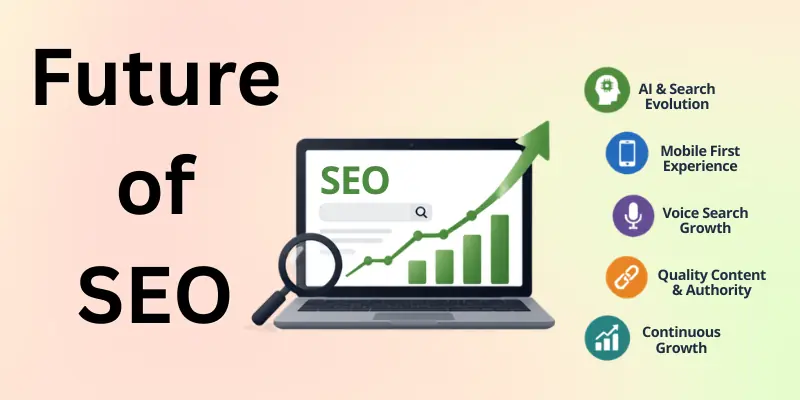
This shift means SEO is becoming a mix of technical skill, content strategy, and audience understanding. The professionals who adapt early will have the biggest advantage.
SEO Future Trends
SEO is not staying the same anymore. In 2026, the way search engines rank and display content is changing quickly. These SEO future trends show where the real demand is heading.
The way people search and the way they expect answers is changing fast, and what worked last year may not work today. Here is what to watch:
1. Search Intent Over Keywords
Search engines now focus on what users actually want, not just the words they type. Content built around real intent performs better than content stuffed with keywords. This makes writing feel more natural and useful.
- Focuses on the reason behind a search, not just the words used
- Rewards content that fully answers the reader’s question
- Reduces the value of keyword stuffing
- Improves engagement and time spent on a page
- Used across blogs, product pages, and landing pages
2. Zero-Click Search Results
More searches now end without a single click, since search engines show direct answers on the results page. Brands need to optimize for visibility even when users do not visit their website. This changes how success gets measured.
- Answers appear directly on the search results page
- Traffic to websites can drop even with strong rankings
- Brand visibility still matters, even without a click
- Structured data helps content appear in these results
- Success now includes impressions, not just clicks
3. Voice and Visual Search Growth
More people now search by speaking or by using images instead of typing. Content needs to answer questions in a natural, conversational way. This trend is growing fastest on mobile devices.
- Voice searches use longer, more natural phrases
- Visual search matches images instead of text queries
- Content should answer questions in a conversational tone
- Mobile devices drive most of this growth
- Local searches benefit strongly from this trend
4. E-E-A-T and Content Trust
Search engines reward content that shows real experience, expertise, and trustworthiness. Thin or generic content struggles to rank, even with strong keyword use. Authentic, well-researched content wins in the long run.
- Rewards real experience and first-hand knowledge
- Favors content backed by credible sources
- Penalizes thin or generic writing
- Builds long-term trust with readers
- Helps content stay competitive against AI-generated text
5. Video and Short-Form Content in Search
Search results now include more video and short-form content than before. Brands that create helpful video content gain extra visibility. This trend fits well with how younger audiences prefer to consume information.
- Video results now appear alongside written content
- Short-form clips perform well in search and social feeds
- Helps brands reach younger, faster-scrolling audiences
- Increases time spent engaging with a brand
- Works well for tutorials, reviews, and quick explanations
6. Next-Gen SEO Tools and Automation
Next generation SEO tools automate reporting, tracking, and even parts of content optimization. This frees up time for strategy and creativity. Writers and marketers who learn these tools work faster and smarter.
- Automates reporting and performance tracking
- Speeds up technical audits and content checks
- Frees up time for strategy and planning
- Reduces manual, repetitive tasks
- Helps teams scale content work efficiently
7. Hyper-Local and Personalized Search
Search results are becoming more personalized based on location, device, and past behaviour. Businesses need to think locally, even when targeting a broad audience. This trend keeps growing as search engines get better at understanding context.
- Results shift based on user location and device
- Personalization improves relevance for each searcher
- Local businesses gain stronger visibility nearby
- Past search behaviour shapes future results
- Encourages more targeted, localized content strategies
These shifts show that search engine optimization trends are moving away from guesswork and toward precision. One trend deserves a closer look on its own, since it is reshaping daily SEO work more than any other.
AI-Powered SEO Tools and Services
AI-powered SEO tools and services have moved from a novelty to a daily necessity for most marketing teams. These tools now handle keyword research, content briefs, technical audits, and competitor tracking in a fraction of the time it used to take.
- Keyword and Topic Research: AI tools scan large amounts of search data and suggest topics people are actively searching for right now.
- Content Optimization: Platforms score content against top-ranking pages and suggest improvements for structure, readability, and depth.
- Technical Audits: AI-driven crawlers spot broken links, slow pages, and indexing issues faster than manual checks ever could.
- Competitor Analysis: Tools track competitor rankings and content gaps, helping teams find fresh opportunities quickly.
- Automated Reporting: Dashboards update in real time, so professionals spend less time building reports and more time acting on insights.
These services do not replace strategy, they remove hours of repetitive work instead. This gives SEO professionals more room for creativity and judgment, the parts of the job AI still cannot handle well. With the right tools in place, it becomes easier to see what skills matter most for the road ahead.
Future SEO Skills
SEO is changing fast, and the old way of ranking a page is not enough anymore. Anyone building a career in future SEO needs more than basic keyword research. Companies want professionals who can think, plan, and adapt.
- AI Tool Handling: Professionals will use smart tools to speed up research and content planning but will still shape the final strategy themselves.
- Content Strategy Thinking: SEO experts will think beyond rankings and focus on how content supports real business goals.
- User Experience Knowledge: Site speed, mobile design, and easy navigation will matter as much as keywords.
- Data Analysis Skills: Reading analytics and search console data will help professionals understand what truly works.
- Technical SEO Understanding: Site structure, schema markup, and crawlability will remain important for visibility.
- Content Quality Focus: Writers will need to create genuinely useful content instead of relying on shortcuts.
- Adaptability: Search algorithms keep changing, so staying flexible will matter more than memorizing fixed rules.
This mix of skills reflects how future of SEO in digital marketing is becoming less about isolated tactics and more about connected strategy. The next big question is how AI fits into all of this.
Role of AI in the Future of SEO
AI is already shaping how content gets researched, written, and optimized. It helps professionals move faster and stay organized. But the future of seo after AI still depends heavily on human judgment and creativity.
- Faster Research: AI gathers keyword data and competitor insights in minutes instead of hours.
- Content Drafting Support: AI creates first drafts that humans refine and improve.
- Pattern Recognition: AI spots ranking patterns and content gaps that are hard to catch manually.
- Personalization at Scale: AI helps tailor content for different audience segments quickly.
- Reduced Manual Work: Routine tasks like reporting and auditing become faster with AI support.
The SEO future will depend on how well brands balance automation with authenticity. AI can support the process, but it cannot fully replace strategy, empathy, and original thinking. This balance leads directly into a common mistake many brands are already making.
What Happens when Brands Optimize for AI the Wrong Way
Some brands rush to use AI without a clear plan, and this often backfires. Content becomes generic, repetitive, and disconnected from real audience needs. Search engines are getting better at detecting low-value, mass-produced content, and rankings often drop as a result.
Brands that copy AI output without editing lose their unique voice. Readers notice when content feels robotic or repetitive, and trust drops quickly. Over time, this hurts both rankings and brand reputation.
The smarter approach is to use AI as a starting point, not a final product. Human review, original insight, and real audience research still make the biggest difference. Brands that skip this step often see short-term speed but long-term ranking losses.
Future Challenges of SEO
SEO is growing, but it is not becoming easier. Even with a strong future scope of SEO, professionals in 2026 face real pressure from AI tools, changing algorithms, and shifting user habits. Work is becoming more competitive, and expectations are higher than before.
To stay strong in this field, professionals must understand these challenges clearly. These points show what SEO experts may struggle with in the coming years.
- AI Content Competition: More basic research and writing work is now handled by AI tools.
- Constant Algorithm Changes: Search engines update ranking rules often, and strategies must adjust quickly.
- Rising Market Competition: More businesses and creators are competing for the same search visibility.
- Attention Shortage: Users scroll faster and expect answers immediately, leaving little room for weak content.
- Zero-Click Impact: Fewer searches send clicks to websites, making it harder to prove direct SEO value.
- Skill Upgrading Pressure: Professionals must keep learning new tools and techniques constantly.
- Content Overload: The internet is full of similar content, making original value harder to achieve.
- Client and Budget Pressure: Businesses often expect faster results without increasing SEO budgets.
- Trust and Authenticity Demands: Search engines increasingly penalize generic or low-effort content.
These challenges show that the SEO future scope is not only about opportunity, real obstacles remain too. Still, the future of SEO industry keeps rewarding those who adapt instead of standing still. Now let us bring everything together in the conclusion.
Conclusion
Here is something worth sitting with. The future of SEO was never really about outsmarting an algorithm, it was always about earning real trust from real people, and that part has not changed at all.
Yes, the tools look different now. Yes, AI can write faster than any human ever could. But the businesses still standing tall five years from now will be the ones choosing depth over shortcuts today.
If you take one thing from this article, let it be this. Stop asking whether SEO will survive, and start asking whether your content truly deserves to be found. Nearly every serious SEO prediction report points to the same conclusion: that intent, trust, and genuine value will outlast every algorithm update that comes along.
That question is the only one that really matters. A few smaller ones remain, though, so let us look at them next.
FAQs
No article about search feels complete without answering the questions people ask most. Here are the ones that come up again and again.
Yes, SEO still has a strong future ahead. Search engines will always need a way to rank helpful, trustworthy content. The methods are changing, but the core purpose of SEO remains valuable. Businesses that adapt early will continue to benefit the most.
SEO will likely still exist in some form for many years to come. It may look different, with more focus on AI search and voice queries. The core idea of helping people find useful information will not disappear. Adapting to new formats will be key to staying relevant.
No, SEO is not dying, but it is changing significantly. AI is reshaping how content gets discovered and ranked. Professionals who learn to work alongside AI tools will continue to succeed. Those who ignore these changes may see their results decline.
AI can support many SEO tasks, but it cannot fully replace human strategy. Real audience understanding and creative thinking still require a human touch. AI works best as a tool, not a replacement for expertise. Businesses still need people to guide overall strategy.
Professionals will need strong data analysis and technical SEO knowledge. Content strategy and user experience skills will also matter greatly. Comfort with AI tools will help speed up daily tasks. Adaptability will remain one of the most valuable skills overall.
AI is helping search engines understand user intent more accurately. It also powers features like zero-click answers and personalized results. This means content needs to be genuinely helpful, not just keyword-focused. Rankings increasingly reward trust and real expertise.
Yes, investing in SEO remains a smart long-term strategy. Organic search continues to bring valuable, consistent traffic to websites. The approach may need updates, but the value remains strong. Businesses that stop investing often lose visibility to competitors.
Content that clearly answers user questions tends to rank well. Search engines also favor content that shows real expertise and trust. Good structure, readability, and updated information all play a role. Quality and relevance will always matter more than shortcuts.




- Be Respectful
- Stay Relevant
- Stay Positive
- True Feedback
- Encourage Discussion
- Avoid Spamming
- No Fake News
- Don't Copy-Paste
- No Personal Attacks
- Be Respectful
- Stay Relevant
- Stay Positive
- True Feedback
- Encourage Discussion
- Avoid Spamming
- No Fake News
- Don't Copy-Paste
- No Personal Attacks
