Blogging Course Description: Complete Learning Roadmap
Published: 1 Aug 2026
Trying to figure out what a blogging course covers before you spend your time or money on it? You’re not alone most beginners get stuck comparing programs that all sound the same on the surface. Once you know exactly what a good course should teach, choosing gets a lot easier, and you stop guessing.
This guide walks through every part of a modern blogging course: the requirements, the blogging syllabus, the AI side of things, and the career path so you can pick a course that actually fits where you want to go.
What is a Blogging Course?
A blogging course trains you to plan, write, and grow a blog that readers keep coming back to. There are countless blogging courses out there now, and the strong ones combine two things: creative writing ability and a working knowledge of how search engines and readers actually behave.
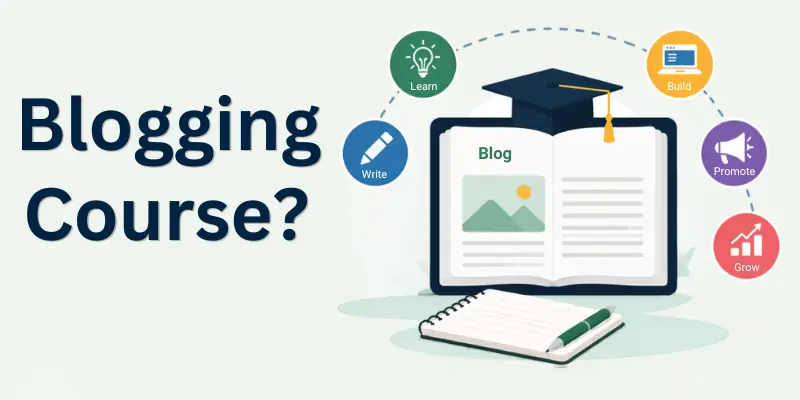
If you sign up for an online blogging course, you’ll typically begin with the fundamentals, picking a niche, setting up your blog, and learning how to structure a post before moving into publishing real content. What makes this approach work is that you are building a live blog while you learn, instead of just collecting notes you will never use.
Before jumping into the actual modules, it’s worth knowing what you need to have ready first.
Blogging Course Requirement
Before enrolling in a blogging course online, it helps to have a few basics ready, so the learning process goes smoothly.
- Basic computer skills: Comfort with using a computer and managing files.
- A working device: A laptop or desktop that can handle writing and light design tools.
- Stable internet: Needed for lessons, research, and publishing.
- Willingness to write regularly: Consistency matters more than talent at the start.
- Set aside time weekly: Even a few focused hours make a real difference.
- Basic reading habit: Reading other blogs helps you understand what actually works.
- Openness to feedback: Helps you improve faster than working in isolation.
- Access to structured lessons: Reliable blogging training with a clear module order speeds up progress significantly.
Once these basics are in place, you’re ready to look at what the course itself actually teaches.
Blogging Course Details
Below are the core areas most professional blogging course programs are built around. Going through them in order keeps the learning manageable instead of overwhelming.
- Blogging Fundamentals
- Content Planning & Writing
- Blog Platforms & Setup
- SEO for Bloggers
- Design & Branding
- Promotion & Distribution
- Monetization Strategies
- Freelancing & Career Building
Here’s what each one actually involves.
Blogging Fundamentals
This is where you build the mindset before touching a keyboard for real content. You will figure out who you are writing for and why, which shapes everything you do afterwards.
- Picking a profitable niche
- Understanding reader intent
- Setting blog goals
- Idea generation techniques
- Researching your competition
Content Planning & Writing
You will practice the actual craft of turning a topic into a post people finish reading. This module usually takes the longest because writing well takes repetition, not just theory.
- Writing strong headlines
- Structuring posts for readability
- Editing your own drafts
- Building a content calendar
- Matching tone to your audience
Blog Platforms & Setup
Here you get hands-on with the platforms bloggers actually publish on. Some learners prefer to start with a short blogging crash course just to get the technical basics down before enrolling in a longer program.
- Setting up WordPress
- Comparing Blogger, Medium, and Ghost
- Basic HTML and CSS
- Choosing hosting and a domain
- Installing essential plugins
SEO for Bloggers
This section teaches you how to get discovered without paying for ads. Search behavior keeps shifting, so a course that updates this module regularly is worth more than one that doesn’t.
- Keyword research basics
- On-page SEO essentials
- Writing meta titles and descriptions
- Internal linking strategy
- Reading basic traffic analytics
Design & Branding
A blog that looks unfinished loses readers fast, no matter how good the writing is. This module covers the visual side, making your blog feel like a real, trustworthy brand.
- Layout and visual hierarchy
- Choosing fonts and colors
- Designing a simple logo
- Keeping visuals consistent
- Basic user experience principles
Promotion & Distribution
Writing the post is only half the job getting it in front of people is the other half. This is a key focus in any blogging masterclass, since even great content goes nowhere without the right distribution plan.
- Sharing on social platforms
- Building an email list
- Pinterest and visual search traffic
- Engaging in relevant communities
- Guest posting for exposure
Monetization Strategies
This is usually the module beginners look forward to most. Many learners move into this stage as part of a longer advanced blogging course once they’ve got consistent traffic flowing.
- Affiliate marketing basics
- Sponsored content and partnerships
- Display advertising
- Selling digital products or guides
- Freelance writing on the side
Freelancing & Career Building
The final stretch is about turning your skills into income or job opportunities. Some programs wrap up with a blogging certificate course component so you have proof of training to show clients.
- Building a writing portfolio
- Pitching and client communication
- Navigating freelance platforms
- Setting your rates
- Long-term career planning
That covers the full course breakdown. Now let’s look at where blogging education is heading with AI in the picture.
AI Blogging Course
AI has changed how blogging is taught, and most updated programs now include it as a core part of the curriculum, not an afterthought. An AI blogging course typically focuses on using AI tools the smart way to speed up your process without losing your own voice.
- AI writing assistants: Using tools like ChatGPT and Claude for brainstorming, outlines, and first drafts.
- AI-powered SEO tools: Platforms such as Surfer SEO and Frase to optimize content before publishing.
- GEO (Generative Engine Optimization): Writing content in a way that increases its chances of being cited by AI answer engines, alongside traditional search rankings.
- Prompt writing skills: Crafting better prompts to get more useful, accurate drafts from AI tools.
- AI content editing: Refining AI-generated drafts so they read naturally and match your tone.
- Fact-checking AI output: Verifying accuracy before publishing, since AI tools can get details wrong.
- Balancing AI and originality: Using AI as a starting point while adding personal experience and voice.
A good course will always stress that AI is an assistant, not a replacement. The strongest content still comes from bloggers who use AI to speed up research and drafting, then add their own experience, fact-checking, and voice before hitting publish.
Blogging Course Syllabus and Modules
If you’re comparing programs, here’s a quick-reference view of what a typical blogging course syllabus looks like from start to finish:
- Weeks 1-2 — Fundamentals & Niche Selection: Building the foundation and finding your blog’s direction.
- Weeks 3-4 — Writing & Content Planning: Practicing the craft and building a consistent posting habit.
- Weeks 5-6 — Platforms, SEO & AI Tools: Setting up a live, searchable blog with the right tools.
- Weeks 7-8 — Design, Promotion & Monetization: Growing traffic and starting to earn from your content.
- Final Stage — Portfolio & Freelancing: Preparing a client-ready profile and career next steps.
This structure isn’t fixed everywhere, some blogging classes online compress it into a few intensive weeks, while others spread it out for deeper practice.
With the full syllabus clear, the next step is knowing how to actually pick between all the programs out there.
How to Choose the Blogging Course
With so many options online, picking the right program can feel harder than blogging itself. A few practical checks make the decision much easier.
- Check the curriculum depth: Make sure it covers writing, SEO, and monetization not just one of the three.
- Look at instructor experience: A course taught by an active blogger usually reflects real, current practices.
- Read reviews carefully: Genuine student feedback tells you more than the sales page ever will.
- Compare pricing to value: A higher price is not automatically better check what’s actually included.
- Confirm support and updates: Blogging and SEO change often, so a course that updates its content holds up longer.
- Test with a free lesson: Many platforms let you preview a module before you commit.
- Match it to your goal: A course built for hobby bloggers looks different from one built for future freelancers.
Taking a few extra minutes on this step saves you from wasting money on a program that doesn’t match your needs. Once you’ve made your pick, here’s what that investment can actually lead to.
Career Opportunities After the Course
Finishing a blogging course opens up more than just personal blogging, the skills transfer across several paid roles.
- Blogger: Build and grow your own blog into a recognizable brand.
- Content Writer: Write articles for businesses, agencies, or publications.
- SEO Content Specialist: Create content built specifically to rank in search results.
- Freelance Writer: Take on client projects across multiple niches.
- Social Media Content Creator: Repurpose blog content for social platforms.
- Affiliate Marketer: Monetize blog traffic through product recommendations.
- Copywriter: Write persuasive content for marketing and ad campaigns.
- Niche Website Owner: Run and scale multiple blogs at once.
- Content Strategist: Plan editorial calendars and content direction for brands.
- Course Creator: Teach beginners once you have built real experience.
Conclusion
This blogging course description has covered what you need before starting, the full module breakdown, how AI fits into modern training, the syllabus timeline, how to choose the right program, and the career paths waiting on the other side. Like any new skill, staying consistent and picking the right program are the two biggest challenges, but both get easier once you understand what to look for going in.
Whether you start with a free blogging course to test the waters or go straight into a complete blogging course, what matters most is picking one that fits your goals and sticking with it. Here are a few common questions to help you decide.
FAQs
Still have questions before you sign up? Here are the answers you’re probably looking for.
Most blogging courses cover writing basics, niche selection, SEO, blog design, promotion, and monetization. Many updated programs now also include AI tools as a subject on their own.
The exact list can vary between beginner and advanced tracks. Checking the outline before enrolling helps you know exactly what’s included.
A short tutorial course can teach you the basics fast enough to launch your first blog. However, becoming a confident blogger usually takes ongoing practice beyond any single tutorial.
Tutorials work best as a starting point, not a finish line. Pairing one with real, regular posting gives the fastest results.
Free courses are a solid way to learn the fundamentals without any financial risk. They’re especially useful if you’re still deciding whether blogging is right for you.
Paid courses usually go deeper with mentorship, updated content, and structured feedback. Many people start free and upgrade once they’re committed.
Most beginner courses run anywhere from a few weeks to a couple of months. Self-paced online options let you move faster or slower depending on your schedule.
Advanced or certification tracks tend to take longer due to added modules. Staying consistent matters far more than finishing quickly.
Certification is not mandatory, but it can strengthen your credibility with clients and employers. It signals that you have completed structured training in real blogging skills.
Many freelancers use it to stand out in a crowded market. That said, a strong portfolio usually matters more in the long run.
Yes, many graduates start earning through freelance writing, affiliate income, or small blogging gigs fairly quickly. Building full-time blogging income, though, typically takes longer and needs sustained effort.
Applying what you learn immediately speeds up the process considerably. Patience combined with consistency makes the biggest difference here.
Most updated courses now include AI tools like ChatGPT and Claude for drafting, along with SEO tools for optimization. This reflects how blogging workflows have shifted in recent years.
Learning AI alongside core writing skills gives you a real speed advantage. It’s worth confirming this is included before choosing a program.
The best beginner course usually has a clear structure, practical projects, and simple, jargon-free explanations. Look for programs covering writing, SEO, and monetization together rather than just one area.
Reading reviews and trying sample lessons helps you judge quality before paying. Matching the course to your specific goal works better than chasing the most popular option.






- Be Respectful
- Stay Relevant
- Stay Positive
- True Feedback
- Encourage Discussion
- Avoid Spamming
- No Fake News
- Don't Copy-Paste
- No Personal Attacks
- Be Respectful
- Stay Relevant
- Stay Positive
- True Feedback
- Encourage Discussion
- Avoid Spamming
- No Fake News
- Don't Copy-Paste
- No Personal Attacks
