Best Blogging Platforms for Beginners: Easy to Learn and Earn
Published: 31 Jul 2026
You have an idea, maybe even a few drafts sitting in your notes app, and a real urge to finally put your words out into the world. But the moment you sit down to actually start, one question stops you cold: where do I even publish this? WordPress feels intimidating, Wix looks too simple, and everyone online seems to swear by a different tool.
That hesitation is completely normal, and it’s exactly why I put this guide together. I’ve used, tested, and compared these platforms myself, and I paid close attention to how easy each one is to learn and how well it helps beginners grow and earn from their writing. By the end of this guide, you’ll know exactly which of the best blogging platforms for beginners fits you right now.
What are Blogging Platforms?
A blogging platform is simply the tool or website you use to write, design, and publish your posts online. Some hand you full control over every detail, while others take care of the technical side completely so you can focus purely on writing.
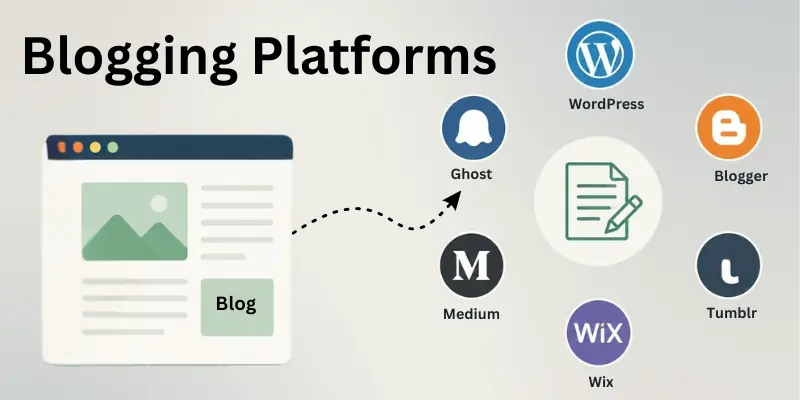
Example: WordPress and Wix are great examples of this difference. WordPress lets you install themes and plugins and shape almost everything about your site yourself. Wix, on the other hand, gives you a visual editor where you simply drag elements into place while it quietly handles the hosting and structure behind the scenes.
Best Blogging Sites for Beginners
The best blogging sites support beginners in two different ways. Some are built purely for a fast, free start, while others are designed for people who want their blog to turn into something bigger, like a business or a steady income source.
A handful of platforms manage to offer both at once. Here is a list of the most dependable and beginner-ready blogging platforms worth knowing about.
- WordPress.org
- WordPress.com
- Blogger
- Wix
- Squarespace
- Medium
- Substack
- Ghost Weebly
- Hostinger Website Builder
- Webflow
- Tumblr
- Typeflo
- Network Solutions
You don’t have to sign up for every single blogging website on this list. I have narrowed it down to the platforms that genuinely deserve a beginner’s time and attention.
1. WordPress.org
WordPress.org gives you the most freedom out of every blog platform on this list. You get thousands of free and paid themes, plus plugins for almost anything you can think of, from contact forms to full online stores.
It takes a bit more effort upfront since you’re managing your own hosting, but once it’s set up, you’re never boxed in by a platform’s limitations. This makes it one of the strongest long-term choices for anyone who plans to take blogging seriously.
- Complete control over design and functionality
- Massive plugin and theme ecosystem
- Best suited for long-term growth and monetization
- Needs initial setup and a hosting plan
2. WordPress.com
WordPress.com gives you the same trusted engine as WordPress.org, minus the hosting headache. You can create an account and publish your first post on a free subdomain within minutes.
As your blog picks up traction, upgrading unlocks a custom domain and more design freedom. It’s a smooth middle ground for anyone who wants WordPress without dealing with servers.
- Free plan with a genuinely quick setup
- Zero hosting management required
- Simple upgrade path as your blog grows
- Free plan comes with a few design limits
3. Blogger
Blogger has been around since the early days of the internet, and its simplicity is still its biggest strength. All you need is a Google account, and your blog can be live in a few clicks.
It costs nothing and asks nothing of you technically, which makes it ideal for casual writing or journaling. Where it falls short is design flexibility, so it may feel limiting once your ambitions grow.
- Free forever, no hidden costs
- No technical skill needed at all
- Backed by Google’s stability
- Fewer themes and customization options
4. Wix
Wix stands out among popular platforms for bloggers who want a blog that looks put-together without ever touching code. Its drag-and-drop editor lets you position text, images, and buttons exactly where you want them.
A short onboarding quiz builds a starter layout for you automatically, so you’re not staring at a blank page. It’s a natural pick for beginners who think visually and want quick, satisfying results.
- Easy, visual drag-and-drop editor
- Polished, fully customizable templates
- Fast setup with guided onboarding
- Free plan available, paid plans from around $4/month
5. Squarespace
Squarespace is loved for templates that look professionally designed straight out of the box. It works especially well for photographers, creatives, and small businesses where presentation carries a lot of weight.
SEO basics come built in, so there’s no plugin-hunting involved. This mix of beauty and simplicity makes it appealing to beginners who care about how their blog looks from day one.
- Designer-quality templates by default
- Built-in SEO and e-commerce tools
- No plugins or developer needed
- Paid plans start around $17/month
6. Medium
Medium strips blogging down to its simplest form: open an account, write, publish. There’s no layout to fuss over and no hosting decisions to make.
What makes it special is its built-in readership, meaning your first few readers can come from the platform itself rather than from scratch. The trade-off is that you don’t fully own your audience or how your content is presented.
- Instant setup, nothing to configure
- Built-in audience from day one
- You don’t own your content or distribution
- Free to use, with an optional paid membership tier
7. Substack
Substack blends blogging with email newsletters, so every post you publish lands directly in your subscribers’ inboxes. That direct connection is hard to replicate on other platforms.
It’s one of the more approachable free blog platforms if your focus is writing and building a loyal readership rather than fiddling with design. Many independent writers eventually turn it into a paid subscription business.
- Blog and newsletter in one place
- Clean, distraction-free writing space
- Straightforward path to paid subscriptions
- Free to start, with a cut taken from paid subscriptions
8. Ghost
Ghost is built for bloggers who want strong search visibility and an audience they truly own. It comes with email and membership tools baked in, plus easy integrations with services like Mailchimp.
It’s a bit more capable than most beginner tools, but the hosted version keeps it manageable even for newcomers. It suits anyone who wants to convert casual readers into loyal subscribers.
- Strong built-in SEO and newsletter tools
- Native membership and subscription features
- Clean, modern writing experience
- Paid plans start around $19/month
9. Weebly
Weebly pairs a simple drag-and-drop builder with built-in e-commerce, useful if you’re thinking of adding a small store alongside your blog someday. It connects smoothly with Square for payments.
That said, blogging here feels more like a bonus feature than the main event, so the writing tools are noticeably lighter than on platforms built specifically for content.
- Simple, approachable editor
- Built-in e-commerce support
- Blogging tools feel secondary
- Free plan available, paid plans start around $10/month
10. Hostinger Website Builder
Hostinger Website Builder leans on AI to do most of the heavy lifting for absolute beginners. Answer a few quick questions, and it generates a working layout for your blog instantly.
It keeps costs low while still offering enough flexibility for most starter blogs, making it a solid pick if speed and simplicity matter more than deep customization.
- AI-assisted, guided setup
- Budget-friendly pricing
- Good balance between ease and flexibility
- Fewer advanced tools compared to WordPress
11. Webflow
Webflow hands you pixel-level design control without requiring code, which is why designers and small agencies gravitate toward it. The results feel genuinely custom rather than template-based.
It’s built more as a website tool than a blogging-first platform, though, so publishing frequently can feel a touch more involved than on writer-focused tools.
- Full creative control, no coding required
- Produces highly custom-looking sites
- Slightly more complex for frequent publishing
- Best suited for design-heavy blogs
12. Tumblr
Tumblr mixes blogging with light social networking, so other users browsing the platform can easily discover your posts. It suits short-form or visual content especially well.
It’s free and quick to set up, but it was not built with long-form, search-focused blogging in mind. Think of it as more of a creative outlet than a serious content-marketing tool.
- Free and fast to set up
- Built-in social discovery
- Better suited to short, casual content
- Limited SEO and monetization options
13. LinkedIn
LinkedIn lets you publish full-length articles right on your professional profile, which works well if your writing revolves around career advice, business, or industry insight. Your existing network sees your posts almost instantly.
It is not a full blogging platform in the traditional sense, but it’s one of the simplest websites for blogging if visibility among professionals matters more than owning a standalone site.
- Publishes straight to your professional network
- No setup or hosting involved
- Not a full, standalone blog
- Free for anyone with a LinkedIn account
14. Typeflo
Typeflo is a newer platform built specifically around SEO and AI search visibility, handling technical details like schema and structured data without any plugin setup. It’s aimed at bloggers who want their posts to rank on Google and get picked up by AI search tools.
It’s built with growth-focused writers in mind rather than casual hobby bloggers, but for beginners whose main goal is organic traffic, it offers a more guided starting point than general website builders.
- Purpose-built for SEO and AI search visibility
- Handles technical SEO automatically
- Geared toward growth-focused bloggers
- Paid plans start around $19/month
15. Network Solutions
Network Solutions offers a straightforward drag-and-drop builder at a genuinely low starting price. Its plans include SEO tools, backups, and analytics without extra add-ons.
It manages all the hosting details for you, which makes it a low-effort, budget-friendly starting point without sacrificing the essentials.
- Very affordable entry price
- No coding or technical setup needed
- Free domain included with paid plans
- Smaller template selection than bigger builders
Now that you’ve seen the full range of options, let’s narrow them down to what actually matters for you: starting for free, or starting with earning in mind.
Best Free Blogging Platforms for Beginners
If you’d rather test things out before spending a rupee, these free blog platforms let you publish your first post without any financial commitment.
- WordPress.com: Free subdomain, fast setup, easy to upgrade later.
- Blogger: Free forever, backed by Google’s infrastructure.
- Medium: Free to write and publish, with an audience already built in.
- Wix: Free plan with a proper drag-and-drop design experience.
- Substack: Free to start writing and building an email list.
Best Blogging Platforms to Make Money
Writing is only half the picture; the platform you choose also shapes how easily that writing turns into income. These stand out among the best platforms for blogging when earning is the priority.
- WordPress.org: Complete freedom over ads, affiliate links, and digital products.
- Ghost: Native memberships and paid subscriptions.
- Substack: Direct, recurring payments from readers.
- Squarespace: Blogging paired with a built-in online store.
- Typeflo: Focused on organic traffic, which fuels long-term earning.
Comparison Table: Learning Curve vs Earning Potential
Here’s a quick side-by-side look at how easy each platform is to learn, and how much earning potential it realistically offers once your blog starts growing.
| Platform | Free to Start | Beginner-Friendly | Earning Potential |
|---|---|---|---|
| WordPress.org | Software free (hosting paid) | Moderate | Very High |
| WordPress.com | Yes | High | Medium |
| Blogger | Yes | Very High | Low |
| Wix | Yes | Very High | Medium |
| Squarespace | No (paid only) | High | Medium-High |
| Medium | Yes | Very High | Low-Medium |
| Substack | Yes | High | High |
| Ghost | No (paid only) | Moderate | High |
| Weebly | Yes | High | Low-Medium |
| Hostinger Website Builder | Limited free | Very High | Medium |
| Webflow | Limited free | Moderate | Medium |
| Tumblr | Yes | Very High | Low |
| Yes | Very High | Low | |
| Typeflo | No (paid only) | Moderate | High |
| Network Solutions | No (paid only) | High | Low-Medium |
This table makes one thing clear: the easiest platforms to learn aren’t always the ones that earn the most. Balance both based on where you are right now.
How to Choose the Right Blogging Platform
No single platform works the same way for every beginner. Some are built for a fast, effortless start, while others reward the extra setup time with more room to grow later.
Before you commit to anything, take a moment to check how each option fits your goals. A good choice now can save you a painful migration later.
- Ease of use: Beginners usually do better with platforms that need little to no technical setup.
- Design flexibility: Some platforms offer full customization, others rely on fixed templates.
- Monetization options: Check whether ads, affiliate links, or paid subscriptions are supported.
- Cost and hidden fees: Confirm what’s actually free versus what needs an upgrade later.
- Content ownership: Some platforms let you fully own your content and audience, others don’t.
- SEO and discoverability: Basic SEO support helps your posts get found on Google.
- Room to grow: Pick a platform that won’t force a messy migration once your blog takes off.
- Community and support: Strong communities make it easier to troubleshoot problems quickly.
You now have a clear picture of what each platform offers. So stop weighing options, and go publish your first post.
Conclusion
Across this guide, one thing stands out: the best blogging platforms for beginners each bring something different to the table, whether that’s simplicity, design freedom, or earning potential, so there’s no single platform that wins for everyone.
I would personally prefer to see a beginner commit to one platform that fits their current goal over trying to juggle five tools at once. Every platform comes with some trade-off, whether that’s a learning curve, design limits, or slower visibility, but you can work around most of these simply You have walked through all the options.
Now it’s time to pick your starting point. Before you do, let’s answer a few quick questions you might still have.
FAQs
Let’s clear some important FAQs about the best blogging platforms for beginners.
WordPress.com, Blogger, and Wix are generally considered the easiest starting points for beginners. They require little to no technical knowledge and let you publish your first post within minutes. Your ideal choice still depends on whether you prioritize simplicity, design, or long-term growth.
Blogger and Medium are two of the most reliable, fully free options available today. WordPress.com and Wix also offer solid free plans, though some features are locked behind paid upgrades. Free plans are a great way to test blogging before investing money.
Yes, platforms like Substack, Ghost, and Medium allow you to earn through subscriptions, memberships, or partner programs. WordPress simply offers more flexibility and control over monetization methods like ads and affiliate marketing. Your earning potential depends more on your content and audience than the platform alone.
No, most modern blogging platforms use drag-and-drop editors that require zero coding knowledge. Tools like Wix, Squarespace, and Hostinger Website Builder are specifically built for non-technical users. Coding only becomes useful later if you want advanced customization.
WordPress.org offers the most SEO flexibility through plugins that control every technical detail. Ghost and Typeflo are also strong choices since they focus heavily on search and structured content. Wix and Squarespace now include decent built-in SEO tools as well.
Bloggers on self-hosted platforms like WordPress.org often earn the most since they have full control over ads, sponsorships, and digital products. Newsletter-based platforms like Substack also perform well for writers with a loyal, paying audience. Ultimately, earnings depend more on niche, consistency, and audience trust than the platform itself.
Most beginners start seeing meaningful traffic and engagement anywhere between six months and a year of consistent publishing. Growth speed depends on your niche, content quality, and promotion efforts on social media or search engines. Patience and consistency matter more than the platform you choose.
Switching platforms is possible but can be time-consuming, especially if you’ve built a large audience or ranked well on search engines.
Platforms like Medium and Tumblr are harder to migrate away from smoothly compared to WordPress. This is why choosing a platform with future flexibility matters from the start.
A few simple tips include checking the free plan limits, testing the editor before committing, and confirming you can export your content later. It also helps to pick something you’ll actually enjoy using every week, since consistency matters more than perfection.
When comparing options, it comes down to a few essentials: ease of use, design flexibility, SEO support, and monetization options.
Ownership of your content and audience is another factor many beginners overlook until it’s too late. Pricing transparency and a clear upgrade path also matter once your blog starts growing.



- Be Respectful
- Stay Relevant
- Stay Positive
- True Feedback
- Encourage Discussion
- Avoid Spamming
- No Fake News
- Don't Copy-Paste
- No Personal Attacks
- Be Respectful
- Stay Relevant
- Stay Positive
- True Feedback
- Encourage Discussion
- Avoid Spamming
- No Fake News
- Don't Copy-Paste
- No Personal Attacks
