Blogging Skills You Are Missing Out On
Published: 29 Jul 2026
Ever hit publish on a blog post and heard… nothing? No traffic, no comments, no shares, just silence. That was me for months. I kept blaming luck until I realized the real issue was skill gaps, not bad luck. The moment I started fixing them one by one, everything changed. If you’re stuck in that same silence right now, this article is going to hand you the exact blogging skills that break it.
Most beginners assume blogging is just “writing well.” I used to think that too, until I learned it’s actually a mix of writing, strategy, and showing up consistently, even on days you don’t feel like it. Let’s fix the confusion right now. Once you know the right skills for blogging, the guesswork disappears and blogging finally starts to feel doable.
Best Skills for Blogging
Learn the right blogger skills, and your posts stop feeling like a shot in the dark. Ever wonder how some bloggers make it look effortless? It’s not luck; it’s these exact skills, laid out below.
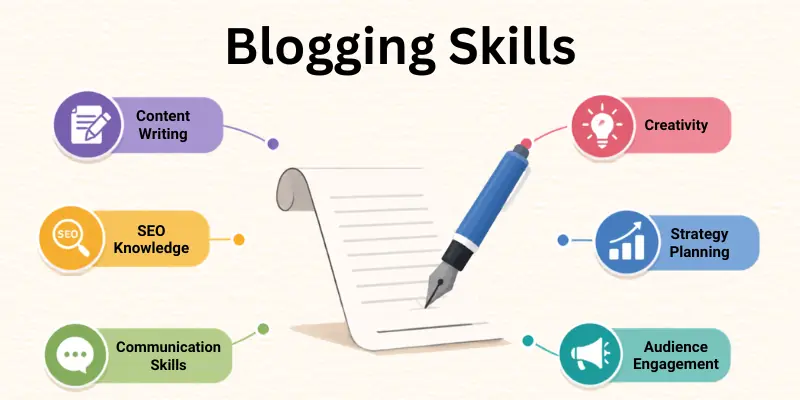
These are the skills needed for blogging that actually move the needle. Every blog that gets read starts with someone who mastered the basics first. Here’s what you need to know.
- Content Writing
- SEO Basics
- Keyword Research
- Content Research
- Editing and Proofreading
- Headline Writing
- Formatting for Readability
- Basic Image Editing
- CMS Knowledge (like WordPress)
- Analytics Understanding
- Social Media Promotion
- Email List Building
- Link Building Basics
- Content Planning
- Niche Selection
- Monetization Knowledge
- Creativity
- Consistency
- Time Management
- Patience
- Networking
- Adaptability
Let’s break each one down.
1. Content Writing
Content writing means shaping raw ideas into posts people actually stick around to finish. It’s the base every other blogging skill builds on top of.
Best Choice for: If you want readers glued to your page instead of clicking away, this is where to start. Beginners hoping to build trust through words will feel the difference fast.
Features:
- Write in a clear and simple tone
- Structure posts with a beginning, middle, and end
- Keep sentences short and easy to follow
- Match writing style to your audience
- Add value in every paragraph
2. SEO Basics
SEO basics show you how search engines discover and rank your posts, so the right people actually stumble onto your work.
Best Choice for: Anyone chasing free, long-term traffic needs this skill. It’s a lifesaver for beginners who don’t want to depend on social media alone for readers.
Features:
- Use keywords naturally in titles and headings
- Write meta descriptions that attract clicks
- Optimize images with alt text
- Improve page loading speed
- Structure content with proper headings
3. Keyword Research
Keyword research means digging up the exact words your audience types into Google before they ever land on your blog.
Best Choice for: Bloggers frustrated by posts that go unread should pick this up first. It’s the difference between writing into the void and writing what people already want.
Features:
- Find low-competition, high-traffic keywords
- Understand search intent behind a query
- Group related keywords into one post
- Track keyword performance over time
- Choose keywords that fit your niche
4. Content Research
Content research is about gathering solid facts and fresh ideas before you write a single word, so your post holds up against what’s already out there.
Best Choice for: Anyone aiming for content people can actually trust needs this habit. It helps beginners win on quality when they can’t yet win on volume.
Features:
- Study top-ranking articles on your topic
- Collect updated facts and statistics
- Identify gaps competitors missed
- Organize research into a simple outline
- Verify sources before publishing
5. Editing and Proofreading
Editing and proofreading turn a messy first draft into something worth publishing, catching the small errors that quietly hurt your credibility.
Best Choice for: If polish matters to you, don’t skip this step. It’s non-negotiable for anyone trying to look professional from post one.
Features:
- Spot grammar and spelling mistakes
- Remove unnecessary words and repetition
- Improve sentence flow and clarity
- Check facts and links before publishing
- Read content aloud to catch awkward phrasing
6. Headline Writing
Headline writing is the craft of writing titles people can’t scroll past. Get this wrong, and even your best post never gets opened.
Best Choice for: Struggling to get clicks? This skill fixes that directly. It’s especially useful for beginners whose great content keeps getting ignored.
Features:
- Use numbers and power words
- Keep headlines short and clear
- Promise a clear benefit to the reader
- Test different headline styles
- Match headlines to search intent
7. Formatting for Readability
Formatting for readability is about laying out your post so eyes can scan it in seconds because most readers skim before they commit to reading.
Best Choice for: Writing longer posts? This keeps readers from bouncing halfway through. It’s a must for anyone who wants people to actually finish what they wrote.
Features:
- Break content into short paragraphs
- Use bullet points and subheadings
- Add bold text for key ideas
- Include white space between sections
- Use images to break up long text
8. Basic Image Editing
Basic image editing lets you enhance photos and graphics so your blog looks put-together, not thrown together.
Best Choice for: Anyone chasing a shareable, polished-looking blog should pick this up. No design background needed, just the basics.
Features:
- Resize and compress images for web use
- Adjust brightness and colours
- Add simple text overlays for social sharing
- Crop images to fit your blog layout
- Create consistent visual style across posts
9. CMS Knowledge (like WordPress)
CMS knowledge means knowing your way around a blogging platform well enough to publish, format, and manage content without a headache.
Best Choice for: Starting a self-hosted blog? Don’t skip this. It hands beginners full control over how their blog looks and runs.
Features:
- Publish and schedule posts easily
- Install and manage plugins
- Customize themes and layouts
- Manage categories and tags
- Keep the site updated and secure
10. Analytics Understanding
Analytics understanding means reading the numbers behind your blog’s traffic and reader behavior instead of just guessing what’s working.
Best Choice for: If you’re serious about growth, stop guessing and start checking your data. This is a game-changer for anyone tired of shooting in the dark.
Features:
- Track page views and traffic sources
- Understand bounce rate and time on page
- Identify your most popular content
- Monitor keyword rankings over time
- Make decisions based on real data
11. Social Media Promotion
Social media promotion means pushing your blog content out to platforms where your audience already spends their time.
Best Choice for: Want faster traffic without waiting on search engines? This is your shortcut. Great for beginners building a personal brand alongside their blog.
Features:
- Repurpose blog posts into social content
- Choose the right platform for your audience
- Write captions that drive clicks
- Engage with comments and followers
- Schedule posts for consistency
12. Email List Building
Email list building means collecting reader emails so you can reach your audience directly, without relying on an algorithm’s mood.
Best Choice for: Anyone who wants a direct line to their readers should build this early. It’s essential if you’re planning to sell anything down the road.
Features:
- Create simple opt-in forms
- Offer a free resource to attract subscribers
- Send regular newsletters
- Segment your list by interest
- Build long-term reader relationships
13. Link Building Basics
Link building basics means earning links from other sites back to yours, which tells search engines your content is worth trusting.
Best Choice for: Chasing better search rankings? You can’t skip this one. It’s key for anyone serious about long-term SEO growth.
Features:
- Write guest posts on relevant sites
- Link internally between your own posts
- Reach out for collaboration opportunities
- Create content worth linking to
- Avoid spammy or low-quality links
14. Content Planning
Content planning means mapping out what you’ll write and when, so your blog stays consistent instead of running on random bursts of motivation.
Best Choice for: Running a blog for the long haul? This saves you from constant last-minute scrambling. Beginners especially benefit from having a plan to lean on.
Features:
- Create a content calendar
- Plan around seasonal trends and topics
- Balance different content types
- Set realistic publishing schedules
- Align content with audience needs
15. Niche Selection
Niche selection means picking a clear topic or focus for your blog, so the right audience can find you and know exactly what to expect.
Best Choice for: Still deciding what to blog about? Start here first. It gives new bloggers a clear direction from day one instead of scattered posts.
Features:
- Identify your interests and expertise
- Research audience demand in the niche
- Check competition levels
- Narrow down a specific angle
- Stay consistent within that focus
16. Monetization Knowledge
Monetization knowledge means understanding the different ways a blog can actually generate income once it has an audience worth monetizing.
Best Choice for: Thinking beyond blogging as just a hobby? This is where you start. It’s ideal for anyone hoping to earn from their content eventually.
Features:
- Explore ads, affiliate marketing, and sponsorships
- Understand how to sell digital products
- Learn about membership or subscription models
- Balance monetization with reader experience
- Track income sources and performance
17. Creativity
Creativity means finding fresh ideas and unexpected angles, so your blog doesn’t blend into the sea of posts saying the same thing.
Best Choice for: Tired of sounding like everyone else in your niche? Lean into this skill. It’s what makes readers remember your content specifically.
Features:
- Generate original post ideas regularly
- Find new angles on common topics
- Experiment with different content formats
- Combine writing with visuals creatively
- Keep your voice distinct from others
18. Consistency
Consistency means showing up with new content on a regular basis, even on the days motivation is nowhere to be found.
Best Choice for: Playing the long game with your blog? This is non-negotiable. It’s what separates bloggers who grow from those who quietly disappear.
Features:
- Stick to a realistic posting schedule
- Maintain quality across every post
- Keep your tone and style steady
- Show up even during slow growth periods
- Build habits that support long-term output
19. Time Management
Time management means planning your writing, editing, and promotion so blogging fits into life instead of taking it over.
Best Choice for: Juggling a job or other commitments alongside blogging? This keeps you consistent without the burnout. A must for anyone short on spare hours.
Features:
- Set aside dedicated writing time
- Prioritize high-impact tasks first
- Avoid distractions during writing sessions
- Balance blogging with other responsibilities
- Track how long tasks actually take
20. Patience
Patience means staying committed even when the results are slow to show, because blogging success is rarely an overnight thing.
Best Choice for: Expecting quick wins right out the gate? Build this skill first instead. It’s what stops new bloggers from quitting way too soon.
Features:
- Accept slow growth in the early stages
- Keep improving without instant rewards
- Avoid comparing your progress to others
- Stay motivated during quiet periods
- Trust the long-term process
21. Networking
Networking means building real relationships with other bloggers and readers, opening doors that solo effort simply can’t.
Best Choice for: Want to grow faster than you could alone? Start connecting with people in your space. It brings support and visibility you can’t get in isolation.
Features:
- Connect with bloggers in your niche
- Engage genuinely in online communities
- Collaborate on guest posts or projects
- Build relationships with readers
- Learn from more experienced bloggers
22. Adaptability
Adaptability means adjusting your approach as trends, algorithms, and audience tastes shift, so your blog doesn’t get left behind.
Best Choice for: Planning to blog for years, not months? This keeps you relevant through every algorithm shake-up. Essential for anyone who wants their blog to actually last.
Features:
- Stay updated on platform and SEO changes
- Adjust content style based on feedback
- Try new formats when old ones stop working
- Learn new tools as they emerge
- Pivot strategy without losing your core voice
Now that you’ve got the full list of blogging skills in front of you, it’s time to put them to work. But first, here’s why they matter so much in the first place.
Why Blogging Skills Are Important
Here’s the truth: skill is what separates a blog nobody reads from one people keep coming back to. The right blogging skills help you communicate clearly, look professional, and unlock real opportunities in freelancing, personal branding, and even full-time income.
They also hand you the confidence to put your ideas out there and actually see results. Building the skills needed for blogging isn’t a side task; it’s the investment that makes everything else about your blog work better.
Before you dive into writing, though, you’ll want the right tools backing you up. That’s next.
Important Tools for Blogging
Blogging tools are the backbone of every blogger‘s workflow. These tools help you write, optimize, and manage your content quickly and efficiently. The right tools make the process smoother and save you time.
- WordPress: Best for building and managing a self-hosted blog with full control.
- Grammarly: Ideal for catching grammar, spelling, and clarity issues while writing.
- Google Keyword Planner: Great for finding keywords your audience is searching for.
- Canva: Perfect for creating simple blog graphics and social media images.
- Google Analytics: Useful for tracking traffic, reader behaviour, and content performance.
- Yoast SEO: Helps optimize posts for search engines directly within WordPress.
- Ahrefs: Powerful for deeper keyword research, competitor analysis, and backlink tracking.
- Mailchimp: Great for building and managing your email list with ease.
- Buffer: Helps schedule and manage social media promotion across platforms.
- Unsplash: Useful for free, high-quality images to make your posts more visual.
The above tools give you the confidence to handle both content creation and blog growth. With the right tools and skills in hand, your blogging journey is ready to take off.
Conclusion
Here’s the truth: nobody starts with all these blogging skills mastered not me, not the bloggers you admire, nobody. What actually separates the blogs that grow from the ones that fade out is simple: they kept showing up and kept sharpening these skills, one post at a time.
You don’t need to master everything today. Pick one skill from this list, work on it this week, and let the rest follow. Your blog’s breakthrough moment is closer than it feels right now; the only thing left is to start. Still curious about something? The FAQs below might just have your answer.
FAQs
Got questions buzzing in your head? Here are the answers to the most searched questions about blogging skills.
You need basic content writing, simple SEO knowledge, and consistency to start a blog. You don’t need to be an expert on day one; most skills improve with practice.
Focus on writing clearly first, then slowly add SEO and promotion skills. Tools like WordPress and Canva also make the technical side easier for beginners.
A blogger needs writing, SEO, and content planning skills, along with personal skills like consistency and patience. Together, these help you create valuable content and stick with blogging long enough to see results.
Technical skills get your content seen, while personal skills keep you going during slow periods. Most successful bloggers build these skills gradually over time.
You can improve blogging skills by writing consistently, studying successful blogs in your niche, and asking for feedback. Reading about SEO and practicing keyword research also sharpens your technical side.
Small daily improvements add up faster than trying to master everything at once. Following blogging communities can also speed up your learning.
No, you don’t need coding knowledge to start a blog today. Platforms like WordPress and Blogger offer simple, drag-and-drop tools for beginners.
Basic HTML knowledge can help with minor customizations, but it’s not required to publish quality content. Most bloggers focus on writing and SEO instead of code.
Becoming a skilled blogger usually takes several months of consistent writing and learning. Some bloggers see noticeable improvement in three to six months, while mastery takes longer with regular practice.
The timeline depends on how often you write, research, and apply feedback. Patience and consistency speed up this process significantly.
Yes, basic SEO is important even for beginners, since it helps your content get discovered on search engines. You don’t need advanced SEO knowledge right away, but understanding keywords and headings makes a big difference.
Skipping SEO often means your great content goes unseen. Learning it early saves time later.
Yes, strong blogging skills can lead to income through ads, affiliate marketing, sponsorships, or selling your own products. Monetization usually comes after you’ve built consistent traffic and a loyal audience.
It rarely happens overnight, so treat early blogging as skill-building first. Once your skills and audience grow, income opportunities naturally follow.
Content writing is often considered the most important skill for beginner bloggers, since every other skill builds on it. Clear, engaging writing keeps readers interested and encourages them to return.
Once writing feels comfortable, skills like SEO and promotion become much easier to add. Strong writing is the foundation everything else stands on.




- Be Respectful
- Stay Relevant
- Stay Positive
- True Feedback
- Encourage Discussion
- Avoid Spamming
- No Fake News
- Don't Copy-Paste
- No Personal Attacks
- Be Respectful
- Stay Relevant
- Stay Positive
- True Feedback
- Encourage Discussion
- Avoid Spamming
- No Fake News
- Don't Copy-Paste
- No Personal Attacks
