Advantages and Disadvantages of Graphic Designing for Beginners
Published: 10 Jun 2026
Graphic designing means creating visual content like logos, posters, social media posts, and advertisements using digital tools. It is a skill that helps turn ideas into clear, attractive designs.
Today, graphic design is used everywhere, from business branding to online content. That is why it is important to understand both sides of it. Knowing the advantages and disadvantages of graphic designing helps people make better decisions before learning it or choosing it as a career.
In this article, you will learn the main benefits of graphic designing and also the challenges that come with it. This will help you understand whether this skill is right for you or not.
Graphic Design Advantages
Graphic design is more than just making attractive visuals. It is a practical skill that helps businesses communicate with customers, build trust, and stand out in a crowded market.
For individuals, it can open doors to different careers and income opportunities. As more businesses move online, the value of graphic design continues to grow.
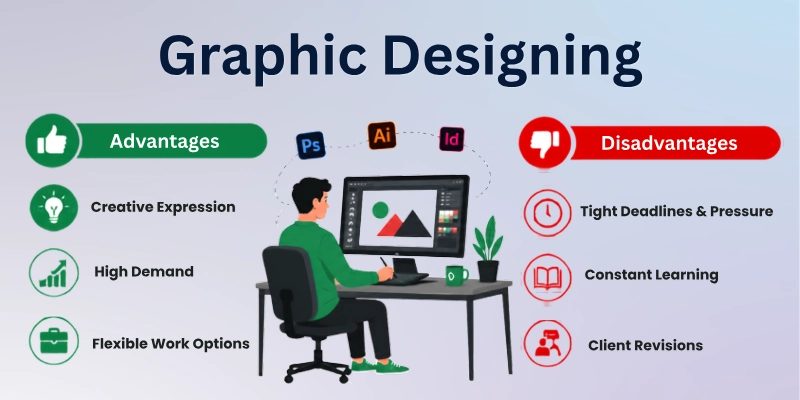
- Market Demand
- Earning Potential
- Remote Work Flexibility
- Global Clients
- Career Options
- Business Growth
- Brand-Building Power
- Visual Communication Skills
- Freelancing Opportunities
- Startup Cost
- Creative Problem-Solving
- Diverse Project Exposure
- Industry-Wide Relevance
- Self-Employment Potential
- Career Value
This list of graphic designing pros can help you see the real value of this skill. Let’s look at the key graphic design pros one by one.
1. Market Demand
Graphic design is needed in many industries. Businesses use it for marketing, branding, and advertising. Websites and social media also require visual content.
This creates a steady demand for skilled designers. As online competition grows, the need for design work continues to increase.
Key Advantages:
- More job opportunities
- Consistent demand
- Useful across industries
2. Earning Potential
Graphic designers can earn through jobs, freelancing, or business projects. Income often increases with experience and skills. Specialized designers can charge higher rates.
Many designers work with multiple clients at the same time. This creates more opportunities to increase earnings.
Key Advantages:
- Multiple income sources
- Higher rates with experience
- Scalable earnings
3. Remote Work Flexibility
Most design work can be completed online. Designers only need a computer and an internet connection. This allows them to work from home or any location.
Many companies also hire remote designers. It offers more freedom than many traditional jobs.
Key Advantages:
- Work from anywhere
- Flexible schedule
- Better work-life balance
4. Global Clients
The internet allows designers to work with clients worldwide. They are not limited to local businesses. Freelancing platforms connect designers with international projects.
This increases opportunities and exposure. It also helps designers build a wider professional network.
Key Advantages:
- Worldwide opportunities
- Larger client base
- International experience
5. Career Options
Graphic design offers several career paths. Designers can work in agencies, companies, or as freelancers. Some focus on branding, while others specialize in web or social media design.
This variety allows people to choose work that matches their interests. It also reduces career limitations.
Key Advantages:
- Diverse career paths
- Different specialization options
- Greater career flexibility
6. Business Growth
Graphic design helps businesses attract and retain customers. Strong visuals make products and services more appealing.
Good design also improves marketing campaigns. It helps businesses stand out from competitors. As a result, businesses can achieve better growth.
Key Advantages:
- Attracts customers
- Improves marketing results
- Supports business growth
7. Brand-Building Power
A strong brand needs a consistent visual identity. Graphic design helps create logos, colors, and marketing materials that people remember.
Good branding builds trust and recognition. It also helps businesses look professional. Over time, this strengthens the brand’s image.
Key Advantages:
- Builds brand recognition
- Increases customer trust
- Creates a professional image
8. Visual Communication Skills
Graphic design makes information easier to understand. Images, icons, and layouts can explain ideas quickly. This is useful when presenting complex information.
People often remember visuals better than text. Clear communication improves audience engagement.
Key Advantages:
- Simplifies information
- Improves understanding
- Increases audience engagement
9. Freelancing Opportunities
Graphic design is one of the most popular freelance skills. Businesses often hire freelance designers for short-term projects. Freelancers can choose their clients and workload.
They also have the freedom to set their rates. This makes graphic design a flexible career option.
Key Advantages:
- Independent work opportunities
- Flexible project selection
- Control over pricing
10. Startup Cost
Starting a graphic design career does not require a large investment. A computer and design software are often enough to begin.
Many beginners start with affordable or free tools. There is no need for a physical office. This makes graphic design accessible to many people.
Key Advantages:
- Affordable to start
- Minimal equipment needed
- Easy entry into the field
11. Creative Problem-Solving
Graphic design is not only about making things look good. Designers solve communication and marketing challenges through visuals.
Each project requires new ideas and solutions. This keeps the work interesting and engaging. It also helps develop valuable thinking skills.
Key Advantages:
- Encourages creativity
- Develops problem-solving skills
- Keeps work engaging
12. Diverse Project Exposure
Graphic designers work on many types of projects. These may include logos, advertisements, websites, packaging, and social media content.
Working on different projects helps build experience. It also prevents the work from becoming repetitive. Every project offers a chance to learn something new.
Key Advantages:
- Variety of work
- Broader experience
- Continuous learning opportunities
13. Industry-Wide Relevance
Almost every industry uses graphic design. Businesses, schools, healthcare organizations, and online brands all need visual content.
This creates opportunities in different sectors. Designers can choose industries that match their interests. The skill remains valuable in many fields.
Key Advantages:
- Applicable across industries
- More employment options
- Long-term demand
14. Self-Employment Potential
Many graphic designers start their own businesses. They can offer services directly to clients without working for an employer.
This gives them more control over their careers. They can decide their pricing, services, and work schedule. It also creates opportunities for business growth.
Key Advantages:
- Career independence
- Control over income
- Business ownership opportunities
15. Career Value
Graphic design remains important as businesses continue to use digital and print media. New platforms may emerge, but the need for visual communication continues.
Skilled designers can adapt to changing trends and technologies. This helps maintain career opportunities over time. It makes graphic design a valuable long-term skill.
Key Advantages:
- Future career relevance
- Adaptable skill set
- Sustainable career opportunities
Graphic design offers many valuable benefits, but it is only one side of the picture. However, every profession comes with its own challenges.
Before deciding if graphic design is the right choice for you, it is important to understand its drawbacks as well.
Graphic Design Disadvantages
Graphic designing can be a rewarding skill, but it also comes with certain challenges. Success often requires time, patience, and continuous effort.
Designers may face competition, changing trends, and demanding project requirements. These drawbacks of graphic designing can help you prepare for the realities of the profession.
- Market Competition
- Client Revisions
- Income Instability
- Skill Updates
- Project Deadlines
- Creative Pressure
- Client Expectations
- Screen Time
- Slow Career Growth
- Software Learning Curve
- Portfolio-Building Challenges
- Project Rejection
- Technology Dependent
- Competition in Freelancing
- Workload Fluctuations
Let’s explore the main disadvantages of graphic designing and how they can impact a designer’s career.
1. Market Competition
Graphic design is a popular skill. Many people offer similar services online. New designers often compete with experienced professionals.
This can make it harder to get clients. Standing out in the market takes time and effort.
Key Disadvantages:
- Hard to attract clients
- Strong competition from experts
- Slower career growth
2. Client Revisions
Clients often request changes after reviewing a design. Some projects may require multiple revisions.
This can increase the time spent on a single task. It may also delay project completion. Managing revisions can become frustrating.
Key Disadvantages:
- Extra workload
- Delayed project completion
- Increased stress
3. Income Instability
Freelance graphic designers do not always have a fixed income. Some months may bring many projects.
Other months may have very little work. This can make financial planning difficult. Beginners often face this challenge more often.
Key Disadvantages:
- Unpredictable earnings
- Financial uncertainty
- Irregular workflow
4. Skill Updates
Design trends change over time. New tools and techniques are introduced regularly. Designers need to keep learning to stay competitive.
Falling behind can affect work opportunities. Continuous learning requires extra time and effort.
Key Disadvantages:
- Ongoing learning required
- Time investment
- Risk of becoming outdated
5. Project Deadlines
Many design projects have strict deadlines. Clients often expect quick results. Designers may need to work under pressure to finish on time.
This can affect work-life balance. Rushed work may also reduce quality.
Key Disadvantages:
- High work pressure
- Limited time for revisions
- Stressful schedules
6. Creative Pressure
Graphic designers are expected to produce fresh ideas regularly. Clients often want unique and eye-catching designs.
Finding new concepts for every project can be challenging. Some days, ideas may not come easily. This pressure can affect productivity.
Key Disadvantages:
- Constant need for new ideas
- Mental pressure
- Creative blocks
7. Client Expectations
Some clients have unrealistic expectations. They may want high-quality work in a very short time. Others may not clearly explain what they need.
This can lead to confusion and misunderstandings. It often makes projects more difficult to manage.
Key Disadvantages:
- Unclear project requirements
- Communication challenges
- Increased workload
8. Screen Time Fatigue
Graphic design requires spending long hours on a computer. Designers often work on detailed tasks that demand focus.
Too much screen time can cause eye strain and tiredness. Sitting for long periods may also affect physical health. Regular breaks become important.
Key Disadvantages:
- Eye strain
- Physical discomfort
- Mental fatigue
9. Slow Career Growth
New designers often start with limited experience. Building skills and gaining trust takes time. Many beginners struggle to find quality projects.
Competition can slow progress. Patience is necessary during the early stages.
Key Disadvantages:
- Limited early opportunities
- Slower income growth
- Time needed to build experience
10. Software Learning Curve
Professional design tools can be difficult to learn. Beginners may feel overwhelmed by advanced features.
Mastering software requires practice and dedication. Mistakes are common during the learning process. It may take months to become confident.
Key Disadvantages:
- Challenging for beginners
- Requires regular practice
- Takes time to master
11. Portfolio-Building Challenges
A strong portfolio is important for attracting clients and employers. However, beginners often have little or no work to showcase. Building a quality portfolio takes time and effort.
Many designers start with small or unpaid projects to gain experience. This can slow down their progress in the beginning.
Key Disadvantages:
- Difficult for beginners
- Time-consuming process
- Limited early opportunities
12. Project Rejection
Not every design is accepted by a client. A client may reject a design even after hours of work. Sometimes the design does not match their expectations.
This can lead to extra revisions or starting over. Frequent rejections can be discouraging.
Key Disadvantages:
- Wasted time and effort
- Additional revisions
- Reduced motivation
13. Technology Dependent
Graphic design relies heavily on computers, software, and internet access. Technical issues can interrupt work at any time.
A software crash or hardware problem may cause delays. Designers also need to keep their tools updated. This dependence can create unexpected challenges.
Key Disadvantages:
- Technical disruptions
- Extra equipment costs
- Work delays
14. Competition in Freelancing
Many freelancers offer graphic design services at different rates. Some charge very low prices to attract clients.
This can make it difficult for others to charge fair rates. Beginners often feel pressure to lower their prices. As a result, earnings may be affected.
Key Disadvantages:
- Lower pricing pressure
- Reduced profit margins
- Difficult to compete on value
15. Workload Fluctuations
Graphic design work is not always consistent. Some periods may be very busy, while others are slow. Managing changing workloads can be challenging.
Busy periods may lead to stress, while slow periods may affect income. This uncertainty is common in freelance work.
Key Disadvantages:
- Irregular workload
- Income fluctuations
- Planning difficulties
These challenges show that success in graphic designing requires more than technical skills. However, experienced designers are not the only ones who face difficulties.
Beginners often deal with a different set of obstacles when starting their journey. Let’s look at the common challenges beginners face in graphic designing.
Beginners Challenges in Graphic Designing
Every graphic designer starts somewhere. In the beginning, many things can feel confusing, slow, or even frustrating.
These challenges are common and part of the learning process. Here are some struggles that most beginners face when they start graphic design:
- Too many design tools make it hard to know where to start.
- New ideas do not always come when you need them.
- Your designs may not look the way you imagined.
- Other designers’ work can make you doubt your skills.
- Client instructions can sometimes be unclear.
- An empty portfolio can make it harder to win trust.
- Low-paying projects are often hard to avoid at first.
- One design can take much longer than expected.
- The first client is usually the hardest to find.
- Negative feedback can feel personal in the beginning.
Now that you have seen the benefits, drawbacks, and beginner challenges, you have a clearer picture of graphic designing. The final step is to bring everything together and see what it means for you.
Final Thoughts
Graphic designing has both strong advantages and real challenges. It gives good career options, creative work, and flexible earning chances. At the same time, it also brings competition, pressure, and the need to improve skills.
This article shows the advantages and disadvantages of graphic designing so you can get a full idea before starting. When you know both sides, it becomes easier to make a clear and practical decision.
This field is a mix of growth and effort. If you stay consistent and improve your skills, the good results can be worth the struggle. Think smart before choosing. The topic is clear now. Let’s move to some simple FAQs.
FAQs
Here are some common doubts explained in easy words about the advantages and disadvantages of graphic designing.
Yes, graphic designing can be a good career choice. It offers many graphic designing jobs and freelance opportunities. You can work with companies or clients from home. Success depends on your skills and practice.
It helps you earn through different work options. You can use your creativity in real projects. It also gives flexible work choices. Many industries need design work every day.
One major issue is strong competition. Beginners may find it hard to get clients at first. Work pressure can also increase with deadlines. Income can be unstable at first.
Yes, beginners can start with simple tools. Basic software is easy to learn. But skill improvement takes time and practice. Regular work helps build confidence.
Yes, good designers can earn well over time. Income depends on skill level and experience. Freelancers can take multiple projects. Beginners usually start with smaller payments.
It can become stressful at times. Tight deadlines and client feedback can add pressure. Some projects need quick changes. Good planning helps reduce stress.
No, you do not need expensive tools at the start. Many beginners use free or low-cost software. A basic laptop or computer is enough in the beginning. You can upgrade tools later as your skills improve.
It can be stable if you keep improving your skills. Many companies need designers regularly. Freelancers can also build long-term clients. Stability grows with experience and consistency.





- Be Respectful
- Stay Relevant
- Stay Positive
- True Feedback
- Encourage Discussion
- Avoid Spamming
- No Fake News
- Don't Copy-Paste
- No Personal Attacks
- Be Respectful
- Stay Relevant
- Stay Positive
- True Feedback
- Encourage Discussion
- Avoid Spamming
- No Fake News
- Don't Copy-Paste
- No Personal Attacks
