3D Design Course Description: Start Your Best 3D Career
Published: 12 Apr 2026
Are you confused about what a 3D design course description actually means? Many beginners feel lost when they see technical terms and complex tools. I saw this problem at the beginning. You just want to know what you will learn and how it will help you earn, right? Let me make it simple for you.
In this guide, I will break down the course in a way that anyone can understand. You will see what skills you get and how you can use them step by step. I will also share what really matters before you join any course.
What is a 3D Designing Course Description?
3D design courses teach you how to create objects that look real on a screen. You learn how to build shapes, add colours, and give them depth so they look like real items. These designs are used in games, movies, ads, and even product designs.
In the 3D designing course detail, you also learn how to use tools that help you turn ideas into visual models. You start with basic shapes and then move to more detailed designs step by step.
For example, you might create a simple 3D coffee cup. First, you build its shape, then add colour and texture, and finally apply lighting to make it look real. This small project helps you understand how 3D design works in a practical way.
Before we go further, let’s see the actual learning parts of this course.
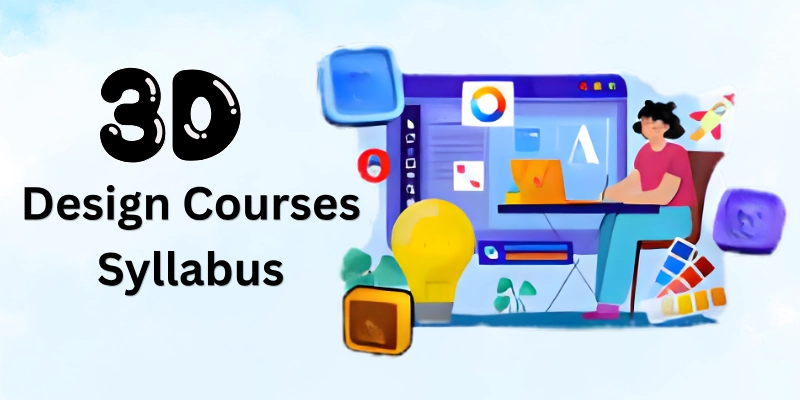
3D Graphic Design Courses Syllabus
A 3D graphic designing course syllabus gives you a clear path of what you will study step by step. It helps you understand the full learning flow before you start. From my experience, students learn better when they already know the structure.
- Beginner Level
- Intermediate Level
- Advanced Level
This section simply shows the main overview of 3D designing course in order. Let’s see.
Beginner Level
This is where you start your journey in 3D design. You learn the most basic things first. These topics help you understand how the software works. You build a strong base before moving forward.
- Introduction to 3D Design
- Software Interface Basics
- Navigation in 3D Space
- Basic Shapes Creation
- Mesh Basics (Vertices, Edges, Faces)
- Simple Object Modeling
- Basic Materials and Colours
- Simple Lighting Setup
- Basic Rendering
Intermediate Level
Now you move one step ahead in your learning. You start working on more detailed designs. These topics help you improve your skills. You also begin creating more realistic work.
- Advanced Object Modeling
- Modifiers and Tools
- Texturing Techniques
- Lighting Improvement
- Camera Angles and Composition
- Scene Building
- Basic Animation
- Practice Projects
Advanced Level
This is the final and most skilled stage. You focus on professional-level work here. You learn how to make complex and real-looking designs. This stage helps you build a strong portfolio.
- Complex Modeling Techniques
- High-Quality Texturing
- Realistic Lighting Setup
- Advanced Rendering Techniques
- Character or Product Animation
- Physics and Effects Basics
- Professional Scene Creation
- Final Project (Portfolio Level)
Now, let’s check the career paths you can start after learning 3D design.
Job Opportunities
After learning 3D design, you can step into many creative and technical jobs. This skill is used in games, films, ads, and product design. I have seen that people who practice regularly can start small freelance work even before full jobs.
The best part is that you are limited to one path. You can work online, join a company, or even build your own client base over time.
- 3D Designer: Create models for products, games, and visuals.
- 3D Modeler: Build detailed objects and characters for different projects.
- Game Designer: Design objects, scenes, and assets used in video games.
- Animator: Bring characters and objects to life through movement.
- Architectural Visualizer: Create 3D building designs and interior views.
- Product Designer: Design realistic product visuals for brands and companies.
- VFX Artist: Add visual effects for movies, ads, and videos.
- Freelancer: Work on client projects online and earn from home.
- AR/VR Designer: Build 3D environments for virtual and augmented reality.
- Rendering Artist: Create final high-quality images from 3D scenes.
Now, let’s see the main benefits you can get from learning a 3D design course.
Benefits of a 3D Graphic Design Course
A 3D graphic design course gives you strong creative skills that you can use in many fields. It helps you turn ideas into real-looking visuals. I have seen many learners start from zero and slowly build real projects after practice.
- It helps you think and design in a more visual way.
- Opens doors in gaming, film, and design industries.
- Allows you to work with clients online and earn from home.
- Many companies need 3D designers for projects.
- Helps you build strong work samples for jobs.
- You can work from home or any location.
- You learn by creating actual design work.
- Gives you long-term growth in creative fields.
- Your earnings can increase with skill and practice.
- Useful in modern industries like AR and VR in the future.
Let’s move to the final part and close this topic simply.
Conclusion
A 3d design course description shows the main skills, benefits, and topics you will study in this field. It is a helpful guide for beginners who want to start in 3D design. I have seen that results depend on how much effort you put in. This course comes with challenges like complex tools and slow progress at the start but also helps you decide if this learning path is right for you.
In my experience, this skill can grow into real opportunities if you stay focused. But it also takes time and regular practice to master. It’s now your choice what you want. Now I will answer a few questions that beginners often think about.
FAQs
Here are some common questions people usually ask about this topic.
A 3D graphic design course description explains what you will learn in the course. It usually includes topics like modeling, texturing, lighting, and rendering. It also shows the skills and tools you will use during the course.
Yes, 3D design courses online are good for beginners because they start from basic lessons. You can learn step by step at your own speed. Many online courses also include practice projects to build real skills.
A 3D art degree is a formal education program offered by colleges or universities. It takes a longer time and includes a deeper study of art and design. A short course focuses more on practical skills and faster learning.
You do not need advanced skills before starting a 3D design course. Basic computer knowledge is enough to begin. Creativity and interest in design will help you learn faster.
Yes, you can earn money after learning 3D design through freelancing and jobs. Many people work on game design, animation, and product visuals. Your income depends on your practice and skill level.
It usually takes a few months to learn the basics of 3D design. Advanced skills take more time and regular practice. The learning speed depends on your effort and consistency.



- Be Respectful
- Stay Relevant
- Stay Positive
- True Feedback
- Encourage Discussion
- Avoid Spamming
- No Fake News
- Don't Copy-Paste
- No Personal Attacks
- Be Respectful
- Stay Relevant
- Stay Positive
- True Feedback
- Encourage Discussion
- Avoid Spamming
- No Fake News
- Don't Copy-Paste
- No Personal Attacks
