Types of Content Writing – Blogs, SEO, Copy and More
Published: 8 Mar 2026
Have you ever wondered why some writers create blogs, others write sales pages, and some write emails or social media posts? Many beginners feel confused when they hear these terms. They all sound like content writing, but they are not the same.
Different goals need different writing styles. This is where the types of content writing come in. Once you understand these types, it becomes easier to see how each one works and where it fits.
Content Writing Types
Content writing does not follow only one style. Writers create different forms of content for different goals. When people search for content writing types, they usually want to know what kinds of writing exist online.
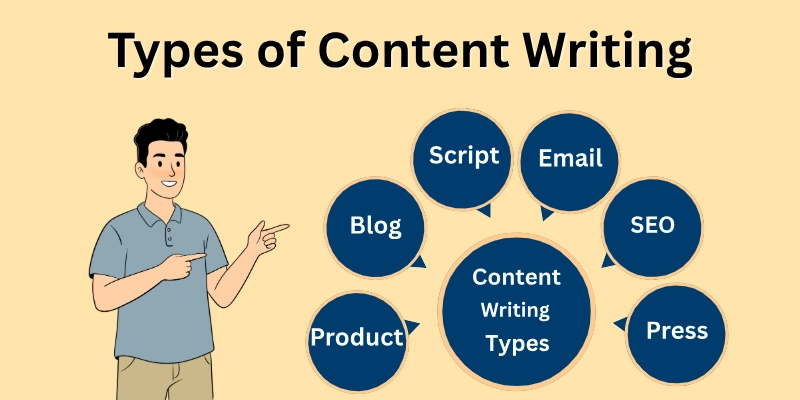
- Blog Writing
- Seo Writing
- Website Writing
- Copywriting
- Social Media Writing
- Email Writing
- Technical Writing
- Product Description Writing
- Ghostwriting
- Script Writing
- Press Release Writing
- Case Study Writing
Below, each type works for a specific platform and audience, which helps you choose the right direction if you want to grow your writing skills or earn online.
1. Blog Writing
Blog writing is one of the most common forms of content writing. Websites publish blogs to share useful information with readers. Many businesses use blog articles to answer questions people search on Google. Blog writing also helps websites grow traffic and build trust with readers.
Key points
- Writers explain a topic in a simple and helpful way.
- Blogs often target specific keywords to appear in search results.
- Writers use headings, examples, and lists to improve readability.
- Blogs usually focus on teaching or guiding readers.
2. SEO Writing
SEO content writing focuses on search engines and readers at the same time. The main goal is to help content appear in search results. Writers use keywords, clear structure, and useful information. This makes content easy for search engines to understand. Good SEO content answers user questions and keeps readers on the page longer.
Key points
- Writers place keywords naturally in headings and paragraphs.
- Content answers search intent clearly and directly.
- Writers use internal links to connect related pages.
- Structure helps search engines understand the topic.
3. Website Writing
Website content writing focuses on the pages people see on a website. These pages introduce a brand and explain its services. Writers focus on clarity and trust so visitors understand the value of the business.
Key points
- Content explains services, products, or brand information.
- Writers keep sentences short and easy to scan.
- Strong headings guide visitors through the page.
- Clear calls to action help visitors take the next step.
4. Copywriting
Copywriting aims to convince readers to take action. Businesses use this writing to increase sales or sign-ups. This style focuses more on psychology and benefits than on long explanations. Copywriting appears in ads, landing pages, and promotional content.
Key points
- Writers highlight benefits instead of only features.
- Short and powerful sentences attract attention.
- Headlines play a major role in grabbing interest.
- Calls to action encourage readers to buy or subscribe.
5. Social Media Writing
Social media writing creates short content for platforms like Facebook, Instagram, or LinkedIn. This writing style focuses on engagement because social platforms move very fast. Writers need to capture attention in the first line.
Key points
- Posts are short and direct.
- Writers use simple language to connect with readers.
- Content often includes questions or opinions.
- Posts encourage likes, comments, or shares.
6. Email Content Writing
Email writing focuses on communication with subscribers. Businesses use email to stay connected with their audience. This type requires a clear message because readers quickly decide if they will open the email. Writers aim to build trust and encourage action.
Key points
- Subject lines attract readers to open the email.
- Messages stay short and focused.
- Content often promotes offers, updates, or tips.
- Emails include clear links or actions for readers.
7. Technical Writing
Technical writing only explains complex topics. Companies often use it for guides or manuals. Writers break down difficult information so readers can understand it easily. This type requires accuracy and clarity.
Key points
- Writers simplify technical information.
- Content includes instructions and explanations.
- Writers use examples to clarify difficult ideas.
- Content structure helps readers follow instructions easily.
8. Product Description Writing
Product description writing appears on online stores. It explains the value of a product. This content helps buyers understand why the product is useful. Writers combine information with arguments.
Key points
- Writers describe product features clearly.
- Benefits show how the product solves a problem.
- Descriptions stay short and focused.
- Strong wording encourages buying decisions.
9. Ghostwriting
Ghostwriting means writing content for another person or brand. The writer creates the content but does not take public credit. Many businesses and public figures hire ghostwriters to produce articles or books. The main skill here is adapting to someone else’s voice.
Key points
- Writers follow the client’s tone and style.
- The final content appears under another name.
- Writers often sign confidentiality agreements.
- Projects can include blogs, books, or speeches.
10. Script Writing
Scriptwriting focuses on content for videos, podcasts, or presentations. This type of writing organizes spoken content before recording. Writers focus on flow and natural language.
Key points
- Scripts guide the structure of a video or audio piece.
- Writers use conversational language.
- Content follows a clear beginning, middle, and end.
- Scripts help speakers stay focused on the message.
11. Press Release Writing
Press releases share official news about a company or organization. Businesses use this format to announce product launches, events, or achievements. The style follows a professional structure.
Key points
- Content shares clear and factual information.
- Writers follow a formal news format.
- Headlines highlight the main announcement.
- Media outlets may publish the news.
12. Case Study Writing
Case studies show how a product or service solved a real problem. Businesses use them to build trust with potential customers. This content often includes real results and experiences.
Key points
- Writers explain a real problem and its solution.
- Content shows measurable results or improvements.
- Real examples increase credibility.
- Case studies help potential clients make decisions.
Every writer starts somewhere, but the right choice makes the path clearer. Let’s see how you can pick the best content writing kinds for yourself.
How to Choose the Right Type of Content Writing?
Start by looking at what you enjoy writing. Some people like to explain ideas in detail, while others prefer short and direct messages. When the writing style matches your interest, the work feels easier, and your words sound more natural.
You should also think about where you want your writing to appear. Blogs, websites, emails, and social platforms all need different styles. From what I have seen, writers improve faster when they pick one type, practice it often, and learn its structure well before moving to another.
Every type of content writing depends on certain skills. Let’s look at the most important ones.
Skills for Different Kinds of Content Writing
Different types of content writing need different abilities. A blog writer, a copywriter, and a technical writer do not work in the same way. Each type requires certain skills that help the writer deliver clear and useful content.
If you want to grow as a writer, you must build a mix of creative and practical skills. These skills help you write better, understand readers, and create content that performs well online.
- Writing Clarity: The ability to write simple sentences that readers understand quickly.
- Grammar Control: Strong grammar and punctuation help your content look professional and trustworthy.
- Research Ability: The skill to find accurate information and turn it into useful content.
- SEO Knowledge: Understanding keywords, search intent, and page structure so content can appear in search results.
- Audience Understanding: Knowing who your readers are and what problems they want to solve.
- Storytelling Skill: The ability to present ideas in a way that keeps readers interested.
- Headline Writing: Creating titles that grab attention and make people want to read more.
- Content Structure: Organizing ideas with headings, lists, and short paragraphs so readers can scan easily.
- Writing Style: Changing tone and format depending on the platform or audience.
- Creativity: Finding fresh angles and ideas so your content feels new and engaging.
- Editing Skill: Reviewing and improving your draft to remove mistakes and improve clarity.
- Time Management: Planning work and finishing content before deadlines.
- Content Strategy: Understanding how each article fits into a bigger content plan.
- Basic Analytics: Reading content performance data to see what works and what needs improvement.
- Attention to Detail: Checking facts, formatting, and small errors before publishing.
These skills help writers handle many types of content, from blogs and websites to marketing pages and social media posts. We will now see the conclusion to determine the last piece of advice.
Conclusion
In this guide, we have covered types of content writing. Each type can bring great results but also comes with some risks if you choose one without proper preparation. My advice is to start small, focus on one type, and adjust your approach as you learn.
This helps you enjoy writing while avoiding common pitfalls. It was a pleasure sharing this with you, and I wish you success in your writing journey. Don’t miss the next FAQ section. It could give you tips you will not find anywhere else.
FAQs
Let’s answer the questions about types of content writing clearly so you do not get stuck.
Content writing is the process of creating written material for websites, blogs, and online platforms. It helps businesses share information and connect with their audience. Beginners can choose the style that works best for their goals.
To start, practice writing about topics you enjoy and read examples of good blogs. Focus on learning one type of writing first, like blogs or social media posts. This gives you confidence and helps you improve quickly.
The easiest way is to keep sentences simple and clear. Start with topics you understand well and organize your ideas in headings and lists. Over time, you will develop your own natural writing style.
Yes, ChatGPT can help generate ideas, outlines, or draft content. But it’s important to review and improve the writing yourself. Using it this way can save time while keeping your content original and accurate.
Good content writing is clear, useful, and engaging for readers. It answers questions people are searching for and keeps them interested. Including examples, headings, and short paragraphs also makes your writing more readable.
Look at your goals and audience first. For example, blogs teach, emails convey, and social media engages quickly. Matching your type of writing to your platform ensures your content performs well.
The use of content is to attract readers, build trust, and guide them to take action. Content can educate, entertain, or promote products depending on its type. The right type helps you create content that works effectively.




- Be Respectful
- Stay Relevant
- Stay Positive
- True Feedback
- Encourage Discussion
- Avoid Spamming
- No Fake News
- Don't Copy-Paste
- No Personal Attacks
- Be Respectful
- Stay Relevant
- Stay Positive
- True Feedback
- Encourage Discussion
- Avoid Spamming
- No Fake News
- Don't Copy-Paste
- No Personal Attacks
