Types of Copywriting List for Beginners Fully Explained
Published: 22 Jun 2026
Have you ever noticed how some words persuade you to click a link, join an email list, or buy a product, and wondered why they work so well? If so, you’re not alone. Many people who are new to copywriting ask the same question and soon discover that not all copywriting serves the same purpose.
That is why learning about the different types of copywriting is so useful. Each type is designed to achieve a specific goal, reach a certain audience, and support a different part of a business. This guide will break everything down into simple explanations so you can understand each type with confidence.
Copywriting Types
Before jumping into the list, it helps to understand one simple thing: copywriting is not just “writing for marketing.”
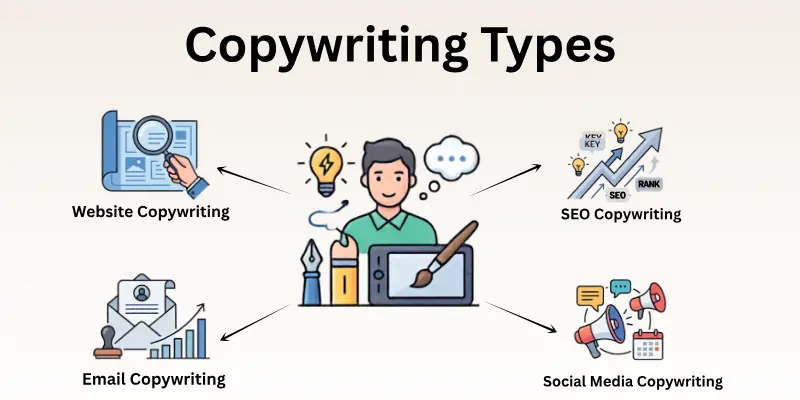
It changes based on where the message appears and what result a business wants. Now, let’s break down the main types of copywriting with examples.
1. SEO Copywriting
SEO copywriting is writing content that helps websites appear on search engines like Google while still being easy for people to read. The main goal is to bring free organic traffic and turn visitors into readers or customers.
- Uses keywords people search on Google
- Helps pages rank higher in search results
- Focuses on both writing and optimization
- Used in blogs, articles, and web pages
- Builds long-term organic traffic
Examples:
- Blog posts like “How to start freelancing”
- Website service pages
- How-to guides
2. Sales Copywriting
Sales copywriting is writing that aims to convince people to buy a product or service. It uses clear messaging and emotional triggers to guide readers toward making a purchase. The main goal is conversion and sales.
- Focuses on persuasion and buying decisions
- Uses emotional and logical triggers
- Written for sales pages and ads
- Highlights the benefits over features
- Encourages immediate action
Examples:
- Product sales page
- Online course landing page
- Promotional ad copy
3. Email Copywriting
Email copywriting is writing emails used for marketing, communication, and building customer relationships. It helps businesses stay connected with their audience and promote offers in a personal way.
- Used in newsletters and campaigns
- Builds trust with readers
- Focuses on engagement and clicks
- Uses strong subject lines
- Sent automatically or manually
Examples:
- Welcome email after signup
- Discount offer email
- Weekly newsletter
4. Social Media Copywriting
Social media copywriting is the practice of writing short content for platforms like Instagram, Facebook, and LinkedIn. It is designed to grab attention quickly and increase engagement, such as likes, comments, and shares.
- Short and catchy writing style
- Focuses on engagement
- Used in captions and posts
- Matches the platform audience
- Works with visuals
Examples:
- Instagram product caption
- Facebook promotional post
- LinkedIn business update
5. Website Copywriting
Website copywriting is writing content for a business website that explains what the brand does and guides visitors clearly. It helps people understand a company, its services, and why they should trust it. The main goal is clarity and conversion.
- Used on home, about, and service pages
- Focuses on clear brand communication
- Builds trust and credibility
- Simple and easy-to-scan writing
- Helps guide visitors to take action
Examples:
- Homepage of a business website
- About Us page of a company
- Service description pages
6. Landing Page Copywriting
Landing page copywriting is writing focused on pages designed to get one specific action from the visitor, like signing up or buying. It removes distractions and keeps attention on one goal.
- Focuses on one clear action
- Very persuasive and structured
- Used for campaigns and ad traffic
- Removes unnecessary information
- Built for conversions
Examples:
- Sign-up page for an online course
- App download page
- Product launch page
7. Product Copywriting
Product copywriting is writing descriptions and details about a product in a way that makes people want to buy it. It highlights benefits, features, and value in a simple way.
- Focuses on product benefits
- Clear and short descriptions
- Used in e-commerce stores
- Helps increase purchase interest
- Makes products easy to understand
Examples:
- Amazon product descriptions
- Online store product pages
- Feature descriptions for gadgets
8. B2B Copywriting
B2B copywriting is writing for businesses that sell products or services to other businesses. It focuses on logic, value, and long-term benefits instead of emotions.
- Targets business decision-makers
- Focuses on value and ROI
- Uses professional tone
- Often longer and more detailed
- Used in reports, emails, and websites
Examples:
- Software company landing page
- Business proposal content
- Corporate email campaign
9. B2C Copywriting
B2C copywriting is writing that targets everyday consumers who buy products or services for personal use. It focuses more on emotions, lifestyle, and quick decision-making. The main goal is to connect with people and encourage direct purchases.
- Targets general consumers
- Uses emotional and simple language
- Focuses on lifestyle and needs
- Used in ads, emails, and product pages
- Encourages quick buying decisions
Examples:
- Clothing brand advertisements
- Food delivery app promotions
- Beauty product campaigns
10. Direct Response Copywriting
Direct response copywriting is writing designed to make the reader take immediate action, such as clicking, signing up, or buying. It is highly focused on results and performance.
- Focuses on instant action
- Uses strong calls-to-action
- Written for measurable results
- Highly persuasive and structured
- Often tested for performance
Examples:
- “Buy Now” sales ads
- Lead generation landing pages
- Subscription sign-up pages
11. Brand Copywriting
Brand copywriting is writing that shapes how people feel about a company. It focuses on voice, personality, and long-term identity instead of direct selling. It is more emotional and identity-focused than sales copywriting.
- Builds brand identity and tone
- Focuses on trust and emotion
- Used across all platforms
- Consistent messaging style
- Long-term impact
Examples:
- Brand slogans
- Company storytelling pages
- About brand messaging on websites
12. Technical Copywriting
Technical copywriting is writing that explains complex topics like software, engineering, or tools in a simple and clear way. It makes difficult information easy to understand. I recommend it for stable career growth because technical industries always need clear communication.
- Simplifies complex ideas
- Uses clear and structured language
- Focuses on accuracy
- Used in tech and industrial fields
- Helps users understand products easily
Examples:
- Software documentation pages
- Tech product descriptions
- User guides and manuals
13. E-commerce Copywriting
E-commerce copywriting is writing content for online stores that helps products get more attention and increase sales. It focuses on making shopping easy, clear, and attractive for customers. The main goal is to turn visitors into buyers.
- Used in online stores and marketplaces
- Focuses on product pages and categories
- Highlights benefits and value clearly
- Simple and conversion-focused writing
- Helps improve buying decisions
Examples:
- Product listings on Shopify stores
- Amazon or Daraz product pages
- Category descriptions in online shops
14. UX Copywriting
UX copywriting is writing small pieces of text inside apps and websites that help users understand what to do. It improves user experience by making navigation simple and clear.
- Focuses on user guidance
- Very short and clear writing
- Used in apps and websites
- Helps reduce confusion
- Improves user experience
Examples:
- Button text like “Sign Up” or “Get Started”
- Error messages in apps
- Onboarding instructions
15. Video Script Copywriting
Video script copywriting is writing scripts for videos used in ads, YouTube content, and promotions. It helps guide what is spoken and shown in a video.
- Written for spoken content
- Focuses on storytelling and clarity
- Used in ads and YouTube videos
- Engages viewers quickly
- Structured for timing and flow
Examples:
- YouTube explainer video script
- Product advertisement video script
- Short promotional reels script
16. PPC Copywriting
PPC copywriting is writing short ads for paid platforms like Google Ads, where every word must attract clicks. It focuses on getting results from paid traffic.
- Very short and precise writing
- Used in paid advertising campaigns
- Focuses on clicks and conversions
- Limited character space
- Performance-based writing
Examples:
- Google search ads
- Facebook paid ads
- Sponsored product ads
With so many options available, it is easy to feel unsure about where to start. The good news is that you do not need to learn every type at once.
The right choice often depends on what you enjoy writing, the kind of clients you want to work with, and the results you want to achieve. Let’s look at how to find the copywriting type that fits you best.
How to Choose the Best Copywriting Type for a Career
There is no single copywriting type that is perfect for everyone. The best choice depends on your strengths, interests, income expectations, and plans. Instead of following trends, focus on the type that matches your goals and working style.
- Pick a type that feels comfortable and easy for you to learn.
- Choose topics that you enjoy reading, learning, and writing about.
- Think about whether you like creative ideas, research, or selling through words.
- Consider the kind of companies or people you would enjoy working with.
- Select a path that supports your earning goals.
- Focus on areas that are likely to stay useful for years to come.
- Learn one type well before moving to another.
- Build real experience and discover what you enjoy most over time.
You have now seen the main different types of copywriting and how each one fits different goals and interests. The next question is simple: what separates an average copywriter from a successful one?
The answer often comes down to a handful of important skills. Let’s go through the ones that can help you improve your writing and open more opportunities.
Copywriting Skills
No matter which type of copywriting you choose, certain skills can help you write more effectively and create better results.
Some skills help you understand your audience, while others help you communicate your message in a clear and convincing way. The more you use them, the stronger and more confident you become as a copywriter.
- Research Skills: Finding useful and correct information before writing.
- Audience Understanding: Knowing what readers think, need, and feel.
- Clear Writing: Saying ideas in simple and easy words.
- Persuasion: Writing in a way that gently influences action.
- Creativity: Coming up with fresh and interesting ideas.
- Storytelling: Turning simple messages into engaging content.
- Editing: Removing extra words and improving clarity.
- Attention to Detail: Checking grammar, flow, and accuracy carefully.
- SEO Awareness: Using search terms so content can be found online.
- Adaptability: Adjusting tone for different brands and industries.
- Headline Writing: Creating lines that grab attention quickly.
- Call-to-Action Writing: Guiding readers on what to do next.
- Time Management: Finishing writing tasks on schedule.
- Brand Consistency: Keeping the same tone and message style.
- Problem Thinking: Understanding issues and offering simple solutions.
You now know the key copywriting skills that help a copywriter grow and improve. These skills of copywriting are the base of strong writing, no matter which type you choose.
But to understand copywriting better, it also helps to know where it started and how it has changed over time. Let’s look at the history of copywriting next.
History of Copywriting
Copywriting did not start as we see it today. It slowly grew with time as media, business, and communication methods changed.
At every stage, the goal stayed the same: to influence people through words. What changed was the platform and style of writing. Let’s look at how copywriting developed over time.
- Early Print Ads: Simple ads appeared in newspapers and posters to promote products and services.
- Newspaper Growth Era: Businesses started using longer written ads to reach more readers in cities.
- Direct Mail Era: Companies sent promotional letters directly to people’s homes to sell products.
- Radio Advertising: Brands used spoken words to attract listeners and promote offers.
- Television Advertising: Visual storytelling became popular, combining images with short persuasive scripts.
- Digital Marketing Era: Websites and online ads changed copywriting into a global online skill.
- Search Engine Era: Writing started focusing on keywords so that content could be found easily online.
- Modern Content Era: Copywriting now includes blogs, social media, emails, and platform-based content for fast digital communication.
Copywriting has changed a lot over time, but its purpose has always stayed the same. Words are still used to inform, attract, and guide people toward action.
Now that you understand how it all started and how it evolved, let’s bring all the key points together in a simple final summary.
Final Summary
In this guide, we covered the types of copywriting and saw how each one plays a different role in marketing, from writing for websites and ads to emails, products, and social media. We also talked about the skills you need, how copywriting has developed over time, and how to choose the right path for your goals.
From my side, I would say this topic really matters if you want to build a strong writing career or start earning online. A better approach is to focus on one type, build real practice, and adjust your learning as you grow. This makes the process easier and more stable.
Let’s move ahead and answer a few common questions people usually ask about kinds of copywriting.
FAQs
Let’s clarify related questions one by one about the types of copywriting.
Copywriting types are different styles of writing used for marketing and business. Each type has its own purpose, like selling products, getting clicks, or building brand trust.
For example, SEO writing helps with Google ranking, while email writing builds customer relationships. All types of work together in digital marketing.
There is no fixed number, but commonly there are around 10 to 16 main copywriting types. These include SEO, sales, email, social media, website, and product copywriting.
Some advanced ones include UX, B2B, and direct response copywriting. The number can change as digital marketing grows.
Today, SEO copywriting, email copywriting, and sales copywriting are the most important. These are widely used by businesses to get traffic, leads, and sales.
Social media copywriting is also very popular due to the growth of short-form content. These types are in high demand in freelancing.
SEO copywriting and website copywriting are best for beginners. They are easier to learn and help you understand structure and clarity. You don’t need strong selling skills at the start. Many writers begin here before moving to advanced copywriting types.
Copywriting types focus on actions like buying, clicking, or signing up. Content types focus more on sharing information or educating readers.
For example, a sales page is copywriting, while a blog post is content writing. Both are used together in digital marketing.
Yes, you can learn multiple copywriting types over time. Most writers start with one and slowly expand their skills. It is better to master one type first before moving to others. This helps you build strong confidence and real experience.
Knowledge of copywriting types helps you choose the right writing style for each job. It also helps you understand what clients expect from you.
Without this knowledge, writing can feel confusing at the start. Once you understand it, your learning becomes much easier.
Sales copywriting, direct response copywriting, and B2B copywriting often pay higher rates. These types directly impact business sales and revenue. Companies are willing to pay more for writers who can bring results. But skill level and experience matter more than the type alone.




- Be Respectful
- Stay Relevant
- Stay Positive
- True Feedback
- Encourage Discussion
- Avoid Spamming
- No Fake News
- Don't Copy-Paste
- No Personal Attacks
- Be Respectful
- Stay Relevant
- Stay Positive
- True Feedback
- Encourage Discussion
- Avoid Spamming
- No Fake News
- Don't Copy-Paste
- No Personal Attacks
