Future of Digital Skills: How Work and Learning Will Change
Published: 18 Feb 2026
Everyone talks about learning digital skills. No one talks about what happens after. Will the skills you know become useless or turn into the new gold? The future of digital skills reveals how AI, automation, and business demand shape what survives in the next few years.
The market is shifting fast, and companies now reward skills that solve real problems, not just skills that look trendy. This is where the real test begins: the future keeps only the skills that stay useful, flexible, and connected to earning, which we will explore in this guide.
Future Trends Affect Digital Skills Roadmap
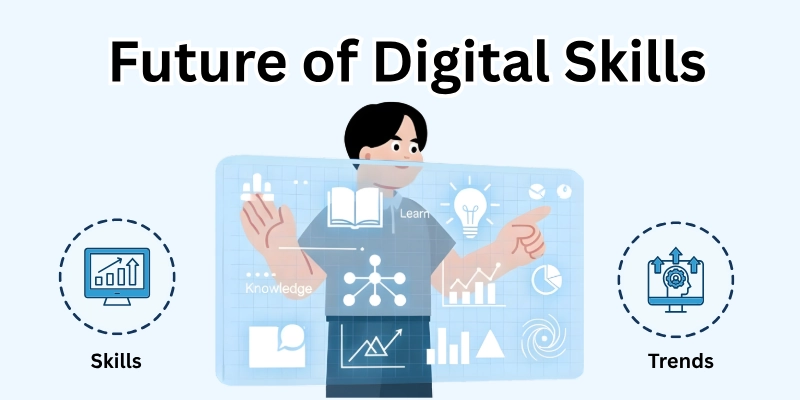
The way people work and learn is changing fast, and this directly affects the skills we need. Businesses are moving online, communication is mostly digital, and tools keep improving. So stay with me to understand how these future trends affect digital skills.
- Remote Work
- Online Collaboration Tools
- Data Handling & Analytics
- Digital Content
- Cybersecurity
- Tech-Savvy Work
- Continuous Learning
- Problem-Solving Online
These trends decide which skills stay useful and which become outdated. Are you ready, guys, to know about the short detail of future trends? Let’s go next with a cute smile:
1. Remote Work
Remote work is becoming normal in many industries. People now work from home, cafes, or anywhere with an internet connection. This shift makes digital communication, task management, and self-discipline more important than ever. Professionals who handle work independently and stay connected online have an advantage.
Key points:
- Manage tasks without supervision
- Communicate clearly online
- Stay productive from anywhere
2. Online Collaboration Tools
Teams rely heavily on online tools to coordinate work. Platforms like project management apps, cloud drives, and messaging software make teamwork faster and more organized. Understanding these tools and using them effectively improves efficiency and avoids confusion.
Key points:
- Track tasks and deadlines
- Share files and resources easily
- Collaborate with remote teammates
3. Data Handling & Analytics
Data drives decisions in every business today. Professionals who can read reports, identify trends, and present findings are in high demand. Even basic knowledge of spreadsheets or analytics platforms adds value to daily work.
Key points:
- Read and interpret data clearly
- Make decisions based on trends
- Present insights in simple ways
4. Digital Content
Digital content creation is becoming a key digital skill because people now learn, shop, and make decisions online. Businesses need videos, blog posts, visuals, and social content to attract and educate customers. This demand makes content creation a reliable skill for freelancing, social media, and online earning.
Key points:
- Create social media posts
- Design visuals and graphics
- Edit videos or presentations.
5. Cybersecurity
Digital work comes with risks. Protecting passwords, accounts, and data from risks is crucial for individuals and businesses. Employees who follow safe practices and understand security basics are trusted more in any team.
Key points:
- Protect personal and work accounts
- Follow safe online practices
- Avoid security risks and data loss
6. Tech-Savvy Work
Most jobs now use software, apps, or online platforms daily. People who quickly learn new tools, adapt to updates, and handle small technical problems work more efficiently and stay ahead.
Key points:
- Use work tools confidently
- Adapt quickly to updates
- Solve basic technical challenges
7. Continuous Learning
The digital world changes fast. Professionals who keep updating their skills, try new tools, and learn from experience remain valuable. Continuous learning keeps careers secure and opens more opportunities.
Key points:
- Stay updated with new tools
- Practice skills regularly
- Make small improvements daily
8. Problem-Solving Online
Work often requires finding solutions quickly using digital tools. People who can troubleshoot, improve processes, or handle challenges online become indispensable. This skill increases productivity and reliability.
Key points:
- Identify problems quickly
- Use tools to find solutions
- Improve work efficiency
Future trends push people toward practical, flexible, and adaptable digital skills. Now see the question rise here: what digital skills are best for the future? The answer to this we will discuss in the next part:
Future Digital Skills
Want to stay ahead in the digital world? You must learn digital skills for the future, but what you are learning today will matter tomorrow. Knowledge of the right digital skills future can determine how successful you can be in your career or online work.
Technical Skills
- AI & Machine Learning: Understand patterns, automate simple tasks, and solve problems using smart tools.
- Data Analysis: Collect, read, and interpret data to make decisions and improve outcomes.
- Cybersecurity: Protect data, accounts, and digital systems from threats and mistakes.
- Software Development: Build websites, apps, or tools that work for businesses or personal projects.
Design Skills
- UX/UI Design: Create user-friendly websites and apps that people enjoy using.
- Digital Content: Make graphics, posts, and visuals that engage audiences online.
- Video Editing: Produce videos and animated content that communicate ideas clearly.
Business Skills
- Digital Marketing: Promote products, services, or brands online effectively to reach more people.
- E-commerce: Sell products or services online and manage digital stores.
- Project Management: Track progress, measure results, and complete projects efficiently.
Soft Skills
- Digital Communication: Share ideas clearly through emails, chats, or online meetings.
- Critical Thinking: Solve problems and make smart decisions using digital tools.
- Remote Work Tools: Work well with teams using digital platforms, even from different locations.
Those who master these technical skills for the future will earn more and adapt easily to any change in the digital world. But the other expert’s view also matters for us to make the best decision, so now look at the expert predictions.
What Experts Predict for the Digital Skill Future?
Experts say the future will favour people who can adapt, stay practical, and handle change. They believe creativity combined with flexibility will matter more than ever. According to them, success in the coming years will go to those who can adjust quickly and think clearly.
They expect the focus to be on being useful, flexible, and ready for new challenges. They also say that staying aware of new trends and learning from experience will help people stay ahead.
These predictions help understand what comes next, but they also talk about challenges. Being aware of the challenges and saving ourselves from the risk in the future is also important. What are the risks? So come to see.
Future Challenges in Digital Skills
Everyone wants to grow, but the path is not always easy. Many people face real obstacles while learning and applying digital skills. There are common challenges that learners do not notice until they face them:
- Up-to-Date: Technology and tools change fast, making it hard to stay current.
- Right Skill: People struggle to know which skill will actually help them in the future.
- Time: Balancing learning with work, studies, or personal life can be difficult.
- Resources: Not everyone has easy access to quality courses, tools, or guidance.
- Falling Behind: Many feel stressed or worried that their skills will become outdated.
These challenges are real, but people who face them with focus, plan carefully, and act consistently often find the fastest path to success. Many people read about the future of digital skills, but few see the final picture that helps them make the right decision. We will also view its end.
Conclusion
In this guide, we looked at the future of digital skills and what makes certain skills more valuable than others. While future digital skills offer great advantages, there are limitations and risks, like choosing the wrong skill or falling behind fast-changing trends.
You can handle them by balancing practical learning with experience and avoiding distractions. Keep a clear plan and review your progress regularly. Don’t skip the following FAQs; they have extra insights that can give you new ideas.
FAQs
Here are some of the important FAQs that will emerge in your mind, like mine, about the future of digital skills.
The future of digital skills is about which abilities will stay in demand as technology grows. Skills like coding, data analysis, digital marketing, and online collaboration are expected to remain important. Focusing on practical, adaptable skills now will help you stay ready for new opportunities.
Skills like coding, data analysis, cybersecurity, content creation, and digital communication are predicted to be highly valuable. Employers will look for people who can solve problems and work online efficiently. Learning these skills now gives you a head start for future careers.
Important Points
- We can prepare by focusing on specialized skills that combine creativity, technology, and communication.
- Practice regularly, follow industry trends, and use online tools to stay updated.
- Small daily steps in learning make a big difference over time.
Some skills will stay relevant, while others may change as tools and technologies evolve. Technical skills like coding or analytics often grow in value, while simple tools may become outdated. Updating your knowledge and adapting to new platforms keeps your skills future-ready.
Soft digital skills, like online communication, collaboration, and problem-solving, help you work effectively in digital teams. Experts say these skills are as important as technical abilities. They make sure your work is seen, understood, and valued in any online or remote environment.
Industries like technology, marketing, healthcare, e-commerce, education, and content creation will require digital skills heavily. Companies are moving processes online, increasing the demand for skilled professionals. Learning digital skills now can open doors to many career paths.
The time depends on the skill and your focus. Basic digital skills can take a few weeks, while advanced skills like coding, analytics, or design may take months. Consistent practice and real-world projects help you learn faster and retain knowledge.
Yes, remote work relies heavily on digital skills like collaboration tools, online communication, and task management. Professionals with strong digital skills can work from anywhere and adapt to changing environments. These skills also increase productivity and career opportunities in a global market.




- Be Respectful
- Stay Relevant
- Stay Positive
- True Feedback
- Encourage Discussion
- Avoid Spamming
- No Fake News
- Don't Copy-Paste
- No Personal Attacks
- Be Respectful
- Stay Relevant
- Stay Positive
- True Feedback
- Encourage Discussion
- Avoid Spamming
- No Fake News
- Don't Copy-Paste
- No Personal Attacks
