Graphic Designing Course Subjects: Smart Guidance of Syllabus
Published: 13 Apr 2026
Many beginners waste time and money because they do not understand the graphic designing course subjects before joining a course. I have guided many learners who felt stuck after picking the wrong course. They learned tools, but they missed important basics like colour and typography.
If you want real skills and online earning, you need to know the right syllabus for the graphic design course from the start. You also need to check if the course focuses on practice or just theory. A strong subject list helps you build a portfolio and start earning faster.
Graphic Design Course Syllabus and Modules
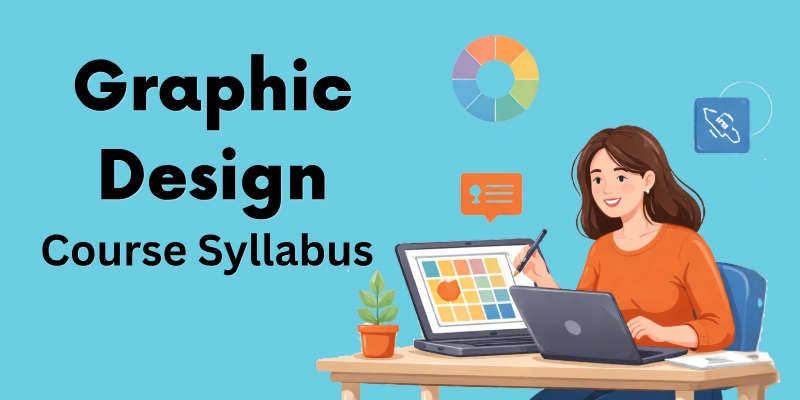
A graphic design course follows a clear syllabus to help you learn step by step. It starts with basic ideas and then moves to advanced skills. Most institutes follow a similar structure, so you can expect a graphic design course syllabus list in almost every course.
- First-Year Syllabus
- Second Year Syllabus
- Final Year Syllabus
Each year builds your skills step by step. Here is a simple breakdown of the basic graphic design course subjects.
First-Year Syllabus
Design starts with understanding how visuals speak. In this stage, you explore the basic rules that shape every creative work. It helps you see design in a new way of thinking. Everything here builds your base for future work.
- Fundamentals of Graphic Design
- Elements and Principles of Design
- Color Theory
- Typography
- Layout and Composition
- Illustration and Visual Art
- Photography Basics
Second Year Syllabus
Now the focus shifts toward practical creation. You move from theory to working on digital tools and software. Real design tasks start to become part of your routine. This phase builds your technical strength.
- Adobe Photoshop
- Adobe Illustrator
- Adobe InDesign
- CorelDRAW
- Digital Media Design
- UI/UX Design Basics
- Web Design Basics
- Motion Graphics Basics
Final Year Syllabus
At this stage, work becomes more industry-focused. You deal with real design problems and complete full projects. The aim is to prepare you for professional work environments. Everything here pushes you toward career readiness.
- Branding and Identity Design
- Advertising Design
- Packaging Design
- Advanced UI/UX Design
- Portfolio Development
- Project Work
- Internship and Client Handling
If you understand these subjects well, you already have a strong base in graphic design. At this point, you are ready to move into more advanced visual work where designs become more detailed and realistic.
3D Design Course
The 3D design course is a step ahead of basic graphic designing. It focuses on creating objects that look real and have depth. You work on shapes, lighting, and movement to build realistic visuals. This field is widely used in animation, gaming, and product design.
- 3D Modeling: Creating digital objects with height, width, and depth.
- Texturing: Adding surface details like colour and material to objects.
- Lighting: Setting light effects to make scenes look real.
- Rendering: Turning 3D scenes into final images or videos.
- Rigging: Building a skeleton for characters to make them move.
- Animation: Making objects or characters move in a sequence.
- Sculpting: Shaping detailed models like digital clay.
- Environment Design: Creating full 3D scenes like rooms or landscapes.
- Character Design: Building 3D human or fantasy characters.
- Product Visualization: Designing real-looking product models.
- Motion Graphics in 3D: Adding movement to 3D elements for videos.
- Simulation Basics: Creating effects like cloth, smoke, or water.
- Portfolio Projects: Building final work to show skills to clients or companies.
After learning 3D design, you can create visuals that feel real and professional. This skill opens new paths in animation, gaming, and product work. Now it’s time to bring everything together and understand the final takeaway.
Conclusion
In the end, the graphic designing course subjects give you a clear path to learn design step by step. These subjects help you build skills from basic ideas to advanced creative work. If you follow them with focus, you can slowly grow your design ability and start real projects with confidence.
From my side, I suggest keeping a balance between theory and practice. Some subjects feel easy, while others take time, so manage your learning speed and do not rush. Stay consistent and practice daily to avoid confusion and skill gaps. If you are still unsure about some points, take a moment to read the next section.
FAQs
These short answers to common questions will guide you with simple clarity before you move ahead.
Graphic designing course subjects are the topics you study in a design course. They include basics like colour theory, typography, and design principles. These subjects help you learn how to create professional designs step by step.
A graphic design syllabus includes both theory and practical subjects. You learn design fundamentals, software like Photoshop, and branding basics. It also covers projects and portfolio work.
Most graphic design subjects are easy to understand if you practice regularly. Some tools and software may feel difficult at first. With time and practice, they become simple and clear.
Common software includes Adobe Photoshop, Adobe Illustrator, and Adobe InDesign. Some courses also teach CorelDRAW, Figma, and Canva. These tools help you create digital and print designs.
Yes, you can learn graphic design subjects online through courses and tutorials. Many platforms offer beginner to advanced training. Online learning also allows flexible practice at home.
These subjects build creativity, visual thinking, and technical skills. You also learn communication through design and problem-solving. These skills help in freelancing and job opportunities.
After learning these subjects, you can work as a graphic designer, UI/UX designer, or freelancer. Many people also start earning online through logo and social media design. The demand for skilled designers is growing in digital industries.
There is no fixed number of courses in graphic design. You can find many types, like short courses, diploma courses, and degree programs. It depends on your level, interest, and how deep you want to learn.




- Be Respectful
- Stay Relevant
- Stay Positive
- True Feedback
- Encourage Discussion
- Avoid Spamming
- No Fake News
- Don't Copy-Paste
- No Personal Attacks
- Be Respectful
- Stay Relevant
- Stay Positive
- True Feedback
- Encourage Discussion
- Avoid Spamming
- No Fake News
- Don't Copy-Paste
- No Personal Attacks
