Types of Graphic Designing for Better Skill Decision to Grow
Published: 19 Feb 2026
If you know a bit about graphic designing, then knowing its types is also useful because it makes everyday things like choosing the right logo, creating social media posts, or even designing a flyer much easier and more effective. The truth is, there are several types of graphic designing, and each one works best for different needs or personal styles.
In this guide, we will break everything down step by step so you can understand each type clearly. By the end, you will clearly know which different styles of graphic design fit your goals and how to apply them.
Kinds of Graphic Designing
Some designs immediately grab your attention. The difference usually comes down to the graphic designing categories behind them, which style works best for a project, and gives you the power to create designs that actually make an impact.
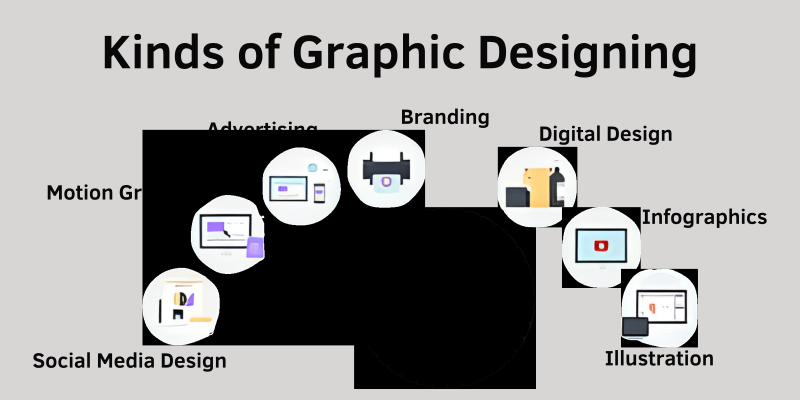
- Branding & Visual Identity
- Marketing & Advertising
- Digital & UI Design
- Publication & Editorial Design
- Packaging Design
- Motion Graphic Design
- Environmental & Signage Design
- Illustration & Custom Artwork
- Infographic Design
- Social Media Graphic Design
These points show creative graphic designing ideas. Next, we will explore each point in detail.
1. Branding & Visual Identity
Branding and visual identity design are all about creating the look and feel of a brand. It helps businesses stand out, appear trustworthy, and leave a lasting impression on their audience. This type focuses on consistent visuals that reflect a brand’s personality and values.
Key Features:
- Design logos, colour palettes, and typography systems
- Ensures consistency across all brand materials
- Builds recognition and trust with customers
- Reflects the brand’s personality and message
- Often guides other types of design, like packaging or marketing
Real-World Examples:
- Apple’s clean logo and minimalist product packaging
- Coca-Cola’s signature red and script logo
- Airbnb’s visual style across the website, app, and marketing
2. Marketing & Advertising
Marketing and advertising design focuses on creating visuals that grab attention and drive action. This type helps businesses promote products or services through appealing and motivating designs. The goal is to communicate quickly and effectively.
Key Features:
- Creates posters, banners, flyers, and online ads
- Uses attention-grabbing colours, images, and typography
- Communicates a clear message or call-to-action
- Can be print-based or digital
- Often works closely with branding to maintain consistency
Real-World Examples:
- Nike’s “Just Do It” campaign posters
- Facebook ad graphics for small businesses
- Billboard campaigns for Netflix shows
3. Digital & UI Design
Digital and UI (user interface) design creates the look and layout of websites, apps, and digital platforms. Its goal is to make online experiences simple, enjoyable, and visually appealing for users.
Key Features:
- Designs buttons, menus, and screens for apps or websites
- Focuses on user-friendly navigation and accessibility
- Ensures consistency across digital platforms
- Often uses wireframes and prototypes before final design
- Balances aesthetics with functionality
Real-World Examples:
- Instagram’s app interface
- Spotify’s web and mobile player layout
- Booking.com’s user-friendly booking pages
4. Publication & Editorial Design
Publication and editorial design arrange text, images, and graphics for magazines, books, newspapers, and brochures. Its purpose is to make content easy to read and visually appealing.
Key Features:
- Balances text, images, and white space
- Focuses on readability and layout flow
- Designs covers, spreads, and page layouts
- Often uses grids and typography hierarchy
- Can be printed or digital
Real-World Examples:
- National Geographic magazine layouts
- The New Yorker’s cover and article designs
- Brochures for museums and exhibitions
5. Packaging Design
Packaging design is creating the outer look of products. It not only attracts buyers but also communicates the product’s purpose and quality. Good packaging makes products stand out on the shelf.
Key Features:
- Designs boxes, bottles, wrappers, and labels
- Reflects the brand and product identity
- Considers material, size, and shape
- Uses colour and formatting to attract buyers
- Often supports marketing campaigns
Real-World Examples:
- Coca-Cola bottles with iconic labels
- Apple product boxes with a simple style
- Lush cosmetic packaging
6. Motion Graphic Design
Motion graphic design uses animation and video to communicate ideas visually. It combines text, graphics, and sound to create dynamic visuals that attract and hold attention.
Key Features:
- Creates animated logos, explainer videos, and ads
- Can include sound and transitions
- Makes complex ideas easier to understand
- Used for online platforms, TV, and presentations
- Requires timing, storytelling, and creativity
Real-World Examples:
- Animated YouTube intros
- Netflix show trailers
- TED-Ed explainer videos
7. Environmental & Signage Design
Environmental and signage design focuses on creating visuals for physical spaces. Its purpose is to guide, inform, or enhance the environment visually.
Key Features:
- Designs signs, murals, exhibition graphics, and wayfinding systems
- Focuses on visibility and readability
- Enhances physical spaces with fashionable designs
- Can reflect a brand or theme of a space
- Often combines style, colour, and graphics
Real-World Examples:
- Airport wayfinding signs
- Museum exhibition panels
- Office lobby wall graphics
8. Illustration & Custom Artwork
Illustration and custom artwork create unique visuals to add personality and creativity to projects. This type can be hand-drawn or digital and is often used to support other designs.
Key Features:
- Produces hand-drawn or digital illustrations
- Adds style and uniqueness to designs
- Can be used for books, branding, or social media
- Works alongside other design types for a complete look
- Often focuses on storytelling through visuals
Real-World Examples:
- Children’s book illustrations
- Custom artwork for album covers
- Website mascots or characters
9. Infographic Design
Infographic design turns data and information into visuals that are easy to understand. It simplifies complex ideas and communicates them clearly to the audience.
Key Features:
- Uses charts, icons, and graphics to explain data
- Makes information visually appealing
- Focuses on clarity and readability
- Often used for reports, articles, and presentations
- Highlights key points quickly
Real-World Examples:
- Health statistics in the WHO reports
- Company performance reports
- Social media data visualizations
10. Social Media Graphic Design
Social media graphic design creates visuals specifically for platforms like Instagram, Facebook, and Twitter. Its goal is to grab attention, encourage engagement, and communicate messages quickly.
Key Features:
- Designs posts, stories, ads, and banners
- Optimizes visuals for each platform
- Uses bold visuals and clear text for fast impact
- Can be animated or static
- Often supports marketing campaigns
Real-World Examples:
- Instagram promotional posts for Starbucks
- Twitter announcement graphics
- Facebook event cover designs
Now you know the main types of graphic designing, but here is what most beginners miss: each type needs different skills. Want to know which ones matter most today? Let’s explore.
Major Skills of Graphic Designing
When you know the key skills, it becomes easier to choose what type of design fits you and how to grow in this field. Here is a list of skills.
- Creative Thinking Skills: Generate fresh ideas and visual concepts.
- Visual Communication Skill: Turn information into clear and meaningful visuals.
- Typography Skills: Work with fonts to support clarity and style.
- Colour Theory Skills: Use colours to set mood, contrast, and hierarchy.
- Layout & Composition Skills: Arrange elements so that designs look balanced and easy to read.
- Branding Skills: Create visual identity using logos, colours, and style systems.
- Illustration Skills: Draw or create custom artwork for unique visuals.
- Motion Graphics Skills: Add movement and animation to digital content.
- UI Skills: Design layouts for screens, apps, and websites.
- Digital Tools Skill: Use design software like Adobe, Figma, or Canva.
- Print & Packaging Skills: Design physical materials such as labels, boxes, and brochures.
- Problem-Solving Skills: Find smart solutions to visual or user challenges.
- Communication Skills: Work smoothly with clients and provide feedback.
- Attention to Detail Skills: Polish designs so they look clean and professional.
These skills are the building blocks of modern graphic designing. Once you understand them, moving forward becomes easier and more exciting. Now, let’s close things up.
Conclusion
We explored the types of graphic designing and the skills that make each type useful in real work. When you understand these parts, the field of graphic design stops looking confusing and starts looking full of chances.
If you guys are planning to build a career, start a side hustle, or improve your brand visuals, learning these types of graphics can help you move in the right direction faster. Keep growing, folks. There is more to learn in the next part.
FAQs
Here are some quick answers to questions that people ask about types of graphic designing.
There are several types, like branding, UI, motion, packaging, and print. Each type serves a different purpose in communication. Knowing these helps beginners find a path that suits them best.
Most guides list around 8 to 12 main types in today’s digital and print world. New types continue to appear as design evolves. Understanding this gives a clear view of the field for both beginners and pros.
Graphic designers create logos, ads, social media posts, websites, and packaging. They help brands communicate visually. Their work can be freelance or in a company setting.
Branding, UI/UX, motion graphics, and social media design are in high demand. These areas connect strongly with online businesses and apps. Learning these helps beginners start in fields with more opportunities.
There are branding designers, UI designers, motion designers, illustrators, and packaging designers. Each focuses on different tasks and projects. This helps newcomers understand career options.
Graphic design can be learned as a hands-on trade or followed as a digital career. Both paths let you work creatively and earn online or offline. It depends on how you want to apply your skills.
UI, web, and motion designers mainly work on digital projects. They design websites, apps, and animated content. Digital design keeps growing as businesses move online.
Firstly Know these points:
- Try small projects in different areas to see what fits your interests.
- Look at examples and explore basic tools.
- Your choice will become easier as you practice and gain confidence.
Designers use creative thinking, layout, typography, and colour skills to solve visual problems. Strong skills help them work efficiently and stand out. Learning the right skills first saves time.
Yes, many designers create logos, social media content, or websites for clients. Freelancing and remote work are growing fast. These opportunities make graphic designing a flexible career path.

- Be Respectful
- Stay Relevant
- Stay Positive
- True Feedback
- Encourage Discussion
- Avoid Spamming
- No Fake News
- Don't Copy-Paste
- No Personal Attacks
- Be Respectful
- Stay Relevant
- Stay Positive
- True Feedback
- Encourage Discussion
- Avoid Spamming
- No Fake News
- Don't Copy-Paste
- No Personal Attacks
