Digital Literacy vs Digital Skills: Surprising Differences
Published: 18 Feb 2026
Digital literacy and digital skills are two terms that people hear a lot in today’s tech world. They sound similar, but they don’t mean the same thing. Digital literacy is about understanding how the digital world works. Digital skills, on the other hand, are the hands-on abilities that help you do digital tasks.
People often compare digital literacy vs digital skills because both are needed to work, study, and earn in a digital environment. Beginners sometimes wonder which one they should learn first or which one matters more for online earning and job opportunities.
Now, I will explain each term, compare how they work, look at their advantages, and help you understand how they support each other. Let’s see which one suits you better.
Overview of Digital Literacy vs Digital Skills
Digital literacy is about understanding how to use digital tools wisely. It includes how to search for information, stay safe online, manage settings, and make smart decisions in the digital world.
Digital skills are the practical abilities that help you do digital tasks. These skills can be basic (like using email) or advanced (like graphic design, coding, or video editing).
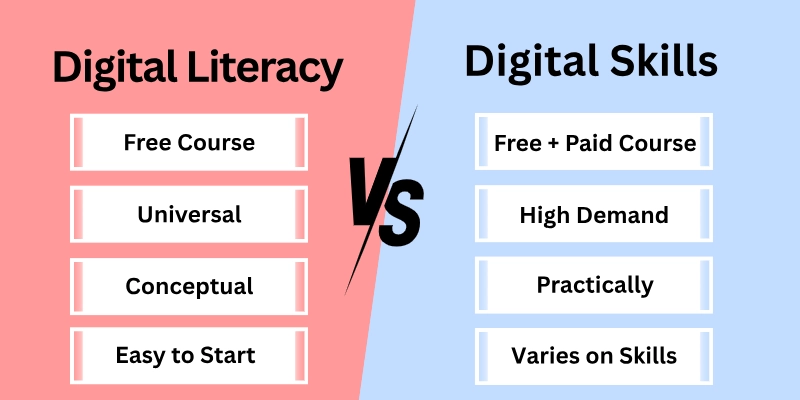
That is a brief overview; let’s move on to the deeper details that highlight their differences.
Difference between Digital Literacy and Digital Skills
Not all digital knowledge is the same. Some skills help you understand the online world, while others help you perform tasks and earn from it. Knowing the difference can save your time. Let’s break down digital skills vs digital literacy, so you know which one to focus on.
- Scope
- Purpose
- Learning Path
- Real-World Application
- Adaptability
- Impact on Career & Earning
- Complexity
- Risk Management
- Creativity & Innovation
- Long-Term Value
Let’s give attention to these key points to make learning easier.
1. Scope
Digital literacy and digital skills cover different areas of the digital world. Literacy gives you the map of the digital world, while skills give you the tools to explore it.
- Digital literacy focuses on understanding technology, evaluating online information, and staying safe. It teaches you what tools to use and why. It emphasizes awareness and understanding. This is a classic example of digital literacy in action.
- Digital skills focus on performing tasks, using apps, and creating digital content. They enable practical action and productivity. Skills allow you to produce results and achieve goals.
2. Purpose
Each serves a distinct goal in using technology effectively. Literacy improves judgment, while skills improve productivity and results.
- Digital literacy helps you make smart online decisions. It prevents mistakes and keeps your information safe. Digital literacy for teachers is especially important in guiding students safely online. It guides your thinking and improves judgment.
- Digital skills help you complete tasks, create content, and work efficiently. They allow you to achieve measurable results and solve problems. Skills focus on output and performance.
3. Learning Path
Beginners usually start with the basics of technology first. Literacy forms the foundation, and skills are built on top of it.
- Digital literacy comes first because it builds comfort, confidence, and understanding. It forms the foundation for learning more complex tools. Beginners also get familiar with safe online practices.
- Digital skills come next because they require hands-on practice. You need confidence and knowledge in literacy to perform tasks effectively. Skills are built through repetition and experience.
4. Real-World Application
In everyday use, literacy and skills appear differently. Literacy supports awareness, while skills support action.
- Digital literacy helps you browse safely, search effectively, and communicate responsibly. It keeps you aware of scams, misinformation, and unsafe practices. This demonstrates that digital literacy is the ability to manage information wisely.
- Digital skills help you create websites, videos, and designs or manage social media. They allow you to work online, solve tasks, and earn money. Skills focus on practical performance.
5. Adaptability
Their ability to help you adjust to new situations varies. Literacy ensures long-term readiness, while skills ensure immediate capability.
- Digital literacy helps you learn new tools quickly. It teaches principles, not just specific software. Literacy makes learning future skills easier.
- Digital skills need updates when tools or platforms change. They help you perform current tasks efficiently. Skills may require continuous learning to stay relevant.
6. Impact on Career & Earning
Both affect job and earning potential differently. Literacy builds potential, while skills deliver results.
- Digital literacy improves problem-solving, confidence, and the ability to learn new tools. Employers value it for judgment and adaptability. It prepares you for growth. It also connects to digital literacy citizenship, helping users act responsibly online.
- Digital skills directly improve productivity, job performance, and earning potential. Skills let you work online, freelance, and complete tasks efficiently. They deliver measurable results.
7. Complexity
The difficulty level differs between literacy and skills. Literacy builds confidence quickly, while skills require practice.
- Digital literacy focuses on understanding concepts and awareness. Beginners can learn it quickly without special tools. It builds confidence and knowledge. You can even visualize concepts with a digital literacy icon to make learning easier.
- Digital skills range from basic to advanced tasks. Some require tools, software, and hands-on practice. Skills take effort to master.
8. Risk Management
They manage risks in different ways. Literacy prevents problems, while skills solve tasks effectively.
- Digital literacy teaches safe online behaviour and prevents scams or errors. It helps you make informed decisions. Literacy protects your personal information.
- Digital skills reduce mistakes when performing tasks. They improve accuracy and efficiency. Skills help deliver reliable results.
9. Creativity & Innovation
Each contributes to creativity differently. Literacy guides ideas, while skills bring them to life.
- Digital literacy guides your thinking and helps you plan tasks thoughtfully. It helps you approach problems logically. Literacy gives structure to ideas.
- Digital skills allow you to build websites, graphics, videos, or apps. They turn ideas into real output. Skills focus on creation and execution.
10. Long-Term Value
Their value over time varies. Literacy gives knowledge, while skills give results.
- Digital literacy builds lifelong understanding, adaptability, and confidence. It makes learning new tools easier. Literacy ensures you stay capable in a changing digital world.
- Digital skills provide immediate productivity and earning potential. They allow you to work, freelance, and complete tasks effectively. Skills deliver measurable results now.
Before choosing what to focus on, it’s important to understand the advantages and drawbacks of each.
Pros and Cons: Comparison
Digital Literacy
Let’s see why digital literacy is important for understanding the digital world.
Advantages:
- Helps make smart and safe online decisions
- Improves understanding of technology and online content
- Builds critical thinking and awareness
- Prepares you to learn new digital tools easily
- Supports responsible online behaviour
Disadvantages:
- Doesn’t directly create or produce work
- Less useful for earning online or performing tasks
- Requires digital skills to be fully effective
- Can feel theoretical without practice
- May not show an immediate result
Digital Skills
Now let’s explore why digital skills are essential for doing and creating online.
Advantages:
- Let’s you perform tasks and create content efficiently
- Directly improves productivity and work performance
- Opens opportunities for earning online or freelancing
- Builds hands-on experience with tools and software
- Allows you to turn ideas into tangible results
Disadvantages:
- Skills can become outdated if not updated
- Requires regular practice and effort
- Needs foundational digital literacy to learn easily
- Some advanced skills need special tools or software
- Can be overwhelming for beginners without guidance
Comparison Table of Digital Literacy vs Digital Skills
Understand how digital literacy and digital skills differ from each other. This table explains all.
| Factors | Digital Literacy | Digital Skills |
|---|---|---|
| Main Purpose | Understand digital environments | Perform digital tasks |
| Pricing | Mostly low-cost or free to learn | Can require paid courses, tools, or software |
| Ease of Use | Easier for beginners; builds confidence | Varies by skill; some are basic, others are advanced |
| Pros | Improves safety, awareness, decision-making, and communication | Leads to productivity, job readiness, freelancing, and earning |
| Cons | Doesn’t directly generate income | Harder to learn without digital literacy as a base |
| Ideal For | Students & beginners | Freelancers & job seekers |
| Demand Level | Universal | Selective but high demand |
| Learning Type | Conceptual & critical thinking | Practical & hands-on |
| Workplace | Online communication, data awareness | Designing, editing, coding |
| Employer Expectation | Basic requirement for all jobs | Depends on role & industry |
Conclusion
To wrap up, digital literacy vs digital skills shows that knowing how to deal with technology is as important as being able to use it effectively. Each has its limits: literacy alone will not make you a professional, and skills without literacy can lead to mistakes.
I recommend combining both: carefully practice skills step by step and always keep your online safety in mind. By being mindful and cautious, you can grow confidently in the digital world.
Thank you for taking the time to be here, and I hope your digital learning experience goes smoothly. Go through the FAQs to clear any questions you have.
FAQs
Need quick answers? Our FAQs will guide you through everything about digital literacy vs digital skills.
Digital skills and computer skills are often confused. Digital skills vs computer skills differ because digital skills include online communication, social media, and cloud tools, while computer skills focus on using software and hardware. Understanding both helps you work efficiently in modern jobs.
No, they are not the same. Digital skills vs technical skills shows that digital skills cover using apps, managing online tools, and communication, whereas technical skills involve coding, programming, or IT problem-solving. Both are useful, but for different purposes in the digital world.
Yes! Soft skills vs digital skills highlights that soft skills like communication, teamwork, and problem-solving make using digital tools easier and more effective. Combining both increases your success in online jobs or remote work.
These are the basic abilities to use devices, apps, and the internet safely and communicate online. Learning them first makes it easier to develop higher digital skills for work or earning online.
Skills like online research, using email, and understanding internet safety are examples of digital literacy skills. Avoid thinking that only coding or graphic design counts; literacy is about understanding and navigating digital tools.
There are multiple categories. This includes information literacy, media literacy, computer literacy, and digital communication literacy. Knowing these helps you focus on the areas most useful for your personal or work goals.
The truth is, literacy is not just reading and writing anymore. Digital literacy means understanding online content, evaluating sources, and using technology safely. This foundation is necessary before learning advanced digital skills.
No, it cannot. Literacy gives understanding, but actual digital skills like social media management, design, or coding are needed to perform tasks and earn online. Both together are essential for online success.
Start by learning to use email, search engines, and online safety tools. Reading guides or tutorials, practicing basic apps, and exploring online resources. These steps make later learning of professional skills easier.
Popular skills include social media management, basic coding, online marketing, and graphic design. Combining them with digital literacy ensures you stay safe, organized, and productive online. Focus on learning one skill at a time while improving your understanding of digital tools.


- Be Respectful
- Stay Relevant
- Stay Positive
- True Feedback
- Encourage Discussion
- Avoid Spamming
- No Fake News
- Don't Copy-Paste
- No Personal Attacks
- Be Respectful
- Stay Relevant
- Stay Positive
- True Feedback
- Encourage Discussion
- Avoid Spamming
- No Fake News
- Don't Copy-Paste
- No Personal Attacks
