Content Writing vs Script Writing: Decide the Right One
Published: 10 Mar 2026
Do you want to start an online writing career but don’t know which skill to learn first? Some people suggest blog writing, while others recommend creating YouTube scripts. It can be confusing to choose the right path. Learning the right skill can save time and help you start earning faster.
In this article, we will compare content writing vs script writing, explain how each works, and show which one suits your goals best. By the end, you will have a clear idea of where to begin your writing journey.
Definition of Content Writing vs Script Writing
Content writing involves creating written material for websites, blogs, and online platforms. It provides information, guides, or advice to readers and helps businesses communicate clearly. This type of writing is suitable for people who enjoy research, explaining ideas, and writing articles or guides.
Script Writing
Scriptwriting is the process of writing text for videos, podcasts, or films, including dialogue and scene directions. It guides how content will be presented to an audience in spoken or visual form. Script writing works well for those who enjoy storytelling, creative dialogue, and planning how ideas are shown on screen.
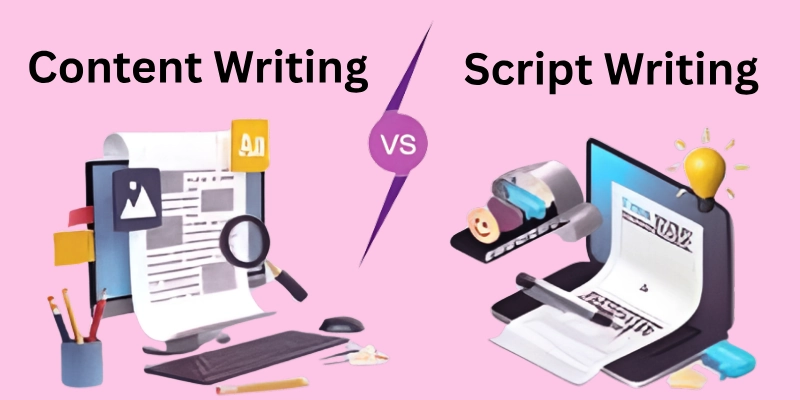
Difference Between Content Writing and Script Writing
When you want to start a writing career online, it’s important to understand the difference between content writing and scriptwriting. Both are valuable skills, but they work in different ways and suit different goals. Here are the key points we will discuss:
- Main Goal
- Writing Style and Format
- Audience
- Platforms & Mediums
- Skills
- Research Planning
- Creativity Storytelling
- Career Opportunities
- Earning Potential
Now we will see the main details of both skills.
1. Main Goal
Content Writing:
Content writing focuses on sharing information, educating readers, or solving problems through words. Articles, blog posts, and guides help readers learn or make decisions. The goal is to provide value and keep the audience engaged with useful content.
Script Writing:
Scriptwriting focuses on storytelling and guiding spoken content for videos, podcasts, or films. Scripts give instructions for dialogue, actions, and scenes. The goal is to deliver a clear message or story that connects with viewers or listeners.
2. Writing Style and Format
Content Writing:
Content writing uses clear sentences, headings, and lists to organize information. It is usually factual, instructional, or informative. The style is easy to read, helping the audience quickly understand the topic.
Script Writing:
Scriptwriting uses dialogue, narration, and scene directions. It needs to sound natural when spoken. The style is more conversational and dramatic, often designed to hold the audience’s attention throughout a video or audio presentation.
3. Audience
Content Writing:
Readers engage with content by reading, commenting, or clicking links. Engagement comes from providing value and building trust over time. The focus is on keeping readers interested through information and clarity.
Script Writing:
Viewers or listeners engage with scripts through spoken words and visual cues. Script writing creates emotions, excitement, or curiosity. It relies on timing, tone, and performance to make the audience feel connected.
4. Platforms and Mediums
Content Writing:
Content writing appears on blogs, websites, online guides, and newsletters. It is mainly written for reading, so structure and SEO are important. Writers focus on making text easy to scan and understand.
Script Writing:
Script writing is used for YouTube videos, podcasts, short films, or advertisements. It is designed for performance, not just reading. Writers plan how words will sound and how scenes flow on screen or in audio.
5. Skills
Content Writing:
Content writers need research skills, grammar, clarity, and sometimes SEO knowledge. They should understand the audience and organize information logically. Attention to detail is key to producing readable and helpful content.
Script Writing:
Scriptwriters need creativity, storytelling ability, dialogue writing, and pacing for spoken content. They must think about how words sound and how scenes flow. Understanding the audience’s emotions and timing is crucial.
6. Research Planning
Content Writing:
Good content requires research to find accurate information, facts, and examples. Planning the structure and flow of an article ensures readers stay interested. Writers need to organize points logically and back ideas with evidence.
Script Writing:
Script writing also requires planning, but in a different way. Writers plan scenes, dialogue, and timing for performance. They decide how ideas appear visually and how viewers will experience the story or message.
7. Creativity Storytelling
Content Writing:
Content writers use creativity to make ideas clear, engaging, and easy to understand. Storytelling can be included, but the main goal is clarity and usefulness. Creative examples and anecdotes make articles more interesting.
Script Writing:
Creativity and storytelling are the heart of script writing. Writers create engaging scenes, dramatic dialogue, or compelling narratives. They must capture attention and emotions, often in a short time.
8. Career Opportunities
Content Writing:
Content writers can work for websites, blogs, digital marketing agencies, or as freelancers. Opportunities include writing blog posts, guides, product descriptions, email newsletters, and social media content. Writers can choose a niche like tech, health, or finance to grow their expertise.
Script Writing:
Scriptwriters can work with YouTube channels, video marketing agencies, podcasts, short films, or TV productions. Opportunities include creating video scripts, ads, podcast episodes, and entertainment scripts. Writers can specialize in storytelling, humour, or promotional content.
9. Earning Potential
Content Writing:
Earnings depend on experience, speed, and client type. Freelance writers can charge per article, per word, or monthly. Experienced writers in high-demand niches like SEO or tech can earn well. Long-term blogging or agency work can provide a stable income.
Script Writing:
Script writing can be more project-based, depending on video production, podcasting, or ad campaigns. Earnings vary by project complexity, client budget, and platform. Skilled writers for popular channels or film projects can earn higher fees per script.
Now that you know how content writing and scriptwriting work. Before you decide, take a look at this simple comparison of both writing types.
Comparison between Content Writing and Script Writing
Here’s a clear side-by-side look at content writing and script writing so you can see how they really differ.
| Feature | Content Writing | Script Writing |
|---|---|---|
| Purpose | Share information and guide readers | Tell a story or guide spoken content |
| Format | Articles, blogs, guides | Dialogue, narration, scenes |
| Style | Clear, easy to read | Conversational, engaging |
| Audience | Readers | Viewers or listeners |
| Platforms | Websites, blogs | YouTube, podcasts, videos |
| Key Skill | Research and clarity | Storytelling and dialogue |
| Engagement | Keeps readers interested with useful information | Holds viewers’ attention through dialogue and story |
| Research | Gather facts and organize ideas for clarity | Plan scenes, timing, and dialogue for smooth flow |
| Career & Earning | Write for blogs, websites, or freelance clients; stable income over time | Write for videos, podcasts, or ads; pay depends on the project |
This comparison shows exactly how each skill works, so you can make a smart decision after the conclusion.
Final Thoughts
In the comparison of content writing vs script writing, both skills have their strengths. Content writing works well for teaching and informing readers, while script writing is great for storytelling and engaging viewers.
My recommendation is to start with the skill that fits your interest, but you can manage both by setting clear time for practice. Focus on one at a time and gradually add the other as you gain experience. Now that the main end is clear, it’s time to dive a little deeper into the FAQs.
FAQs
Want to know more? These FAQs explain content writing vs script writing in simple terms.
If you are starting online, content writing basics help a lot. Content writing focuses on articles, blogs, and guides for readers. Scriptwriting, on the other hand, is for videos or podcasts and guides spoken words.
Yes, even if you have no experience in content writing, you can begin with simple articles or short scripts. Practice small projects to learn structure and style. Gradually, your skills will improve, and you can take on bigger assignments.
You can build content writing experience by writing blogs, guest posts, or contributing to online projects. Focus on presenting ideas clearly and checking facts. This helps you create a portfolio and attract clients or employers.
Yes, it offers good career opportunities because websites, blogs, and content writing agencies always need writers. Scriptwriting can be profitable too, but it often depends on media or video projects. Choose the one that fits your interests and long-term goals.
Pay attention to content writing details like research, clarity, headings, and structure. These help readers understand your article quickly. Script writing also needs details, but mainly for dialogue, timing, and storytelling.
Yes, beginners can try both, but it’s better to focus on content writing basics first before moving to scripts. Start with small articles, then gradually try short scripts. Managing both skills slowly helps you grow without feeling stressed.




- Be Respectful
- Stay Relevant
- Stay Positive
- True Feedback
- Encourage Discussion
- Avoid Spamming
- No Fake News
- Don't Copy-Paste
- No Personal Attacks
- Be Respectful
- Stay Relevant
- Stay Positive
- True Feedback
- Encourage Discussion
- Avoid Spamming
- No Fake News
- Don't Copy-Paste
- No Personal Attacks
