History of Graphic Designing: Early Art to the Digital Age
Published: 19 Feb 2026
The history of graphic designing shows how people used shapes, symbols, and pictures to share ideas long before computers existed. From ancient cave art and early printed books to the digital screens of today, designers have always shaped how we see information. In 2024, the global graphic design market was worth about $52.32 billion.
And it is expected to grow to around $56.19 billion in 2026 as businesses invest more in online visuals and branding. Experts also predict it could reach over $70 billion by 2040 as visual communication continues to rise in importance. That is why its growing career shows that it is very important to know the graphic designing timelines.
Graphic Designing History
Every logo, every poster, and every website you see today has a story and a graphic designing fact. The history of graphic designing reveals the journey behind these powerful visuals. Let’s see the different eras of graphic designing
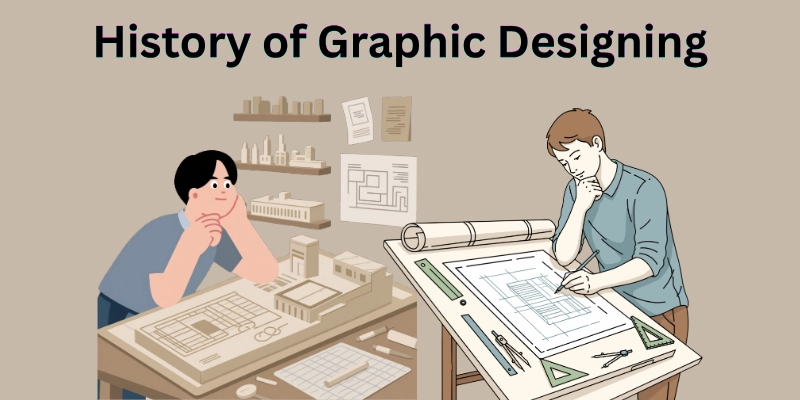
Graphic Designers (before 1900)
Long before screens existed, humans spoke through images. Every symbol and layout told a story that dates back thousands of years. From carved stones to printed books, visual communication shaped the world.
Ancient Civilizations:
- Egyptians used hieroglyphics to record history and ideas, arranging symbols with care.
- Mesopotamians carved cuneiform on clay tablets, organizing text and images for clarity.
Classical Antiquity:
- Greeks and Romans focused on proportion and balance in architecture, coins, and inscriptions.
- Visual designs such as mosaics and monuments convey messages clearly.
Medieval Europe:
- Monks decorated manuscripts with illuminated letters, borders, and illustrations.
- Block printing in China and Gutenberg’s movable type in Europe introduced structured layouts.
Renaissance:
- Artists like Albrecht Dürer combined text, images, and perspective in prints.
- Posters and announcements highlighted readability, hierarchy, and visual balance.
Before the 19th century, old graphic design evolved from simple symbols to organized visuals, using text and imagery to communicate ideas effectively.
Graphic Design Timeline in the 19th-20th Century
Graphic design in the 19th century evolved rapidly, responding to industrial growth, new printing techniques, and cultural shifts. Each era shaped design differently, blending art and communication to meet social and commercial needs.
1900–1930: The early 20th century saw graphic design become more structured and commercial. The Industrial Revolution had already increased mass production, and businesses needed posters, advertisements, and packaging that captured attention.
Designers began using bold typography, simple imagery, and clear layouts to communicate quickly. During this era, designers focused on visual storytelling, using composition and typography to guide viewers’ eyes effectively.
- Art Nouveau used flowing lines, decorative fonts, and organic shapes.
- Posters combined text and illustration to attract attention for theater, products, and travel.
- Improved print technology lets designers experiment with colour, patterns, and textures.
1930–1960: Between the 1930s and 1960s, graphic design shifted toward simplicity and function. Modernist principles emerged, emphasizing clean lines, grids, and minimal decoration. Designers aimed for clarity and universal communication rather than ornamentation.
This era marked the professionalization of graphic design, with designers approaching projects systematically rather than purely artistically.
- Swiss Design used grid layouts, sans-serif fonts, and precise alignment.
- Posters, logos, and brochures emphasized readability and visual hierarchy.
- Photography added realism and emotional impact to designs.
1970–2000: From the 1970s onward, graphic design expanded into branding, corporate identity, and digital experimentation. Designers embraced more expressive styles while maintaining clarity for communication.
During this period, graphic design moved from print-focused communication to multi-platform storytelling, setting the stage for the digital age.
- The 1970s–1980s featured bold, experimental typography and layouts inspired by pop culture and music.
- Desktop publishing in the 1980s sped up design and gave more control over fonts and visuals.
- The 1990s saw computer-based design merge digital graphics with print.
- Corporate branding grew, creating consistent logos, packaging, and ads.
From decorative Art Nouveau posters in the early 1900s to functional modernist designs and finally to digital experimentation, traditional graphic designing evolved with society, technology, and commerce. Each era left lasting principles that guide designers even today.
In the Digital Age, Graphic Designing
The 21st century completely transformed graphic design. Digital tools, the internet, and mobile technology changed how designers create, share, and deliver visuals. Each era within this period reflects how technology and trends shaped design practices.
2000–2009: The early 2000s saw a shift from traditional print to digital-first thinking. Designers began exploring software like Adobe Photoshop, Illustrator, and InDesign, creating more flexible and dynamic visuals.
During this period, branding for digital platforms grew in importance, with logos and marketing materials needing to work online as well as offline.
- Websites, email marketing, and digital banners emerged as key media.
- Graphic design focused on clean layouts, readable typography, and striking visuals for screens.
- Multimedia projects, including animations and interactive graphics, became more common.
2010–2019: This era marked the rise of smartphones and social media, changing the way people consumed content. Graphic design became more responsive, adaptive, and visually engaging for mobile screens.
Designers also focused on user experience (UX) and interface (UI) design, blending aesthetics with functionality across apps, websites, and interactive platforms.
- Platforms like Instagram, Facebook, and Twitter demanded eye-catching visuals, infographics, and GIFs.
- Flat design and minimalism dominated, emphasizing simplicity and faster load times.
- Motion graphics and short animations became essential for storytelling and marketing.
2020–2026: The last few years brought rapid innovation with cloud-based tools, AI-assisted design software, and remote workflows. Designers now create for multiple devices, screen sizes, and interactive experiences.
- Digital illustration, 3D design, and animation became widespread in branding, entertainment, and social media.
- Accessibility and inclusivity became key, ensuring visuals work for diverse audiences.
- Global collaboration tools allowed designers to work across continents in real time.
From the early 2000s’ digital experiments to mobile-first visuals and global, adaptive designs of today, graphic design has become faster, more interactive, and more accessible. Let’s see the future era of graphic designing.
Future of Graphic Designing
The future of graphic designing focuses on clear ideas and fast visuals. Designers will use smart tools to save time and improve quality. Motion graphics, 3D visuals, and interactive design will grow across digital platforms. Creative thinking and strong storytelling will keep designers valuable in the digital world.
- AI tools will handle repetitive tasks, while designers focus on ideas and strategy.
- Motion, 3D, and interactive visuals will replace static designs on digital platforms.
- User-focused and accessible design will become a standard, not an option.
- Strong branding and visual storytelling will drive trust and engagement online.
This shows that the evolution of graphic designing is moving from simple visuals to powerful digital experiences that shape how people think and act.
Conclusion
As we now know the history of graphic designing, it tells a clear story of growth, change, and creativity. It shows how designers solved problems using visuals in every era. This knowledge helps today’s designers work with confidence and clarity. My personal advice is to respect design history while building modern skills.
You can manage this by reviewing past styles and applying their ideas to today’s digital projects. This balance makes your work stronger and more thoughtful. I hope this guide helped you. Please continue to the FAQ section. They may surprise you with helpful points.
FAQs
Check these FAQs to answer your questions about the history of graphic designing clearly.
The history of graphic designing explains how people used visuals to share ideas over time. It started with drawings and symbols and later moved to print and digital design. This history helps beginners understand why design works the way it does today.
Graphic design began when early humans used images and symbols to communicate, long before written language. Cave paintings and ancient scripts mark its earliest form.
The history of graphic designing helps beginners understand the reason behind design rules and styles. It shows how designers solved problems at different times. This knowledge builds strong design thinking instead of blind copying.
The printing press made graphic designing accessible to large audiences. Designers could repeat text and images quickly and clearly. This invention turned design into a tool for education, advertising, and public communication.
The 19th century turned graphic designing into a profession. Mass printing, posters, and advertising became common. Designers started working for businesses and brands during this time.
Digital tools changed how designers create and share visuals. Software and the internet moved design from paper to screens. This shift made design faster, global, and more interactive.
Many learners ask if “graphic design” is capitalized when writing articles or titles. You do not capitalize it in normal sentences unless it starts a sentence. You only capitalize it when it starts a sentence or appears in a heading or title.




- Be Respectful
- Stay Relevant
- Stay Positive
- True Feedback
- Encourage Discussion
- Avoid Spamming
- No Fake News
- Don't Copy-Paste
- No Personal Attacks
- Be Respectful
- Stay Relevant
- Stay Positive
- True Feedback
- Encourage Discussion
- Avoid Spamming
- No Fake News
- Don't Copy-Paste
- No Personal Attacks
